They came from outer space--and you can have one! Genuine meteorites are now on sale in the Space Weather Store. They make a unique Valentine's gift. | | |
SOLAR SAIL SIGHTINGS: NASA's NanoSail-D, the first solar sail to orbit Earth, is making a series of flybys over the United States this week. Normally, the sail is barely visible to the naked eye, but occaasionally sunlight glints off its reflective fabric, causing bright flares in the night sky. Check the Simple Satellite Tracker (or your cell phone) for flyby predictions. If you photograph a flare, you could win $500.
ISS-SHUTTLE MOVIE: Space shuttle Discovery docked to the International Space Station on Saturday, Feb. 26, delivering humanoid Robonaut 2 to join the ISS crew. Just before docking, observers in Europe witnessed a spectacular double flyby of the converging spacecraft. French astrophotographer Thierry Legault trained his telescope on the pair for a close-up view; the movie he made is a must-see:
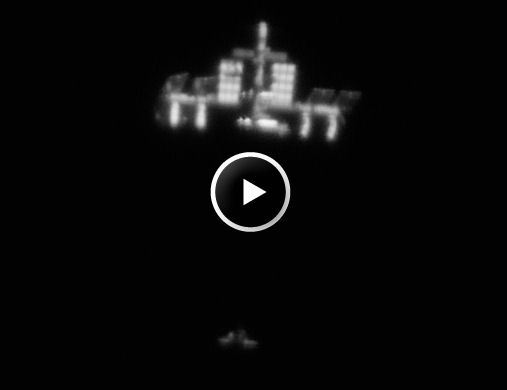
"I had to travel as far as Weimar, Germany, to find a clear-enough sky to catch the ISS and Discovery 30 minutes before docking," says Legault. "The station fades near the end of the video as the sun sets on the ISS."
Another opportunity to see the spaceships arranged in this way will come on or about March 6th when Discovery undocks from the ISS. Until then, click on the links for more double shots: from Rob Bullen of Forest of Dean, Gloucestershie, England; from Tamas Ladanyi of Veszprem, Hungary; from Emmanuel Marchal of London, England; from Anton Husek of Svihov, Czech Republic; from Monika Landy-Gyebnar of Veszprem, Hungary; from Rafael Schmall of Hungary, Somogy, Kaposfo;
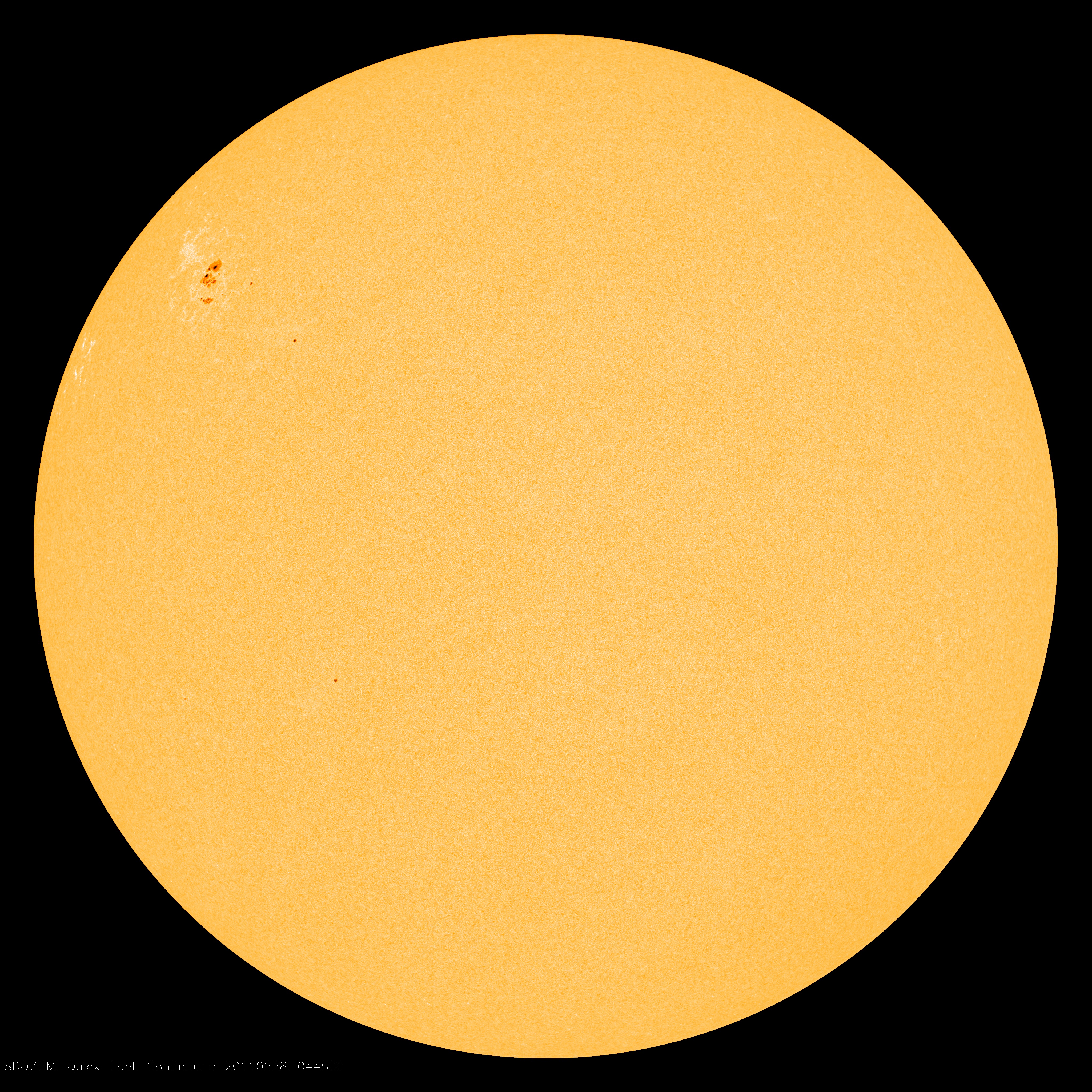
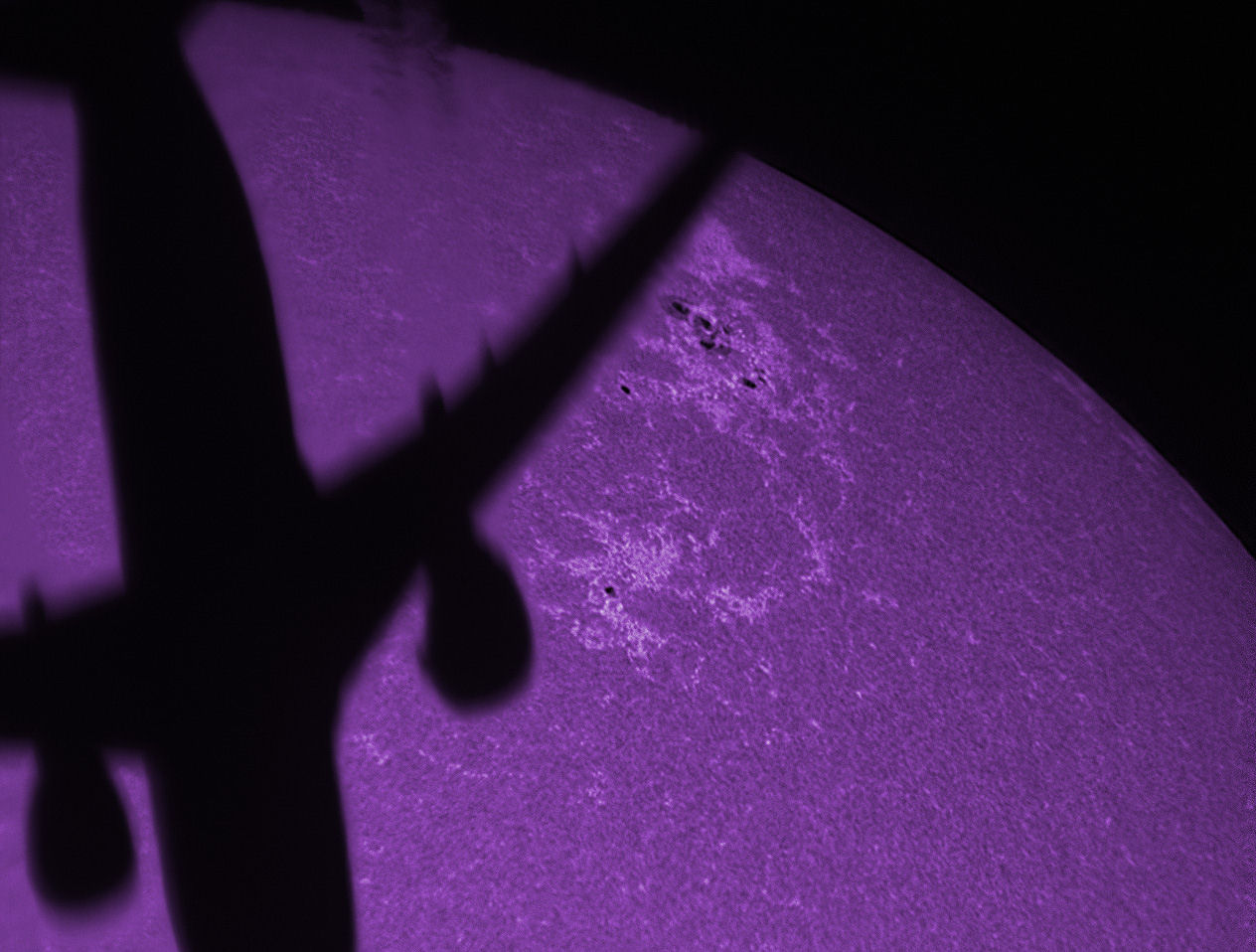
AIRPLANE AND SUNSPOT: Big sunspot 1164 is an attractive target for solar telescopes. Amateur astronomer Howard Eskildsen was monitoring the active region from his backyard observatory in Ocala, Florida, on Feb. 27th when an airplane flew by:
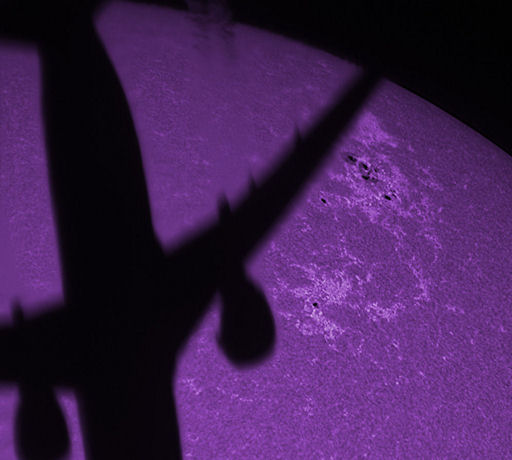
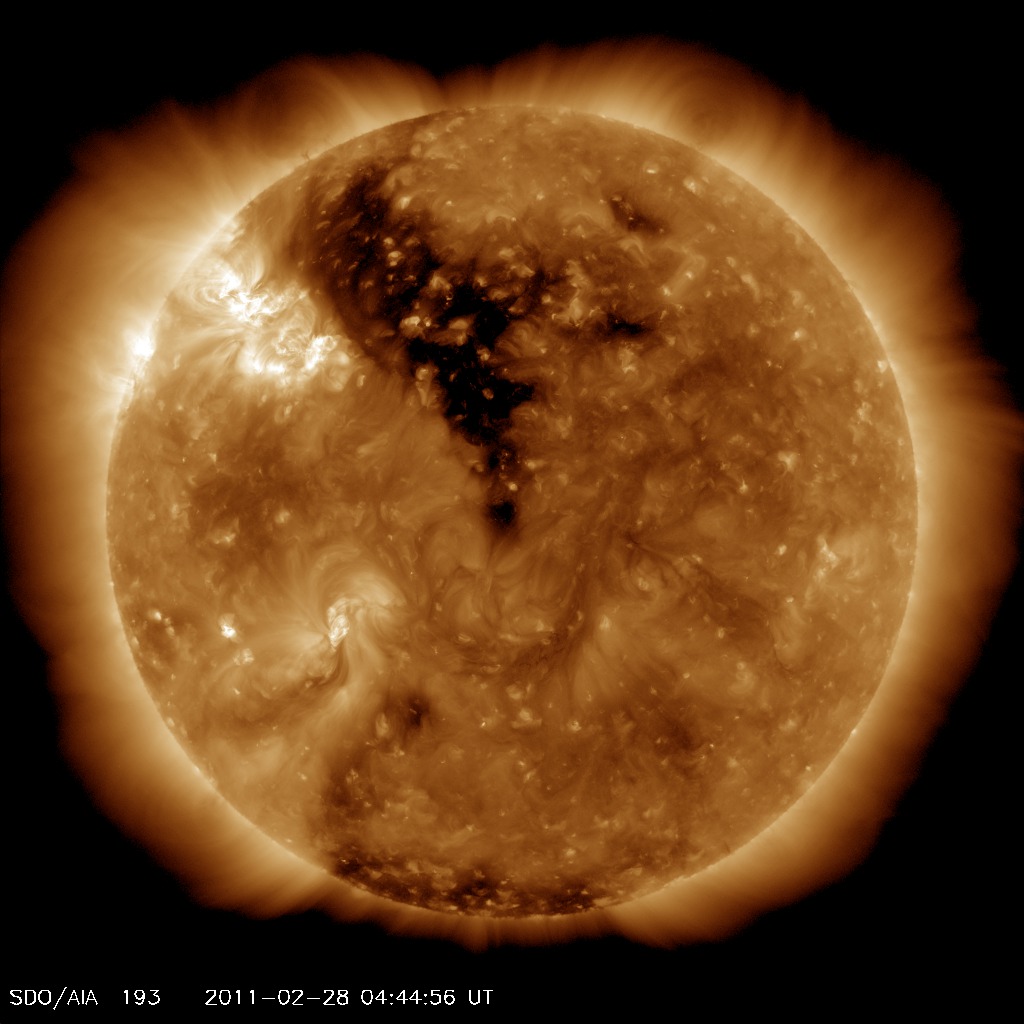
"Until now, I could only have dreamed of such a composition," Eskildsen says. He took the picture through a violet "Calcium-K" filter that highlights bright magnetic froth around the sunspot's dark core. NOAA forecasters say AR1164 has an unstable magnetic field that harbors energy for powerful M-flares. Tomorrow's composition could include a bright eruption. Stay tuned!
NanoSail-D Photo Gallery
[NASA: Solar Sail Stunner] [Photo Contest]
February 2011 Aurora Photo Gallery
[previous Februaries: 2010, 2009, 2008, 2007, 2006, 2004, 2003, 2002]
Potentially Hazardous Asteroids (
PHAs) are space rocks larger than approximately 100m that can come closer to Earth than 0.05 AU. None of the known PHAs is on a collision course with our planet, although astronomers are finding
new ones all the time.
On February 28, 2011 there were 1201 potentially hazardous asteroids.
Notes: LD means "Lunar Distance." 1 LD = 384,401 km, the distance between Earth and the Moon. 1 LD also equals 0.00256 AU. MAG is the visual magnitude of the asteroid on the date of closest approach. | | The official U.S. government space weather bureau |
| | The first place to look for information about sundogs, pillars, rainbows and related phenomena. |
| | Researchers call it a "Hubble for the sun." SDO is the most advanced solar observatory ever. |
| | 3D views of the sun from NASA's Solar and Terrestrial Relations Observatory |
| | Realtime and archival images of the Sun from SOHO. |
| | from the NOAA Space Environment Center |
| | the underlying science of space weather |
| | for out-of-this-world printing and graphics |