Turn your cell phone into a field-tested satellite tracker. Works for Android and iPhone. | | |
ASTEROID FLYBY: Newly-discovered asteroid 2012 BX34 is flying past Earth today only 77,000 km (0.2 lunar distances) away. There is no danger of a collision with the 14-meter wide space rock. Advanced amateur astronomers might be able to observe the flyby as the bus-sized asteroid brightens to 14th magnitude just before closest approach on Jan. 27th at 1530 UT. [3D orbit] [ephemeris] [images: #1, #2, #3]
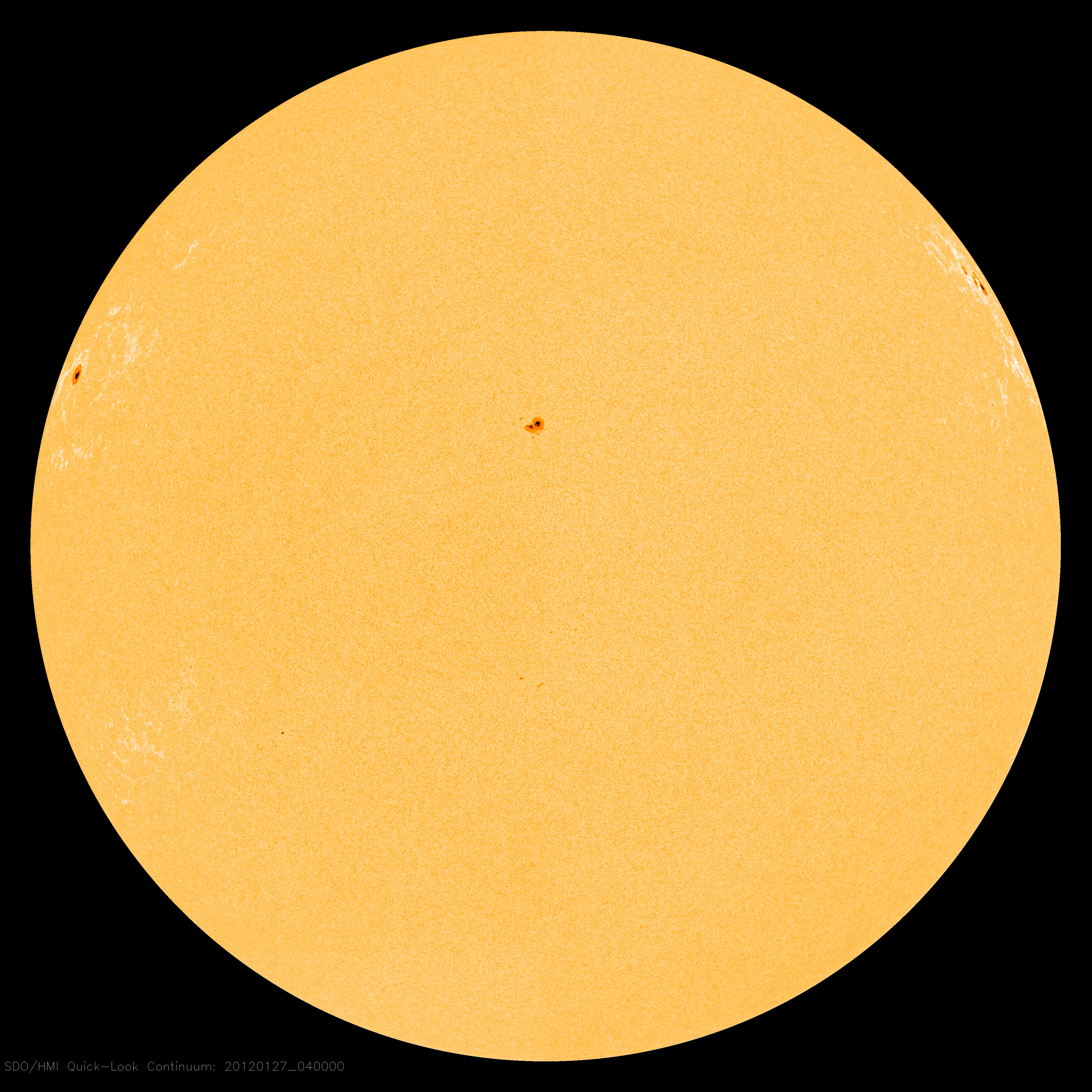
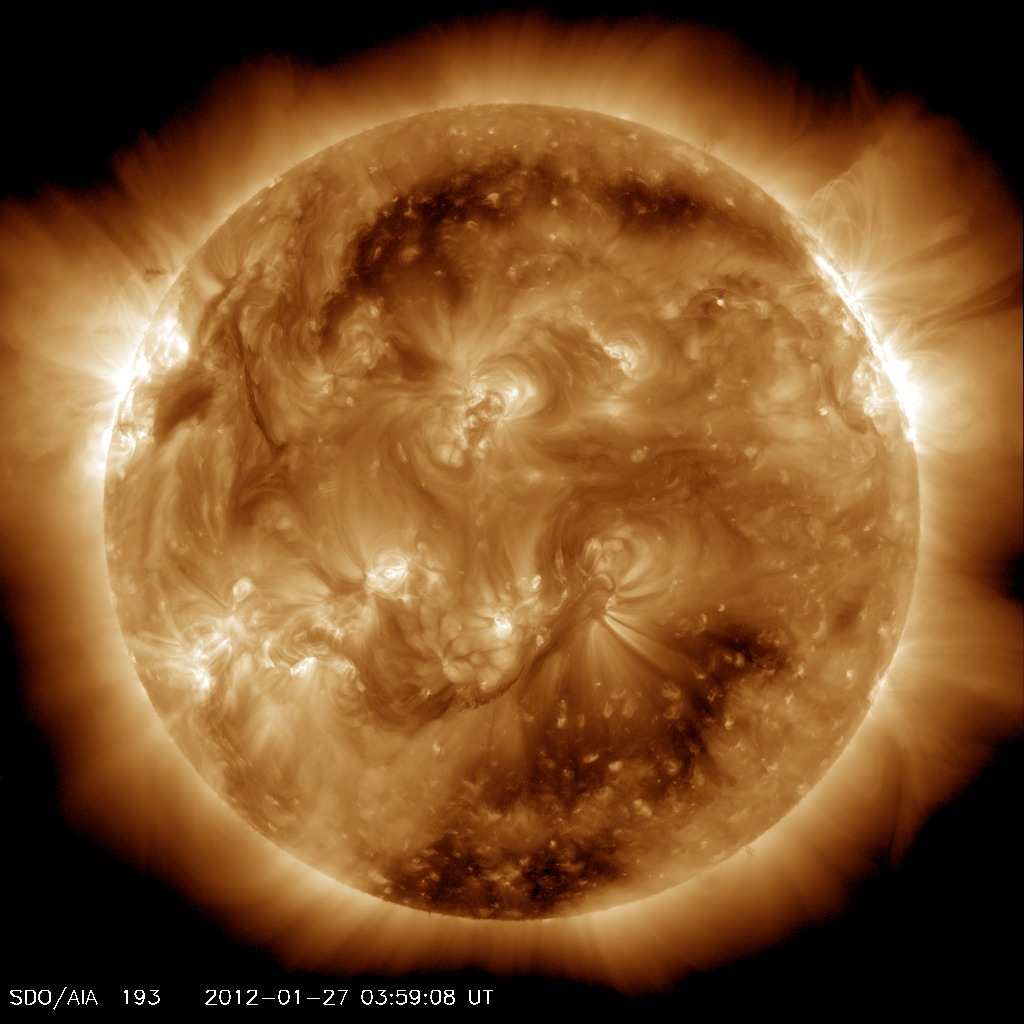
X-FLARE: Departing sunspot 1402 unleashed an X2-class solar flare today, Jan. 27th, at 18:37 UT. Click on the image to view a movie of the extreme ultraviolet flash recorded by NASA's Solar Dynamics Observatory:
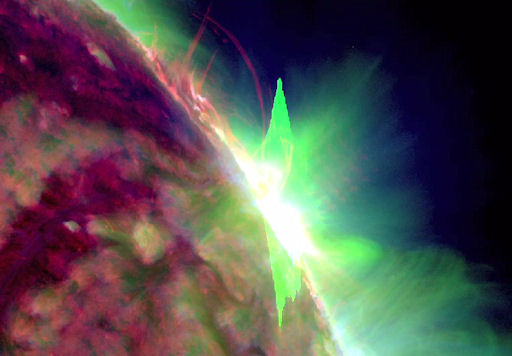
Sunspot 1402 is rotating onto the far side of the sun, so the blast site was not facing Earth. Nevertheless, energetic protons accelerated by the blast are now surrounding our planet, and an intensifying S1-class radiation storm is in progress.
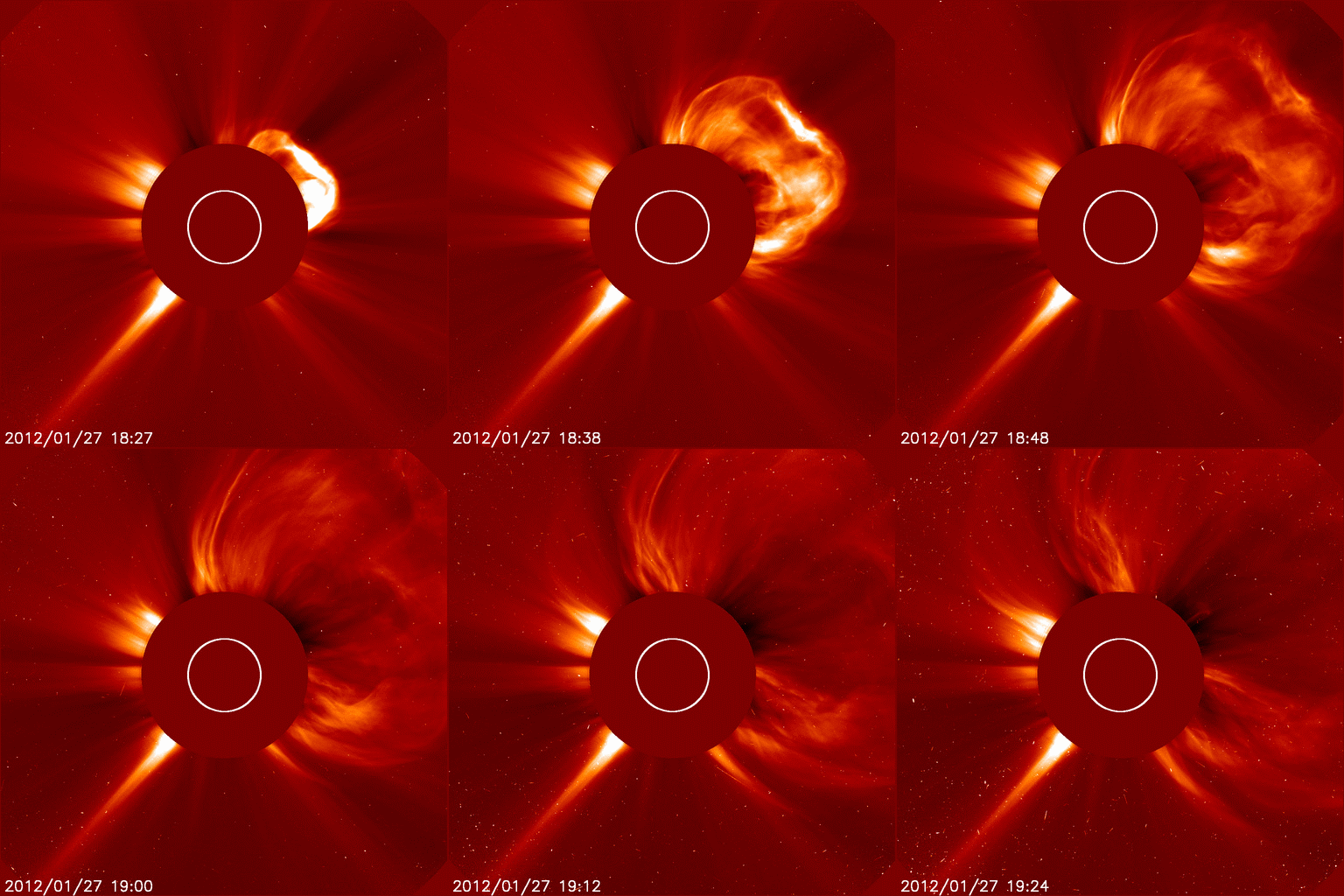
The explosion also produced a spectacular coronal mass ejection (CME): SOHO movie. Analysts at the Goddard Space Weather Lab say the cloud raced away from the sun at 2500 km/s or 5.6 million mph. The CME is not heading toward Earth, although it is too soon to rule out some kind of glancing blow on Jan. 28-29. Stay tuned for updates. Solar flare alerts: text, voice.
CORONA CONJUNCTION: "Last night I went outside to photograph the Venus-Moon conjunction, and I got more than I bargained for," reports Robert Arn of Fort Collins, Colorado. "The Moon and Venus both had an incredible corona surrounding them. The sight was beyond words (but not beyond pictures)." He recorded the scene in this 5-second exposure @ ISO 400:
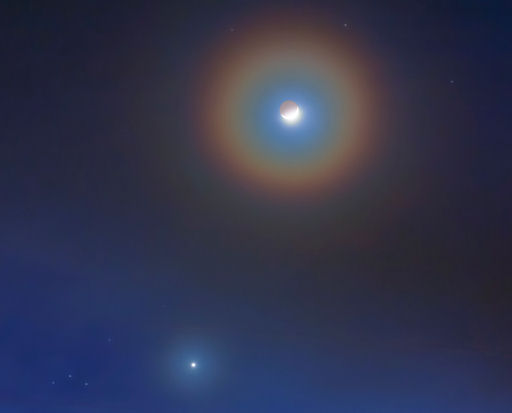
Coronas are caused by tiny water droplets in thin clouds, which diffract the light of bright heavenly bodies to produce iridescent halos, as shown above. Seeing one corona in the night sky is not uncommon; however, seeing two in close proximity is a rare treat. Another "corona conjunction" could be in the offing. The Moon is moving past Venus for a meet-up with Jupiter on Jan. 29th. If the two align behind a moist, thin cloud--voilà!
more Venus-moonshots: from Petr Horalek of the Academy of Sciences of the Czech Republic; from Mike O'Leary of San Diego, CA; from Francis Audet of Quebec City, Canada; from Gregg Alliss of Marion, Iowa; from Becky Ramotowski of Tijeras, New Mexico;
AURORAS OVER THE USA: The geomagnetic storm of Jan. 24th died out before night fell over North America--or did it? According to reports still trickling in, auroras were reported not only in Canada, but also in some of the lower 48 US states. Shawn Malone of Marquette, Michigan, took this picture looking north from the shores of Lake Superior:
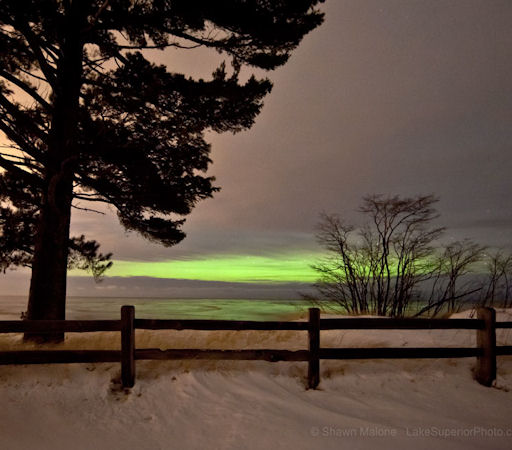
"I got to view a slice of the aurora through a tiny opening in an otherwise completely overcast sky," says Malone. "It appeared to be a pretty decent display."
Prompted by the CME warning, Mike Hollingshead of Nebraska drove 450 miles to the Badlands National Park of South Dakota hoping to catch a glimpse of the auroras. He got more than he bargained for: "While I waited for some sign of auroras, the most amazing fireball I've ever seen blasts down. It flashed brightly and illuminated the terrain around me." Later, the auroras made a belated appearance, turning the badland sky green.
More auroras could be in the offing. A solar wind stream is heading for Earth, due to arrive on Jan. 28-29. NOAA forecasters estimate a 15% chance of geomagnetic storms at high latitudes. Aurora alerts: text, voice.
more images: from Stephan Hoglund of Grand Marais, Minnesota; from Kimberly S Mietzah Damkoehler of Houston, Alaska; from Robert Berdan of Calgary, Alberta; from Bob Conzemius of Lake of the Woods, Minnesota; from Matt Melnyk of Edmonton, Alberta; from Sylvain Serre of Ivujivik, Nunavik, Quebec, Canada;
January 2012 Aurora Gallery
[previous Januaries: 2010, 2009, 2008, 2007, 2005, 2004]
Comet Lovejoy Gallery
[previous comets: McNaught, Holmes, Lulin, Tuttle, Ikeya-Zhang]