Thirty-five new items have just been added to our Meteorite Jewelry collection. Browse the Space Weather Store for something out of this world. | | |
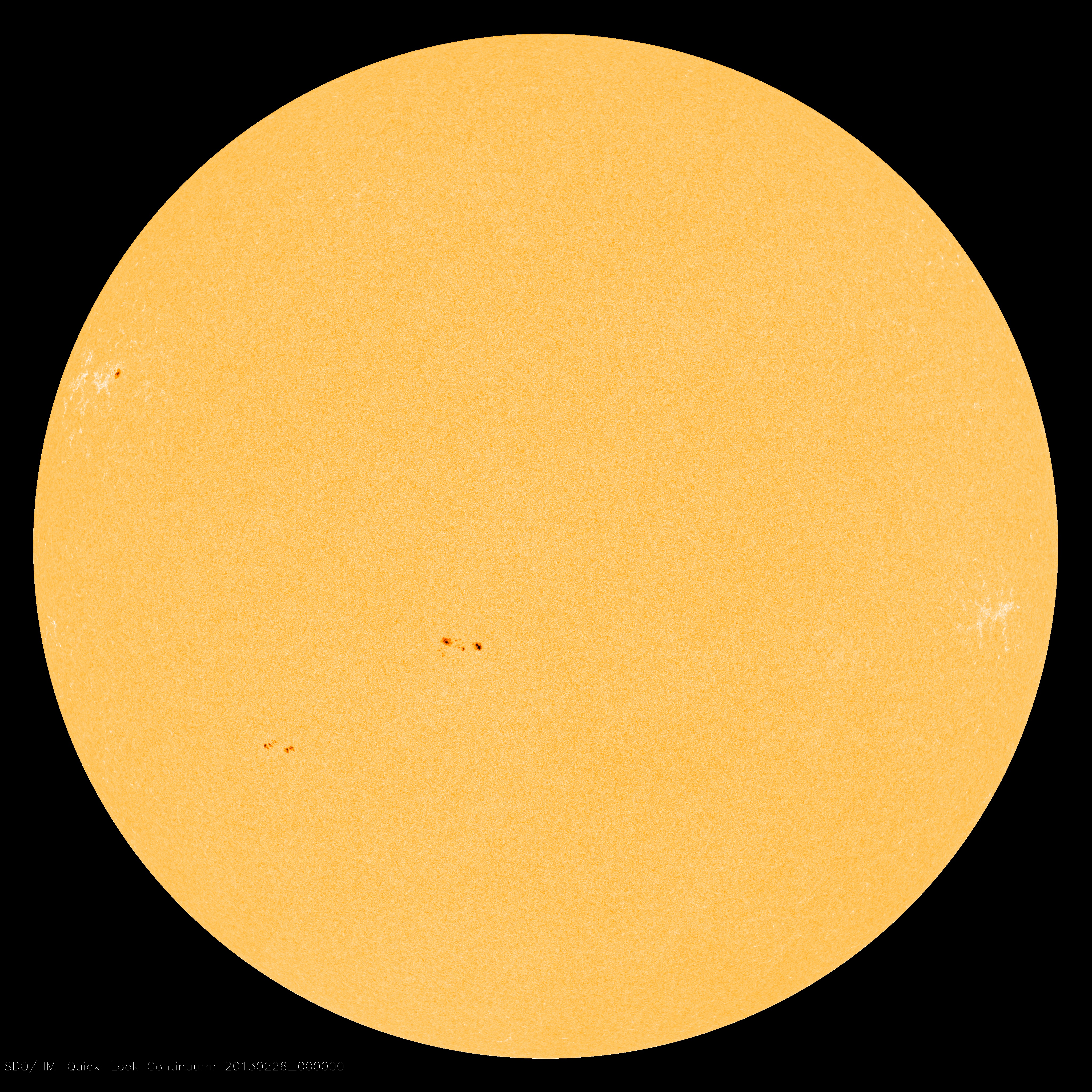
SLIGHT CHANCE OF FLARES: New sunspot AR1682 has a 'beta-gamma' magnetic field that harbors energy for M-class solar flares. NOAA forecasters estimate a 10% chance of an eruption. Solar flare alerts: text, voice.
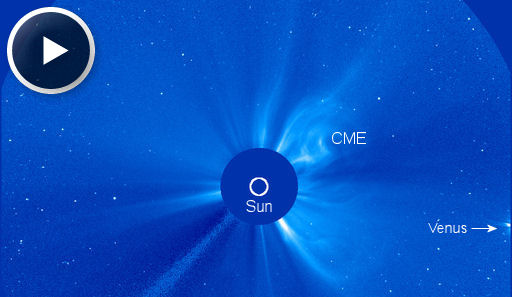
FARSIDE CME: There is an active sunspot on the farside of the sun. Yesterday, Feb. 25th, it blasted a coronal mass ejection (CME) over the sun's northwestern limb, shown here in a movie from the Solar and Heliospheric Observatory:
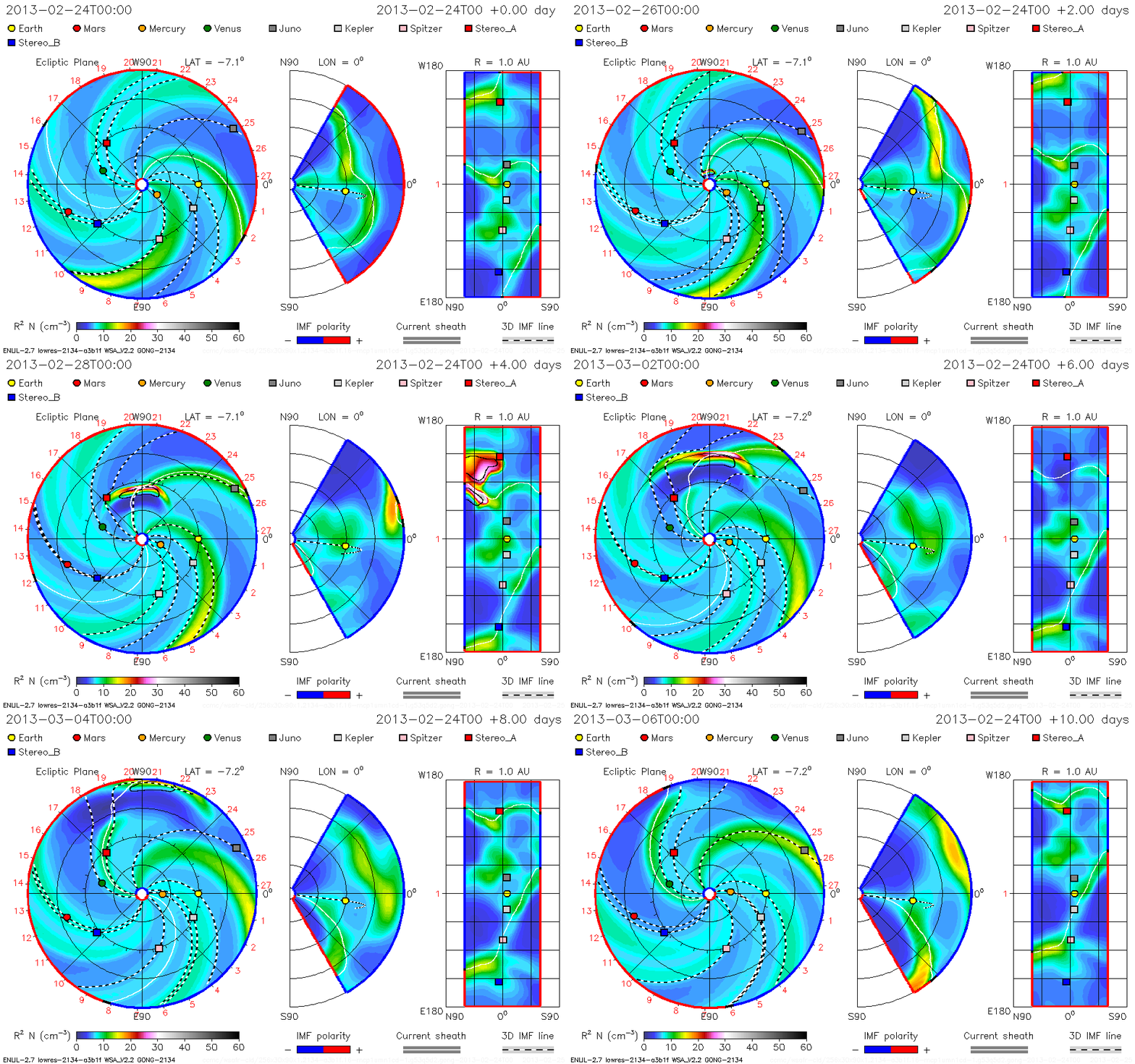
A 3D model of the CME prepared by analysts at the Goddard Space Weather Lab shows that the CME will miss everything--no planets are in the line of fire.
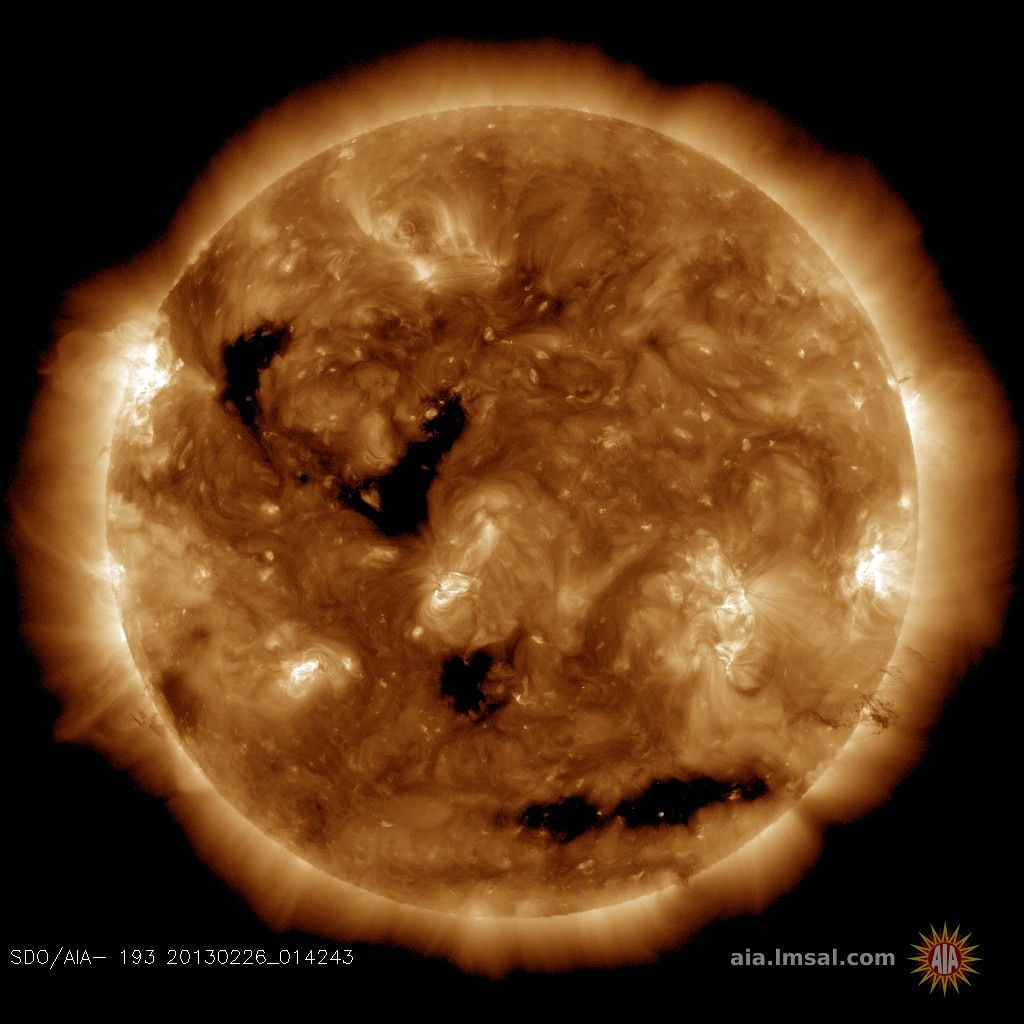
NASA's STEREO-Ahead spacecraft is stationed over the farside of the sun, almost directly above the CME. Images from the spacecraft pinpointed the source of the blast: It is active sunspot AR1678, which rotated off the Earthside of the sun just a few days ago.
Realtime Space Weather Photo Gallery
SNOW MOON: According to folklore, last night's full Moon was the "Snow Moon," so-called to mark the heavy snows of February. Göran Strand of Östersund, Sweden, photographed the moonrise and wrapped his images into a 360-degree self-portrait of snowy moon-watching:
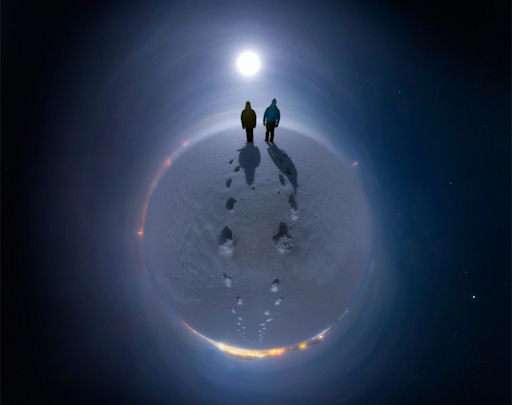
"To visualize the Snow Moon, a friend and I decided to go for a walk out on a big lake, covered with snow, so that I could create a snowy planet matching the snowy moon," says Strand. "As we stood there watching the moon, a mist blew in from the south, adding some 'atmosphere' to the composition."
More moonshots from last night may be found in the realtime gallery:
Realtime Full Moon Photo Gallery
Realtime Aurora Photo Gallery
Realtime Comet Photo Gallery
Realtime Noctilucent Cloud Photo Gallery
[previous years: 2003, 2004, 2005, 2006, 2007, 2008, 2009, 2011]
Potentially Hazardous Asteroids (
PHAs) are space rocks larger than approximately 100m that can come closer to Earth than 0.05 AU. None of the known PHAs is on a collision course with our planet, although astronomers are finding
new ones all the time.
On February 26, 2013 there were 1381 potentially hazardous asteroids.
Notes: LD means "Lunar Distance." 1 LD = 384,401 km, the distance between Earth and the Moon. 1 LD also equals 0.00256 AU. MAG is the visual magnitude of the asteroid on the date of closest approach. | | The official U.S. government space weather bureau |
| | The first place to look for information about sundogs, pillars, rainbows and related phenomena. |
| | Researchers call it a "Hubble for the sun." SDO is the most advanced solar observatory ever. |
| | 3D views of the sun from NASA's Solar and Terrestrial Relations Observatory |
| | Realtime and archival images of the Sun from SOHO. |
| | from the NOAA Space Environment Center |
| | the underlying science of space weather |