Can you drop a probe on a comet? A new iPhone game from NASA's Jet Propulsion Laboratory puts you in control of the Rosetta spacecraft as it prepares to intercept Comet 67P/Churyumov-Gerasimenko. Download it now. | | |
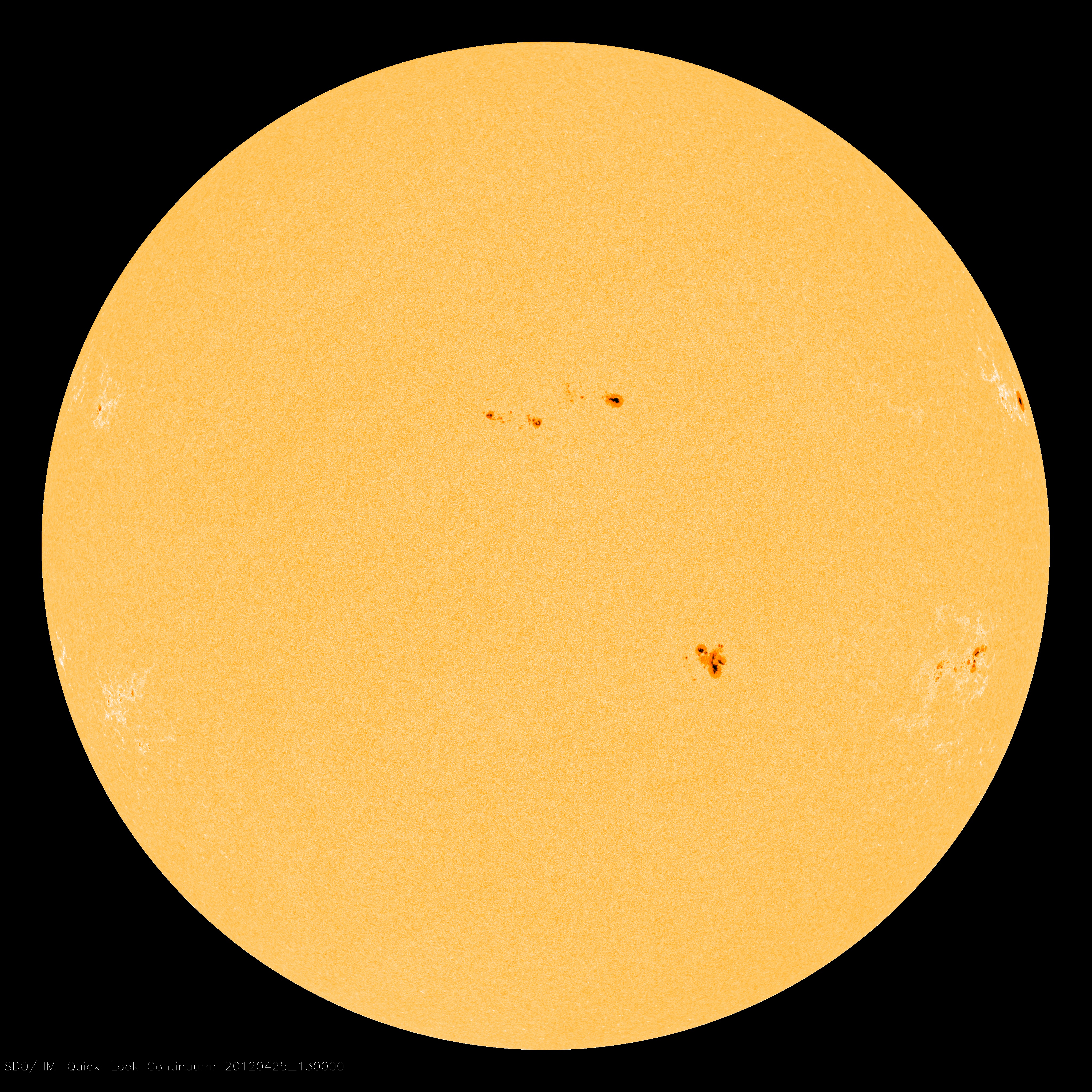
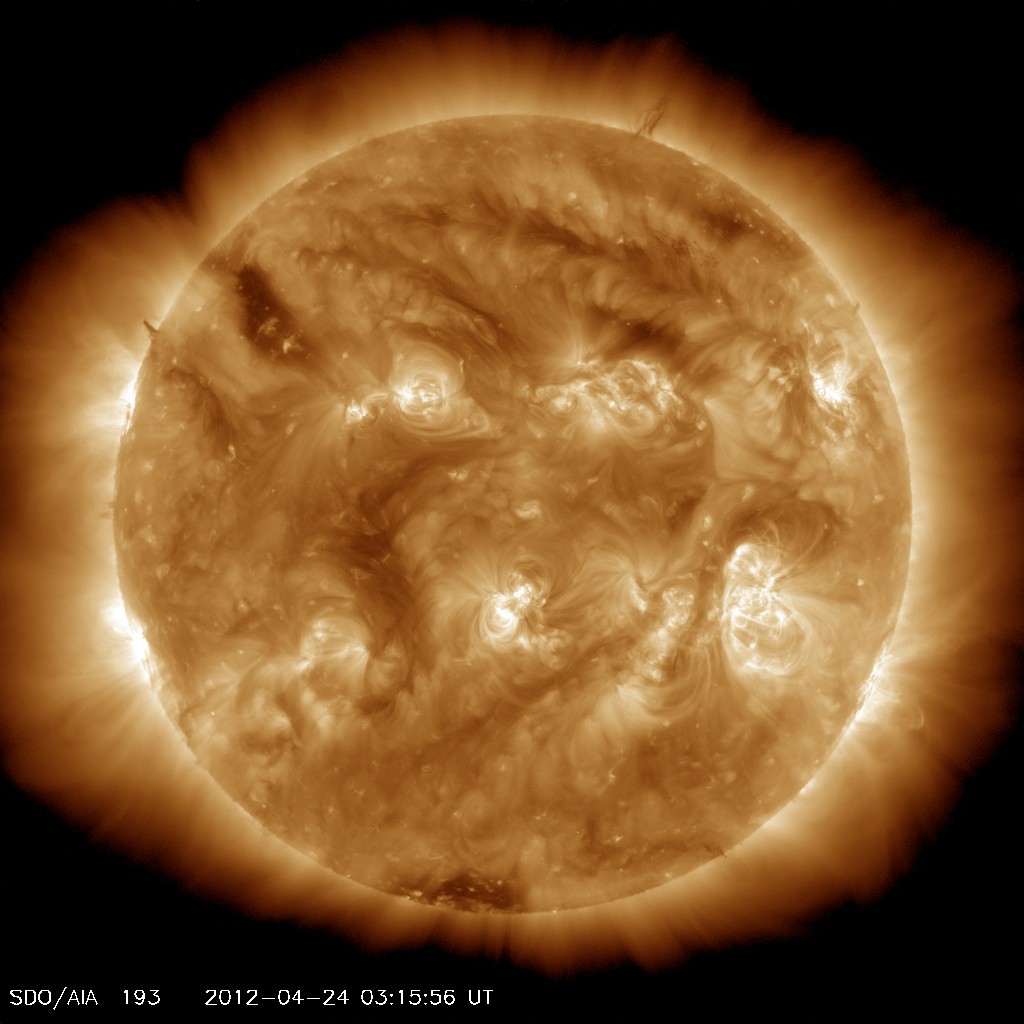
CHANCE OF FLARES: Sunspot AR1465 has developed a 'beta-gamma-delta' magnetic field that harbors energy for X-class solar flares. Because of the sunspot's location near the middle of the solar disk, any eruptions will likely be Earth-directed. Solar flare alerts: text, phone.
QUIETING STORM, MORE TO COME: Earth's magnetic field is quieting after two straight nights of mild to moderate geomagnetic storms. At the height of the disturbance on April 23-24, auroras were spotted in more than a dozen US states including Michigan, Nebraska, Kansas, Wisconsin, North Dakota, South Dakota, Iowa, Illinois, Minnesota, and Colorado. On the threshold of the Arctic Circle in Anchorage, Alaska, the Northern Lights pierced the glow of the midnight sun:
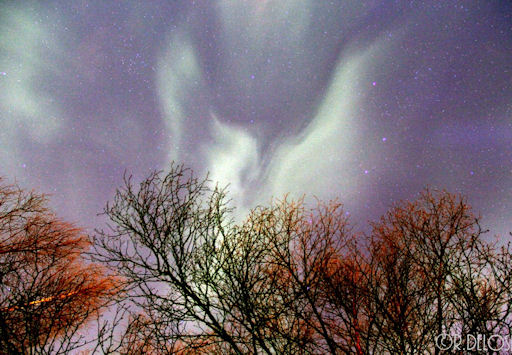
"I didn't think I would get another glimpse of the auroras this season because of the increasing daylight," says photographer Ryan Delos Reyes, "but this was a spectacular show."
More auroras may be in the offing. A minor CME is en route to Earth, due to arrive on April 26th. NOAA forecasters estimate a 20% to 30% chance of geomagnetic storms. Aurora alerts: text, phone.
SIERRA FIREBALL DECODED: On Sunday morning, April 22nd, just as the Lyrid meteor shower was dying down, a spectacular fireball exploded over California's Sierra Nevada mountain range. The loud explosion rattled homes from central California to Reno, Nevada, and beyond. According to Bill Cooke, head of NASA's Meteoroid Envronment Office, the source of the blast was a meteoroid about the size of a minivan.
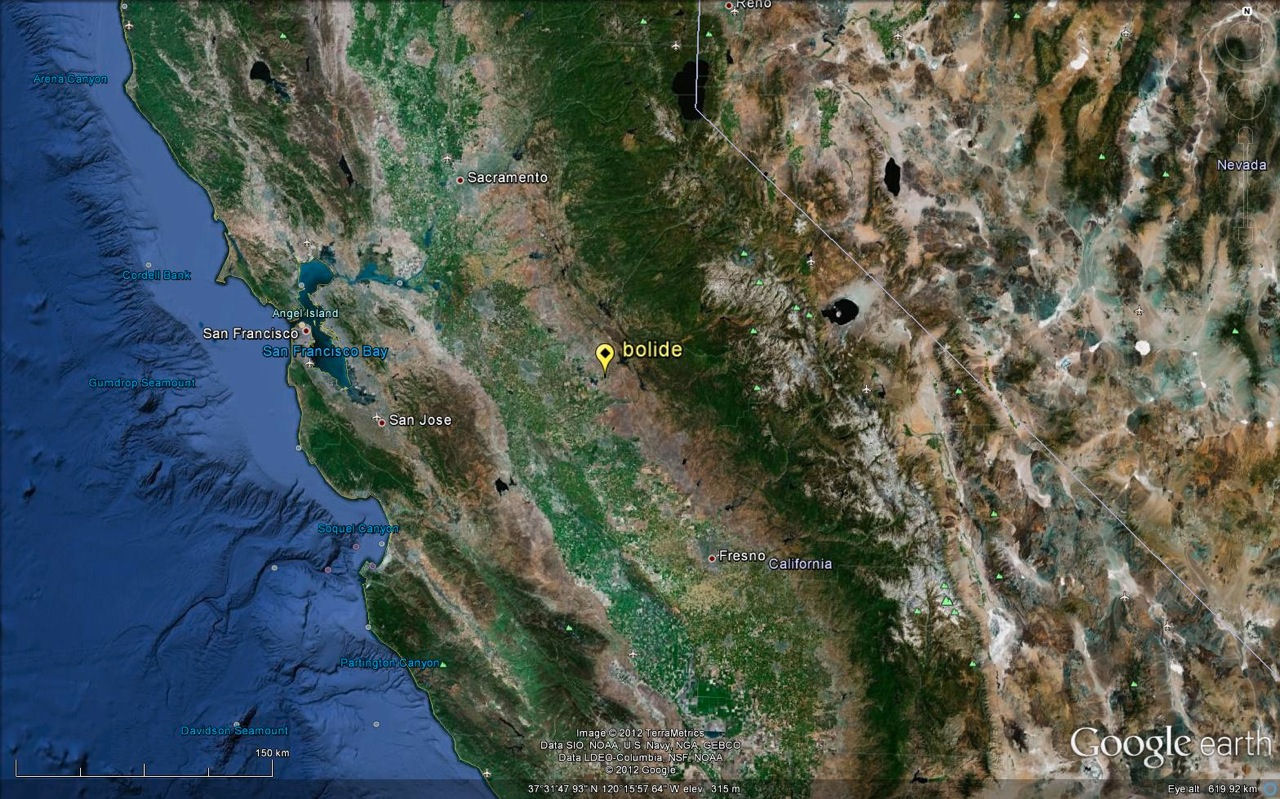
"Elizabeth Silber at Western University has searched for infrasound signals from the explosion," says Cooke. "Infrasound is very low frequency sound which can travel great distances. There were strong signals at 2 stations, enabling a triangulation of the energy source at 37.6N, 120.5W. This is marked by a yellow flag in the map below."
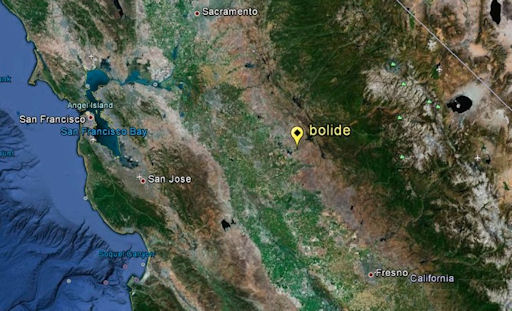
"The energy is estimated at a whopping 3.8 kilotons of TNT, so this was a big event," he continues. "I am not saying there was a 3.8 kiloton explosion on the ground in California. I am saying that the meteor possessed this amount of energy before it broke apart in the atmosphere. [The map] shows the location of the atmospheric breakup, not impact with the ground."
"The fact that sonic booms were heard indicates that this meteor penetrated very low in atmosphere, which implies a speed less than 15 km/s (33,500 mph). Assuming this value for the speed, I get a mass for the meteor of around 70 metric tons. Hazarding a further guess at the density of 3 grams per cubic centimeter (solid rock), I calculate a size of about 3-4 meters, or about the size of a minivan."
"This meteor was probably not a Lyrid; without a trajectory, I cannot rule out a Lyrid origin, but I think it likely that it was a background or sporadic meteor."
News and eyewitness reports: #1, #2, #3, #4.