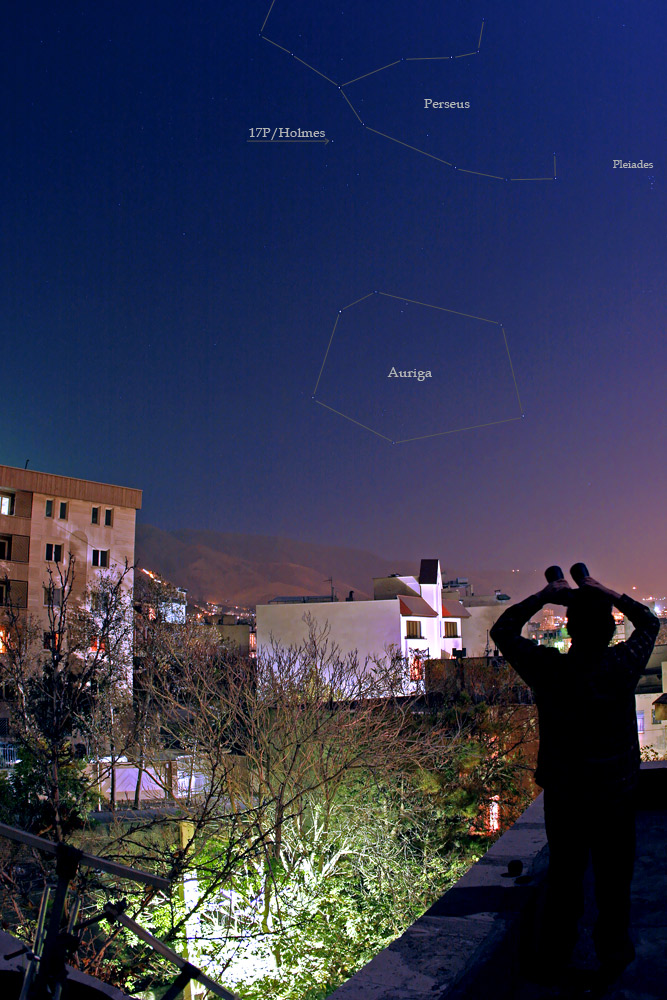
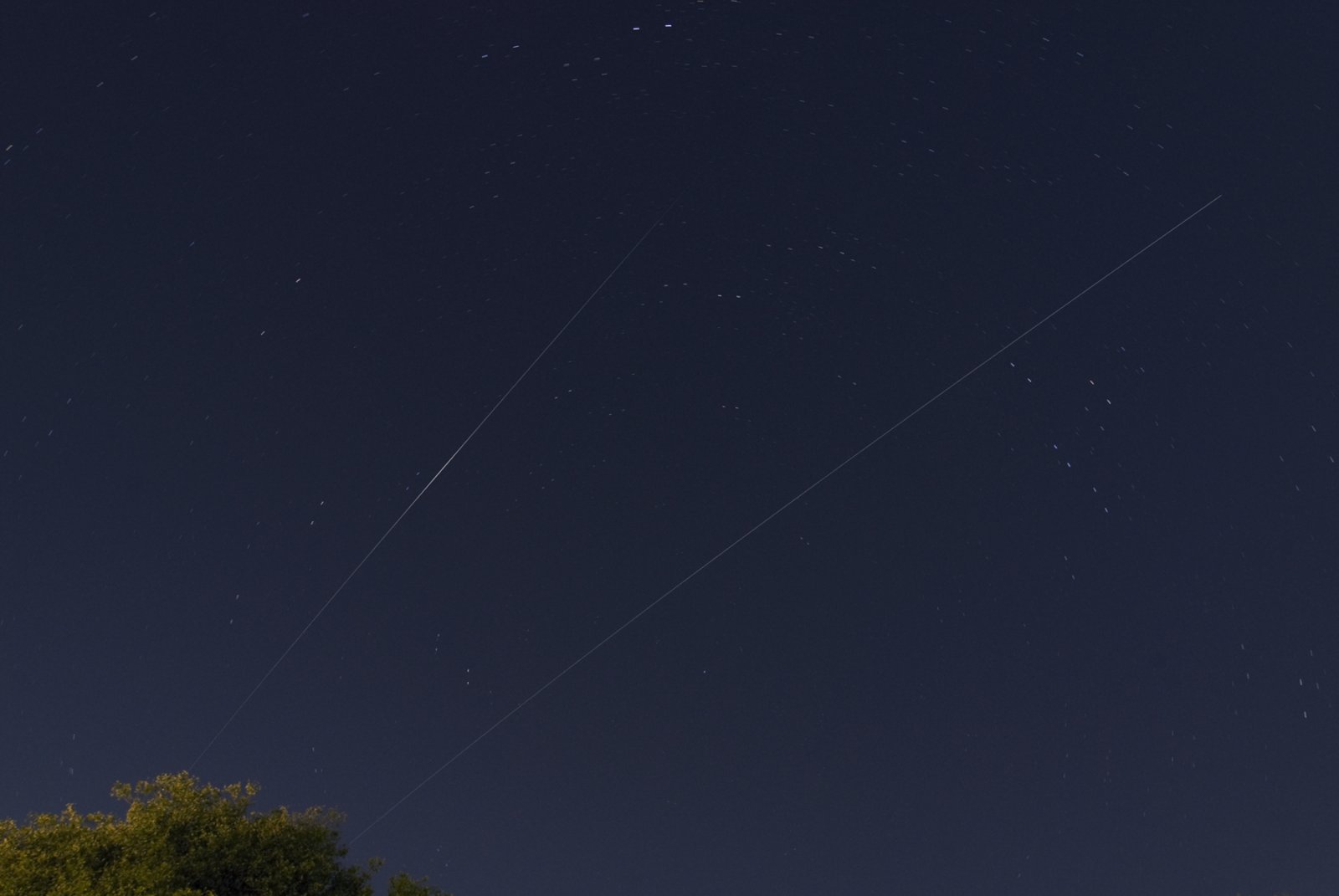
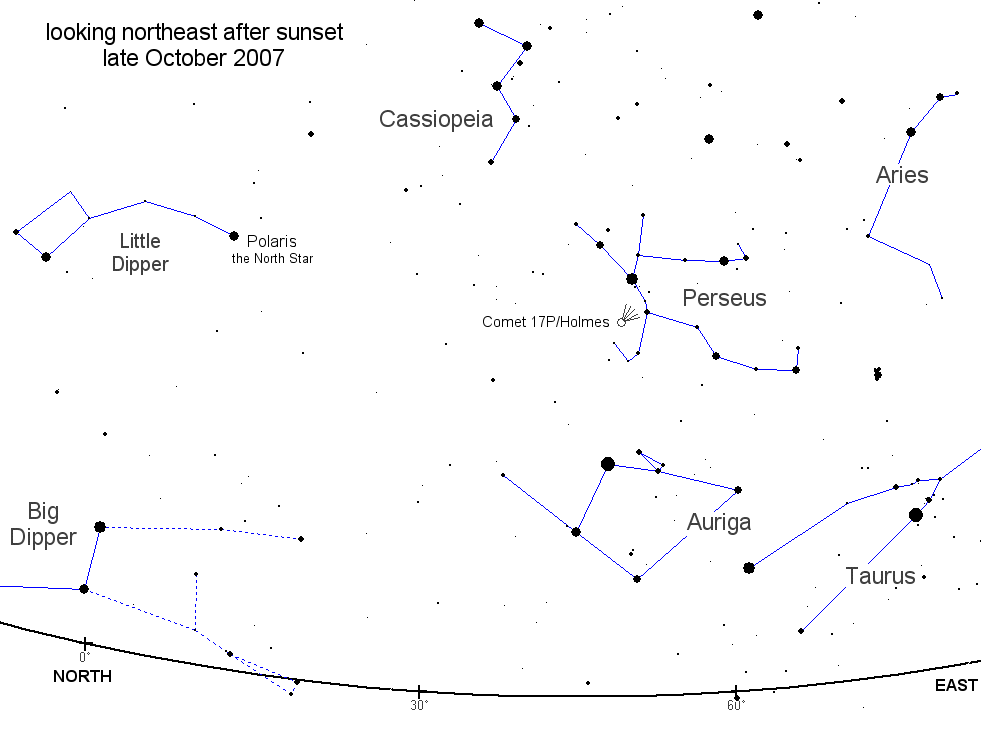
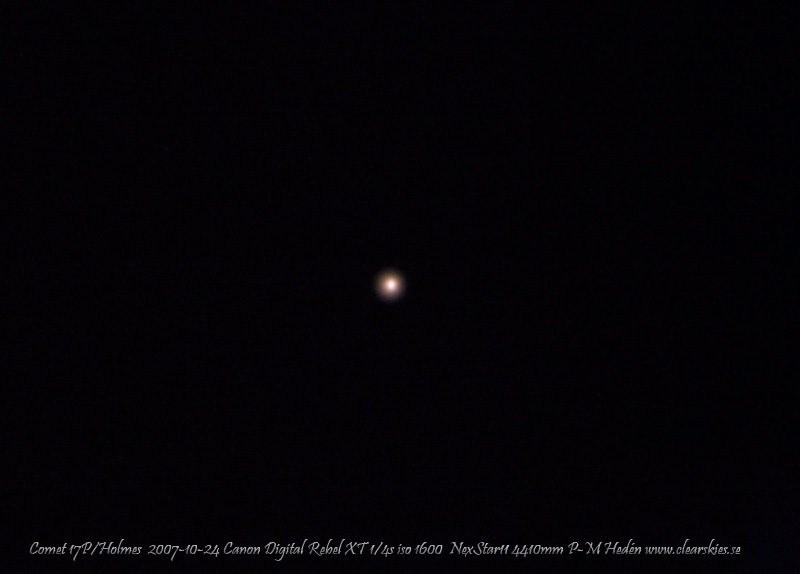
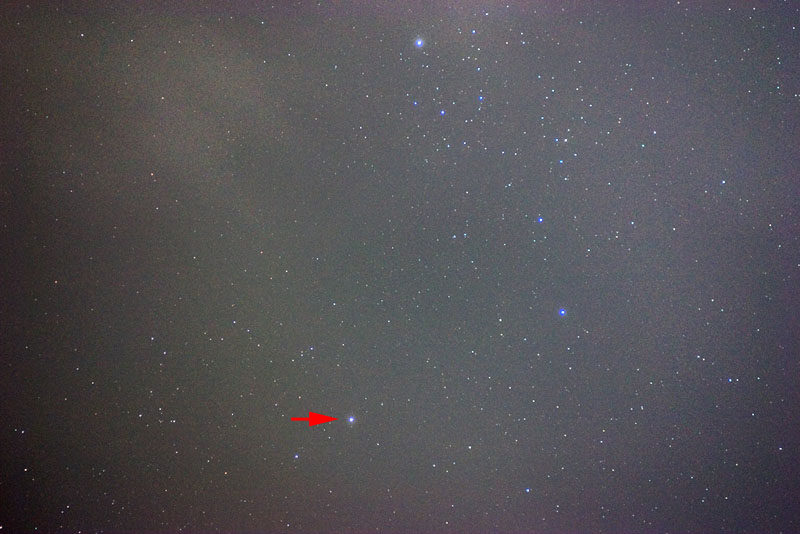
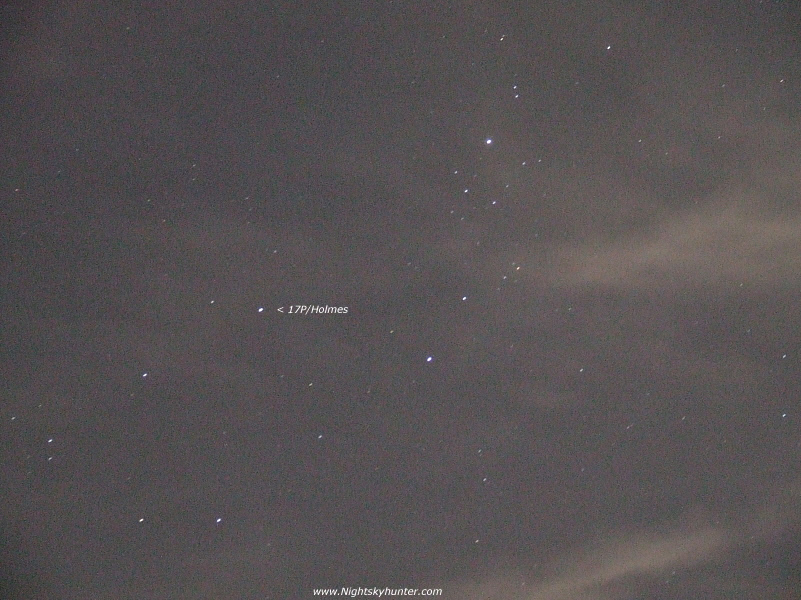
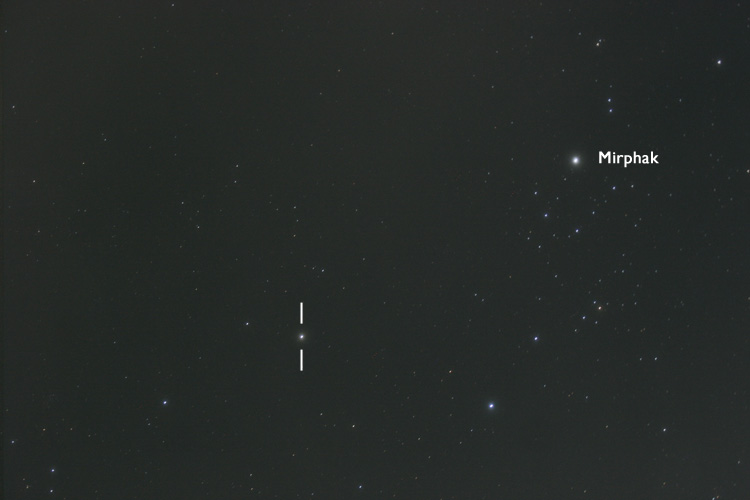
Where's Saturn? Is that a UFO--or the ISS? What's the name of that star? Get the answers from mySKY--a fun new astronomy helper from Meade. Where's Saturn? Is that a UFO--or the ISS? What's the name of that star? Get the answers from mySKY--a fun new astronomy helper from Meade. SPACESHIP SIGHTINGS: Space shuttle Discovery is chasing the ISS around Earth and they're a beautiful sight in the night sky. Witness this picture taken last night by Bryan Tobias of San Antonio, Texas. "The ISS came first and then Discovery 12 minutes later," says Tobias. The two ships will converge on Oct. 24th in preparation for docking on Oct. 25th. Be alert for flybys. HOT NEWS: Astronomers in Japan, Persia and Europe report that Comet 17P/Holmes is undergoing a spectacular eruption. The 17th magnitude comet has brightened by a factor of five hundred thousand or more during the past 24 hours becoming a naked-eye object in the evening sky. Look for a yellow 2.5th magnitude fuzzball in the constellation Perseus after sunset. [sky map] [ephemeris] [3D orbit] "This is unbelievable!" says Iranian astronomer Babak Tafreshi. "I was amazed to find Comet Holmes so easily with the naked-eye in the light-polluted skies of metropolitan Tehran." Click on Tafreshi's photo to pinpoint the comet: 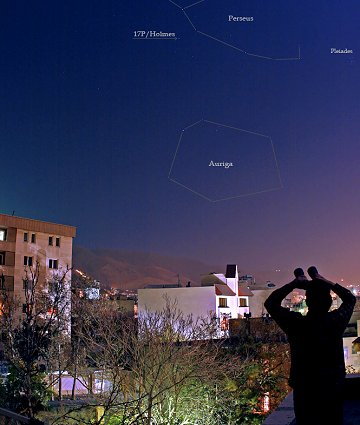
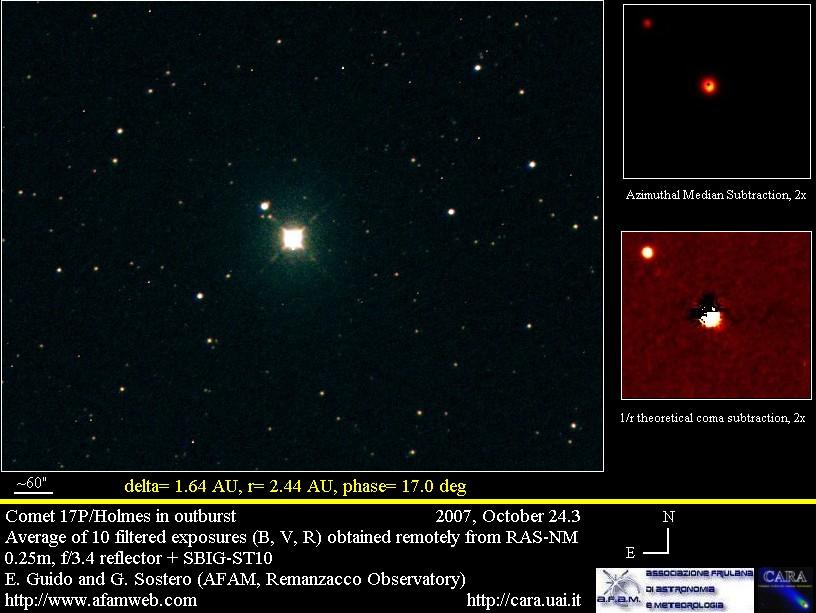
The outburst may signify a breakup of the comet's core or a rich vein of ice suddenly exposed to sunlight--no one knows. At present the comet looks more like a star than a comet; it does not have a discernable tail, but it might grow one as the outburst continues. Amateur astronomers are encouraged to monitor developments using binoculars and backyard telescopes. Stay tuned for updates! more images: from P-M Hedén of Vallentuna, Sweden; from Vladimir Ladinsky of Moscow, Russia; from Martin McKenna of Magheram Co. Derry, N. Ireland; from Runar Sandnes of Reed, Norway; from Ernesto Guido and Giovanni Sostero using a remote-controlled telescope in New Mexico. BIG FULL MOON: This week's full Moon is the biggest full Moon of 2007. It's no illusion. Some full Moons are genuinely larger than others and Thursday night's will be a whopper. Why? Read the answer below. 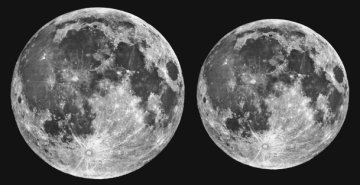
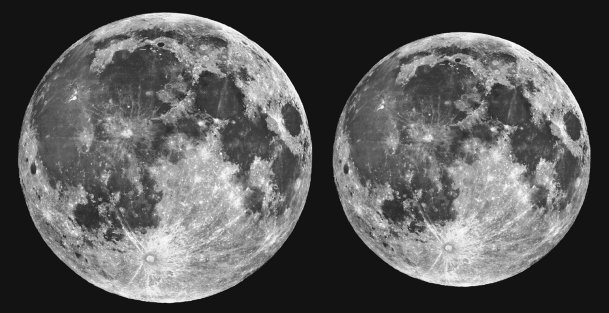
Left: A big, bright perigee Moon. RIght: A lesser apogee Moon.
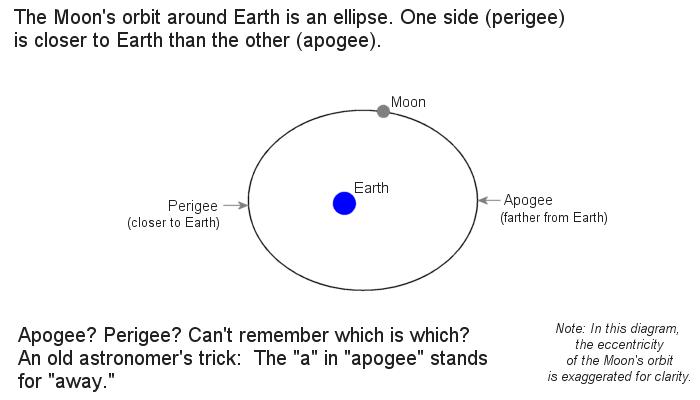
The Moon's orbit is an ellipse with one side 30,000 miles closer to Earth than the other. The full Moon of Oct. 25-26 is located on the near side, making it appear as much as 14% bigger and 30% brighter than lesser full Moons we've seen earlier in 2007. In the language of astronomy, the two ends of the Moon's orbit are called "apogee" and "perigee." Apogee is the farthest point, perigee the nearest: diagram. This week's full Moon is a "perigee Moon" with extra-high "perigean tides." The Moon is 14% bigger, but can you actually tell the difference? It's not so easy. There are no rulers floating in the sky to measure lunar diameters. A fun experiment: Take a friend outside Thursday night and ask if they notice anything unusual about the Moon. Explain perigee after they answer.
October 2007 Aurora Gallery
[September Gallery] [Aurora Alerts] |