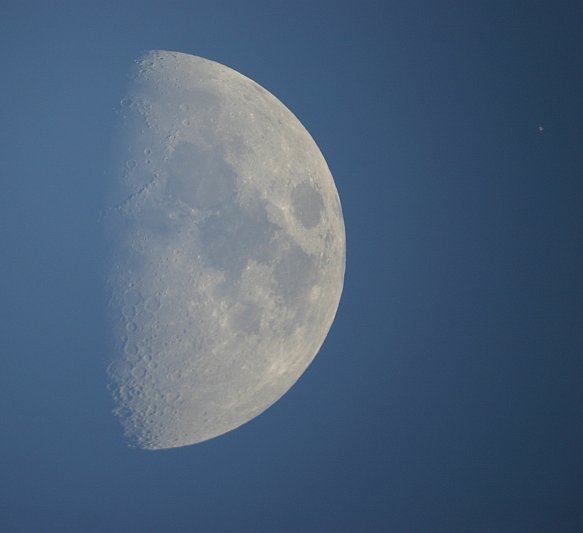
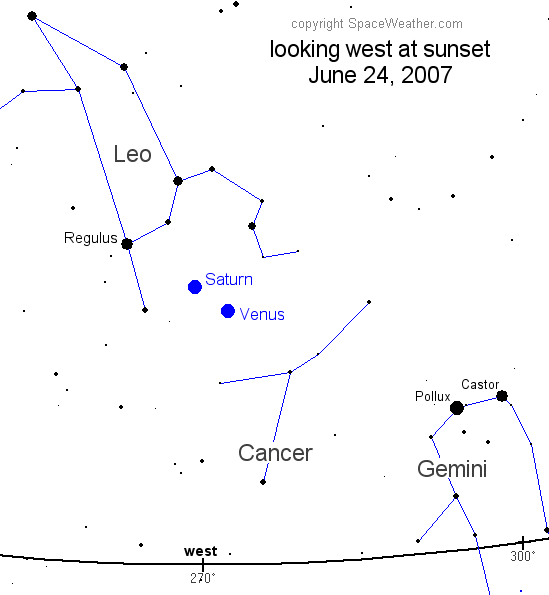
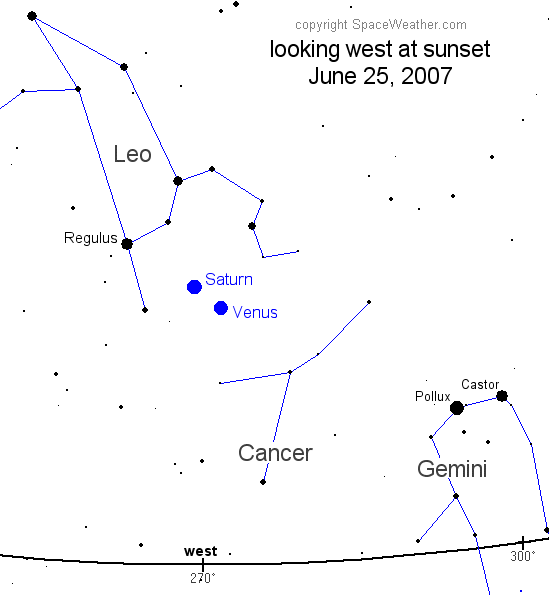
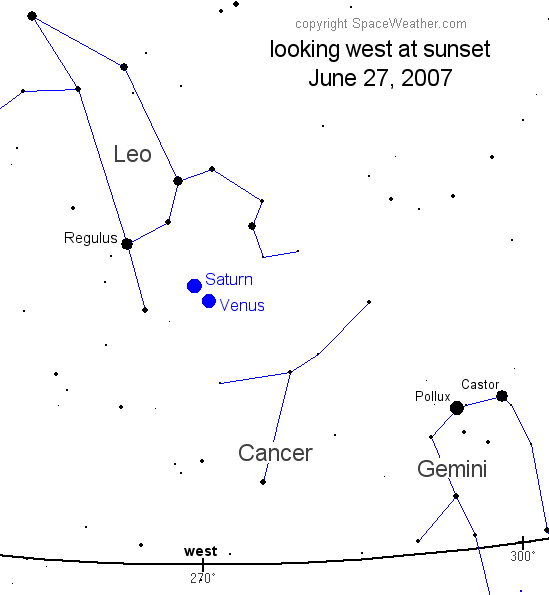
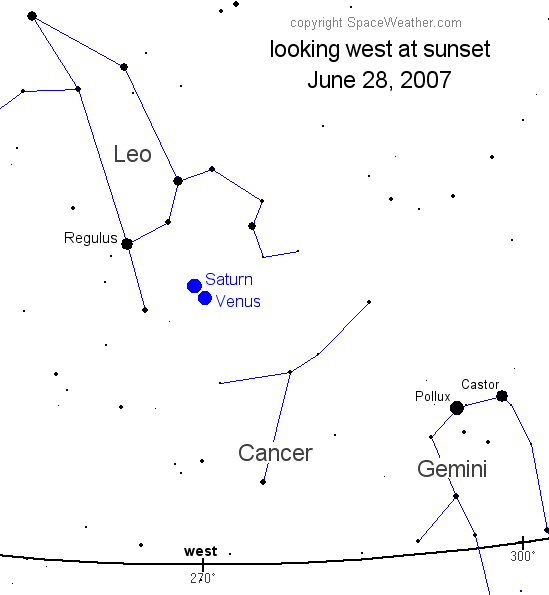
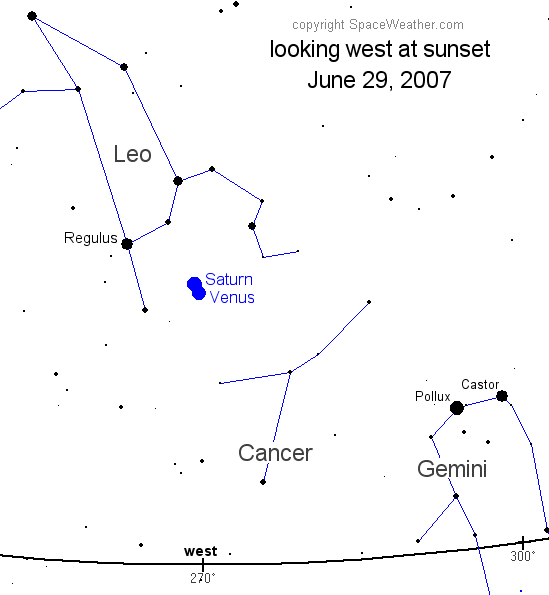
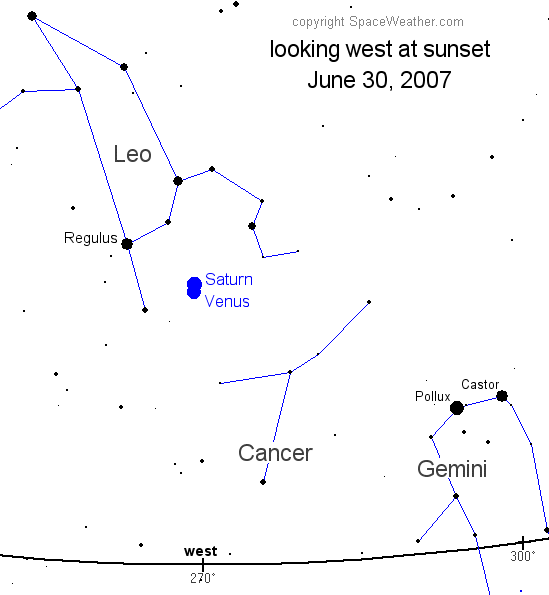
Where's Saturn? Is that a UFO--or the ISS? What's the name of that star? Get the answers from mySKY--a fun new astronomy helper from Meade. Where's Saturn? Is that a UFO--or the ISS? What's the name of that star? Get the answers from mySKY--a fun new astronomy helper from Meade. PLANETS ALIGN: Venus and Saturn are converging for a close encounter on June 30th when the pair will be only 2/3o apart. You can watch the distance shrink in the nights ahead. Step outside after sundown and look west. Venus is the brightest object in the sky; Saturn is the yellow dot right beside it. Sky maps: June 24, 25, 26, 27, 28, 29, 30. DAYLIGHT FLYBYS: The International Space Station is now bright enough to see in broad daylight. Yesterday in Sonnenbuehl-Genkingen, Germany, photographer Martin Wagner caught it gliding past the quarter Moon: 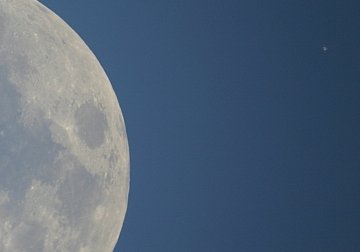
Photo details: 25cm telescope, f=1300mm, Canon EOS 300D, 1/800s, 200 ASA.
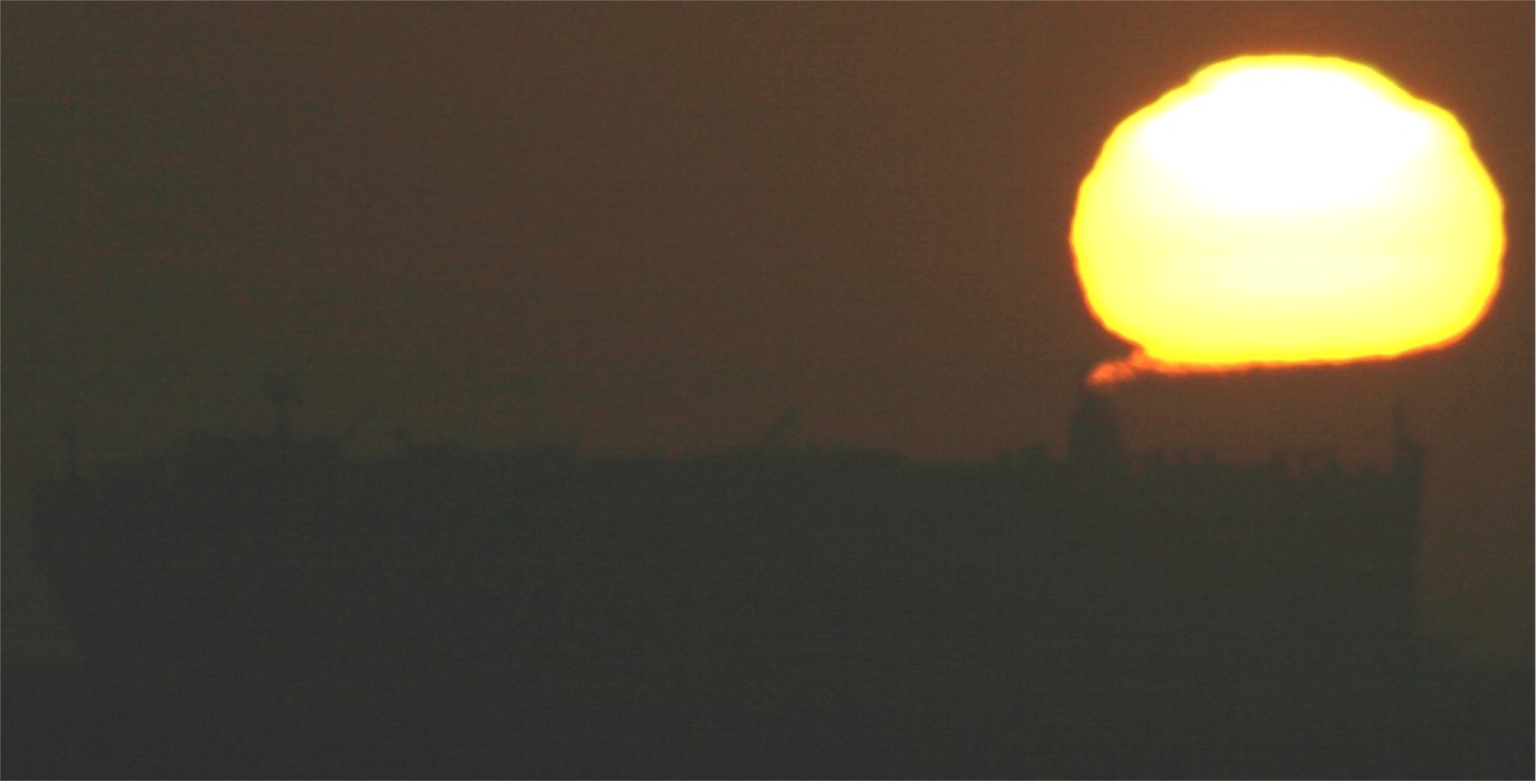
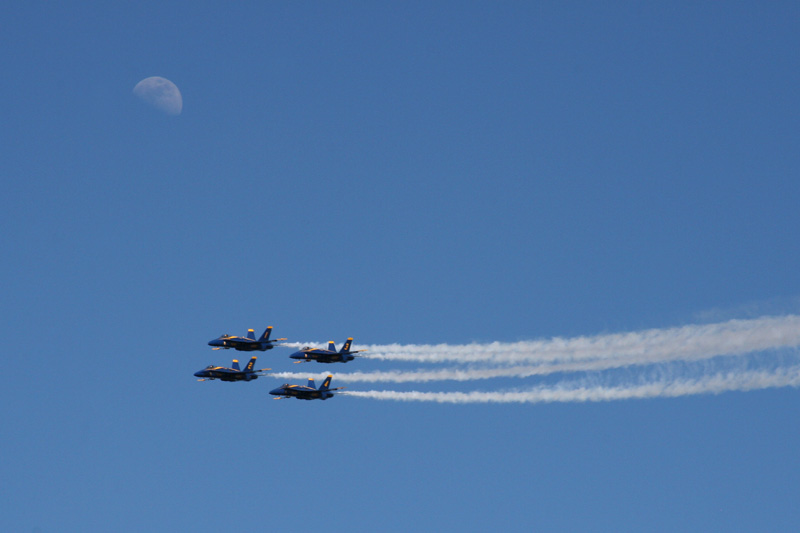
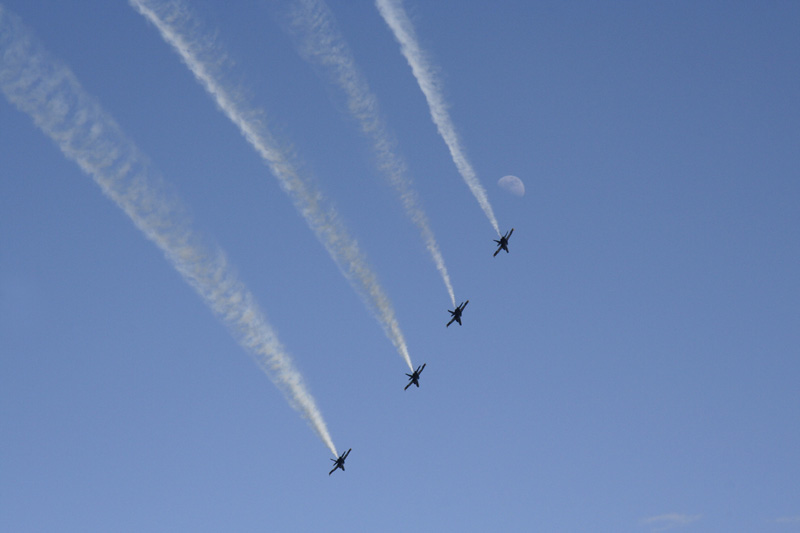
"I saw a light dot coming toward the Moon and took a series of four pictures, hoping that one at least would succeed--and one did! I'm happy to be so lucky," he says. Would you like a call when the ISS is about to fly over your home town? Sign up for SpaceWeather PHONE. BONUS: Some flybys are easier to see than others. "We took these photos of the US Navy Blue Angels F/A-18 Hornets passing close to the Moon during yesterday's air show over North Kingstown, Rhode Island," write Imelda Joson and Edwin Aguirre. Photos: #1, #2. BALL OF FIRE: On June 14th, photographer Mila Zinkova stood on a beach near her home in San Francisco and looked out across the waves. In the distance, a ball of fire emerged from the smokestack of a passing ship: 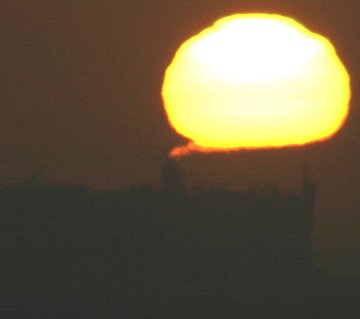
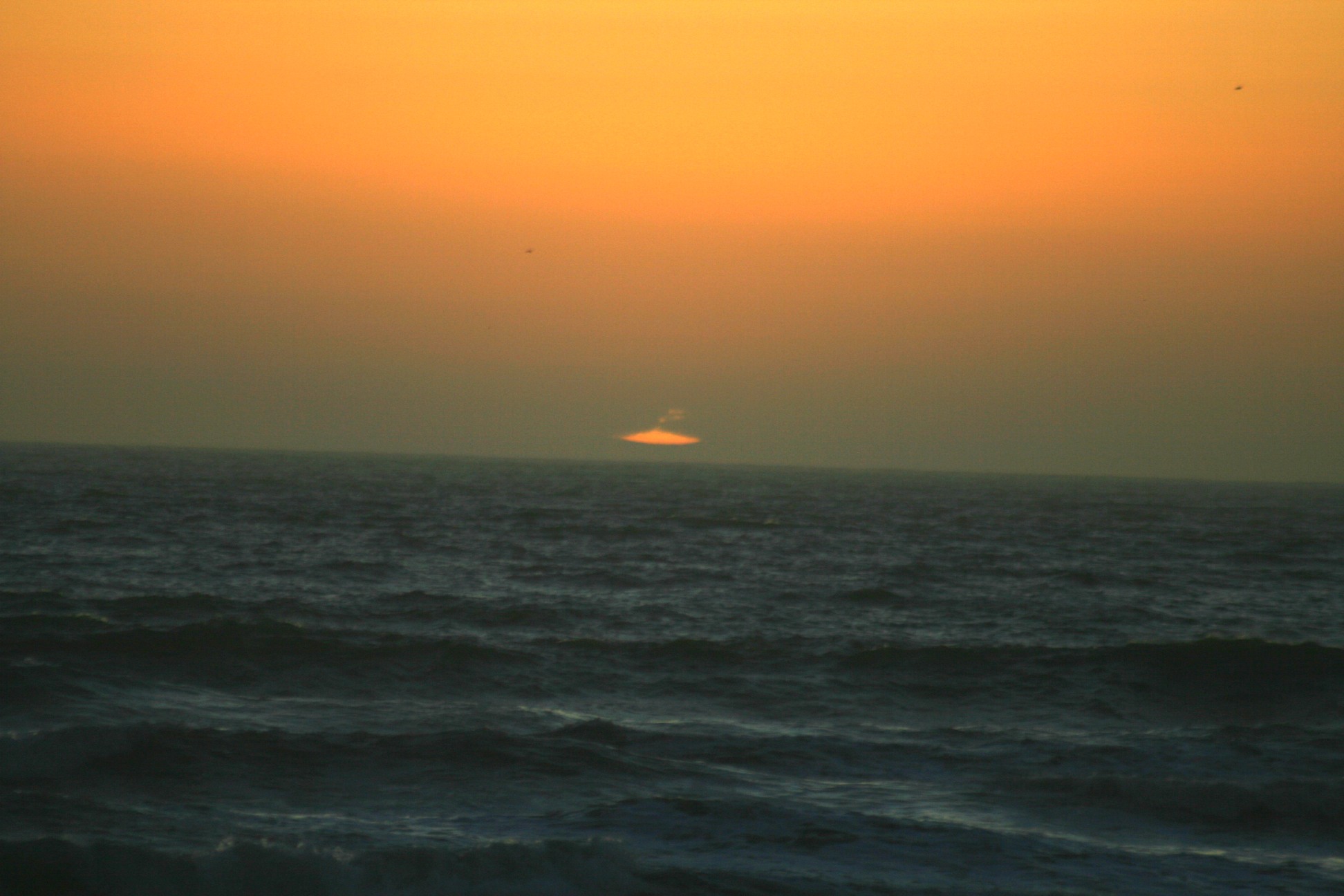
Really, it was the sun. Green flash and mirage specialist Andrew Young explains: "Thermal turbulence in the ship's exhaust plume is scattering light from the sun into the plume, with a deflection of several minutes of arc." Later, as the sun set even further, the distortion grew, producing a figure that "looked like a solar prominence," says Zinkova. This was caused by the turbulent plume of a second ship beyond the horizon. It all goes to show, you never know what you might see when you look at the sunset. |