iPHONE VS ANDROID! Actually, it doesn't matter which phone you carry. Our cool, new app turns both smartphones into field-tested satellite trackers. Learn more. | | |
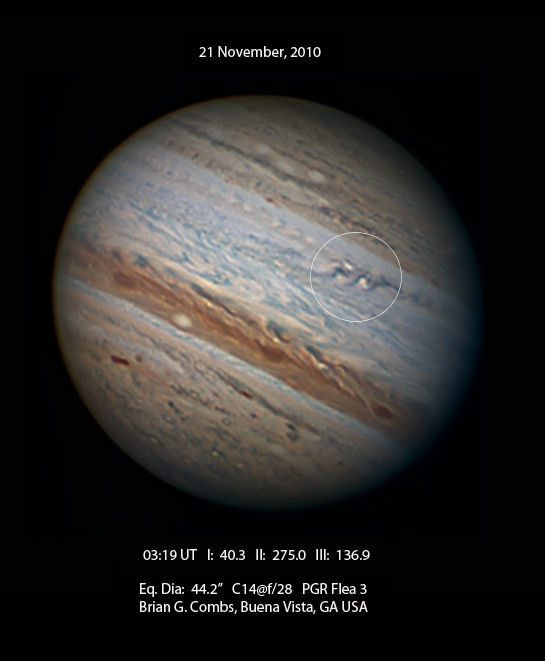
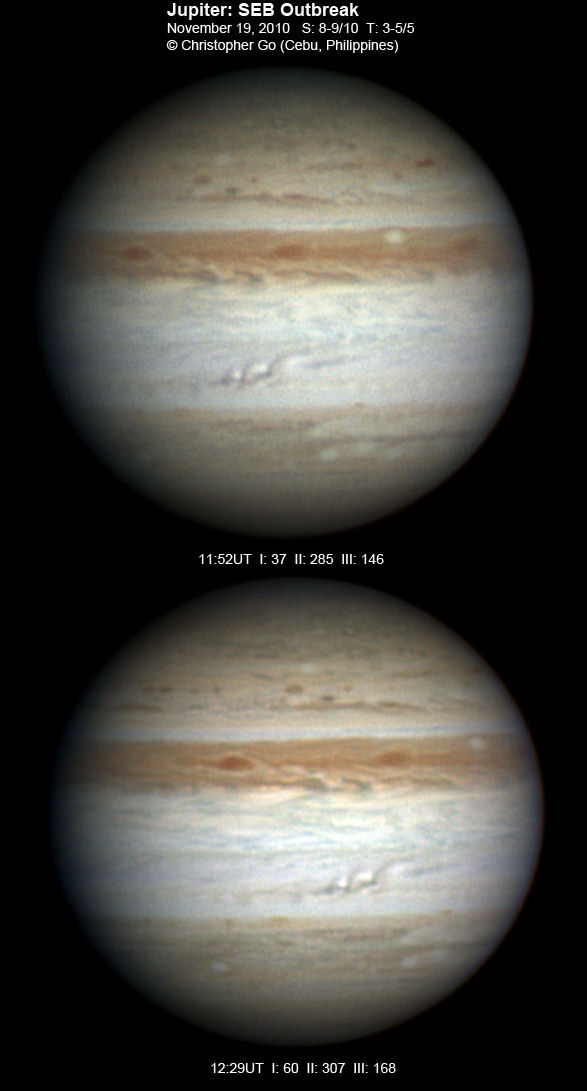
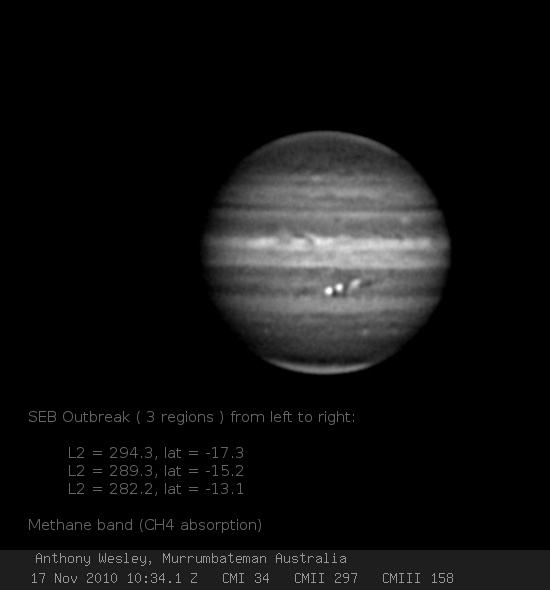
OUTBREAK ON JUPITER: The return of Jupiter's lost stripe (the South Equatorial Belt) is proceeding apace. At least three energetic plumes are breaking through the cloudtops of Jupiter's south equatorial zone, shown here in a weekend photo from Brian Combs of Buena Vista, Georgia. Researchers believe these plumes herald the emergence of the globe-straddling belt, mysteriously absent for nearly a year. more images: #1, #2, #3.
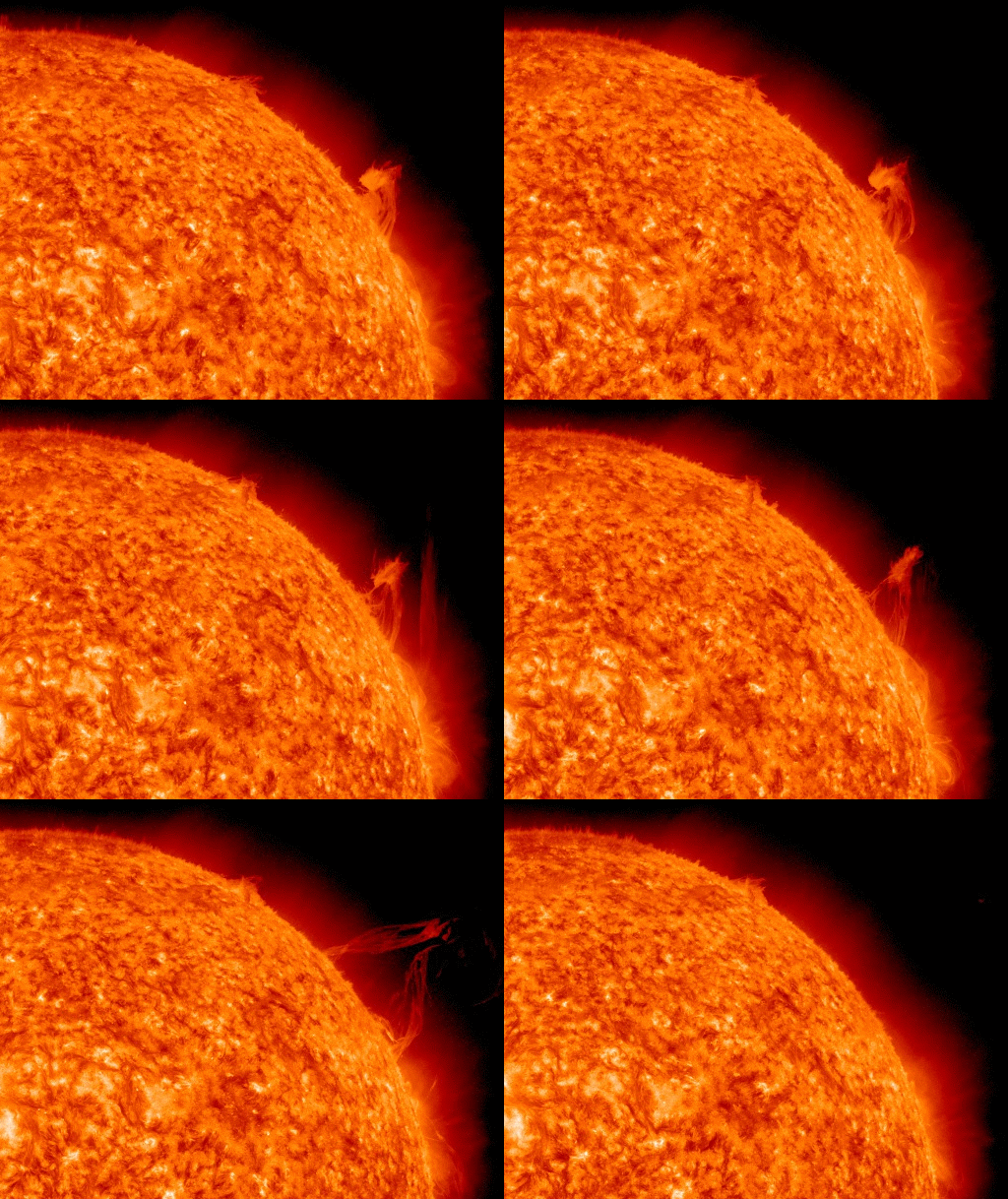
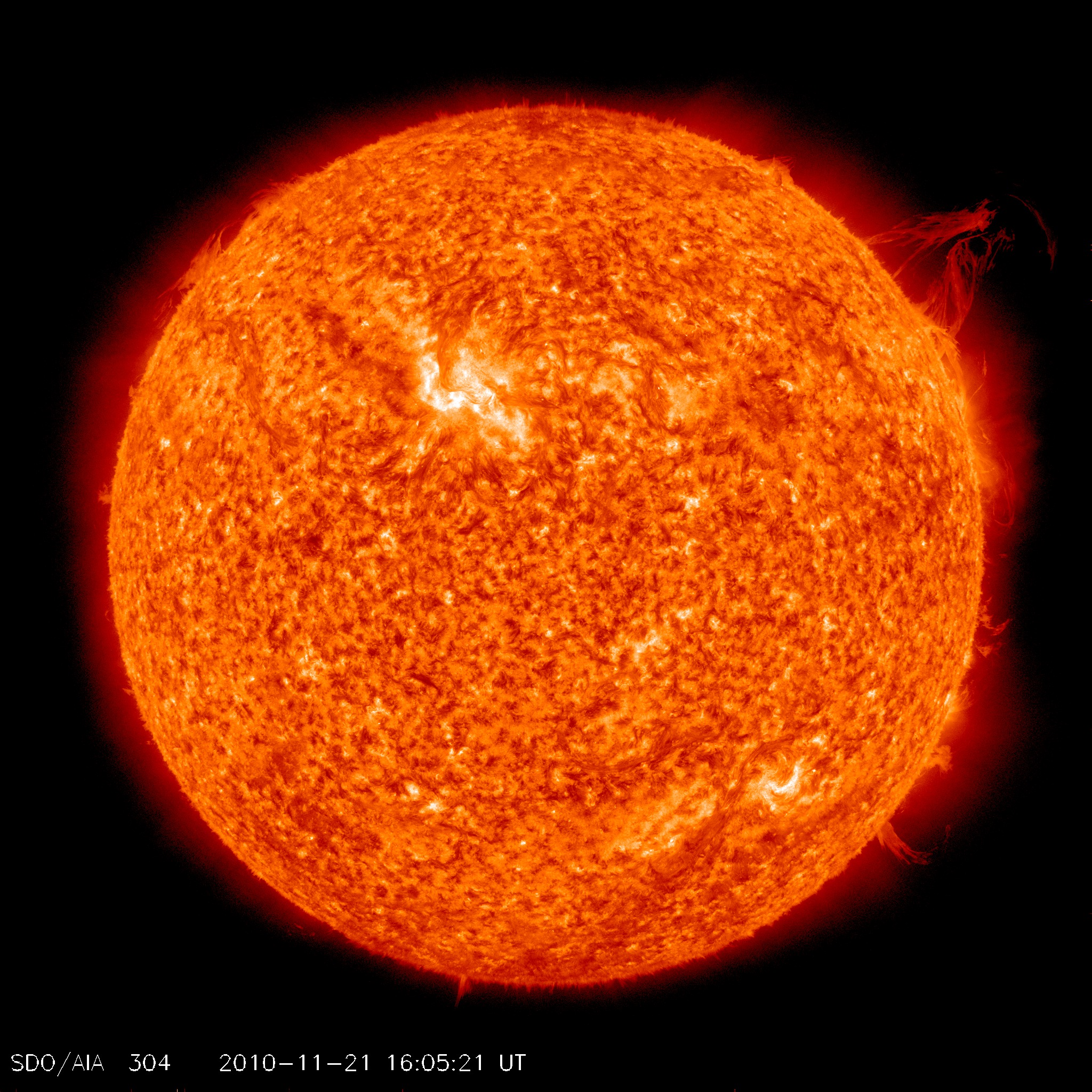
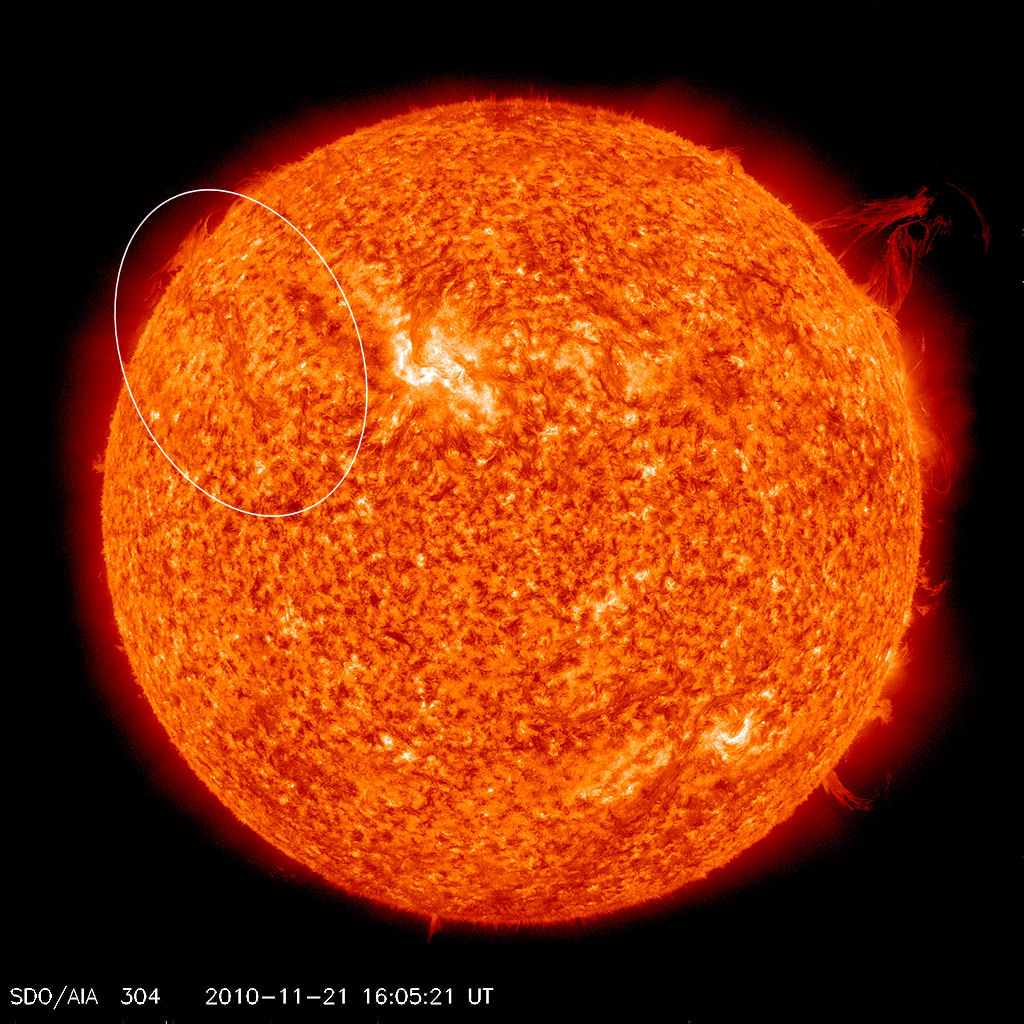
STRESS RELIEF: The tension was just too great. On Nov. 21st around 1600 UT, a twisted filament of solar magnetism suddenly untwisted, producing a towering eruption off the sun's northwestern limb. Click on the image to play a 6-hour time lapse movie from the Solar Dynamics Observatory:
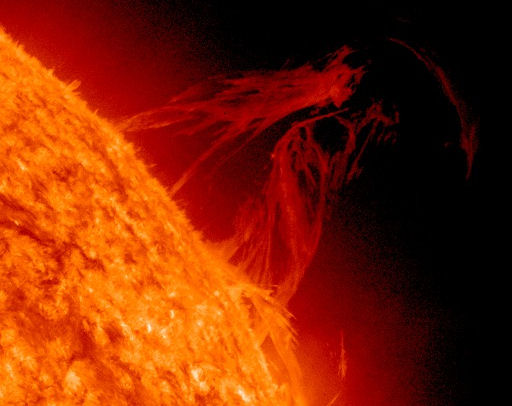
Movie formats: 3 MB gif, 1.2 MB iPad, 0.3 MB iPhone, 1 MB hi-res still frame
Earth was not in the line of fire. No geomagnetic storms or auroras are expected as a result of the blast. Moreover, now that the filament has relaxed, it poses little threat for future eruptions. There is, however, another filament that bears watching. Stay tuned for updates.
ORANGE vs. BLUE MOON: By some reckonings, last night's full Moon was a Blue Moon. The moonrise over Korinthos, Greece however, had a distinctly different hue:
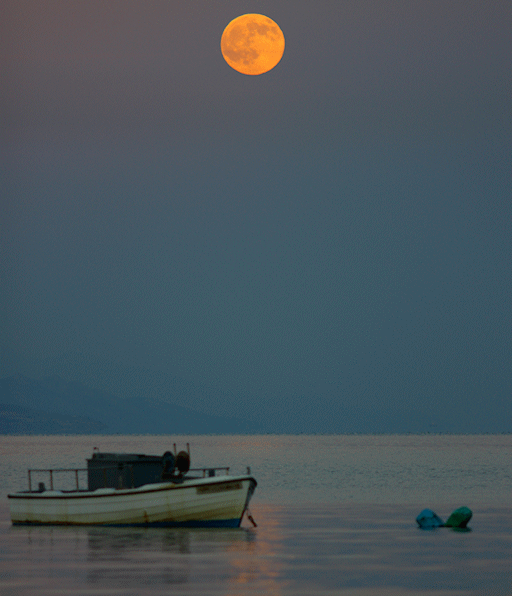
"The orange Moon rising over the Saronic Gulf near Korintthos was a beautiful sight," says Konstantinos Christodoulopoulos, who took the picture using a Canon EOS 450D.
Blue Moons are creatures of folklore, having little to do with actual color. A true-blue moon is a rare sight indeed. Orange moons, on the other hand, are commonplace. Scattering of moonlight by aerosols and air molecules gives the moon an orange tint via the same physics that colors sunsets.
So, actually, that was an ordinary moonrise over Greece. Not bad. Browse the links below for more "ordinary" moons from the weekend of Nov. 20-21.
more images: from Louis Suarato of Catskill Mountains, NY; from P. Nikolakakos of Sparta Greece; from Jin Lu of Tempe, AZ; from Lauri Kangas of Caledon, Ontario, Canada; from Peter Barvoets of Schenectady. NY; from Pete Griffith of Newport, UK
November 2010 Aurora Gallery
[previous Novembers: 2009, 2008, 2007, 2006, 2004, 2003, 2002, 2001, 2000]
Potentially Hazardous Asteroids (
PHAs) are space rocks larger than approximately 100m that can come closer to Earth than 0.05 AU. None of the known PHAs is on a collision course with our planet, although astronomers are finding
new ones all the time.
On November 22, 2010 there were 1164 potentially hazardous asteroids.
Notes: LD means "Lunar Distance." 1 LD = 384,401 km, the distance between Earth and the Moon. 1 LD also equals 0.00256 AU. MAG is the visual magnitude of the asteroid on the date of closest approach. | | The official U.S. government space weather bureau |
| | The first place to look for information about sundogs, pillars, rainbows and related phenomena. |
| | Researchers call it a "Hubble for the sun." SDO is the most advanced solar observatory ever. |
| | 3D views of the sun from NASA's Solar and Terrestrial Relations Observatory |
| | Realtime and archival images of the Sun from SOHO. |
| | from the NOAA Space Environment Center |
| | the underlying science of space weather |