Hang the Transit of Venus on your wall! Hubble-quality images from NASA's Solar Dynamics Observatory are now available as metallic posters in the Space Weather Store. | | |
SOLAR WIND: A medium-speed (~425 km/s) stream of solar wind is buffeting Earth's magnetic field. The solar wind is not blowing hard enough to ignite a full-fledged geomagnetic storm, but it is stirring up some beautiful auroras around the Arctic Circle. Check the realtime aurora gallery for latest images.
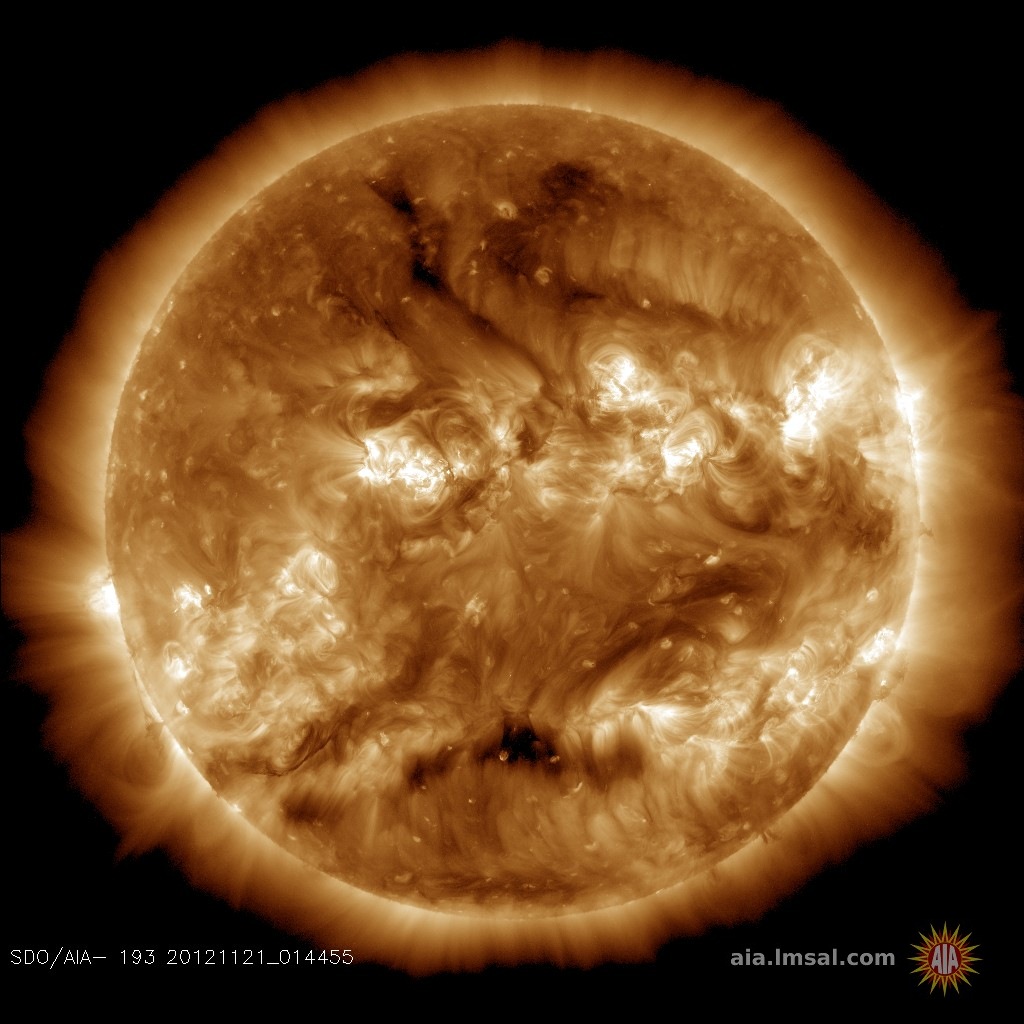
M-CLASS SOLAR FLARES: The magnetic canopy of big sunspot AR1618 is crackling with M-class solar flares. This image taken by NASA's Solar Dynamics Observatory shows the extreme ultraviolet flash from one of them, an M1.6-class flare on Nov. 20th at 1928 UT:
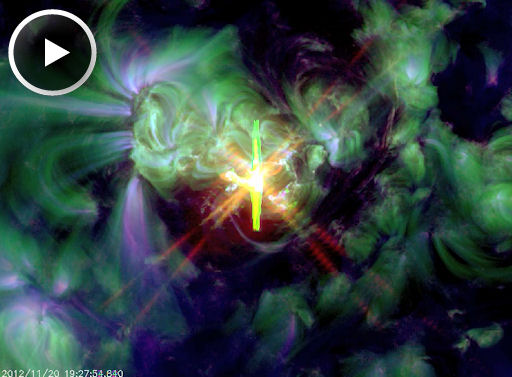
This eruption, and another one like it about 7 hours earlier, might have propelled faint coronal mass ejections (CMEs) toward Earth. If so, the impacts would likely commence on Nov. 23rd, with a chance of high-latitude geomagnetic storms following their arrival. Stay tuned for updates. Aurora alerts: text, voice.
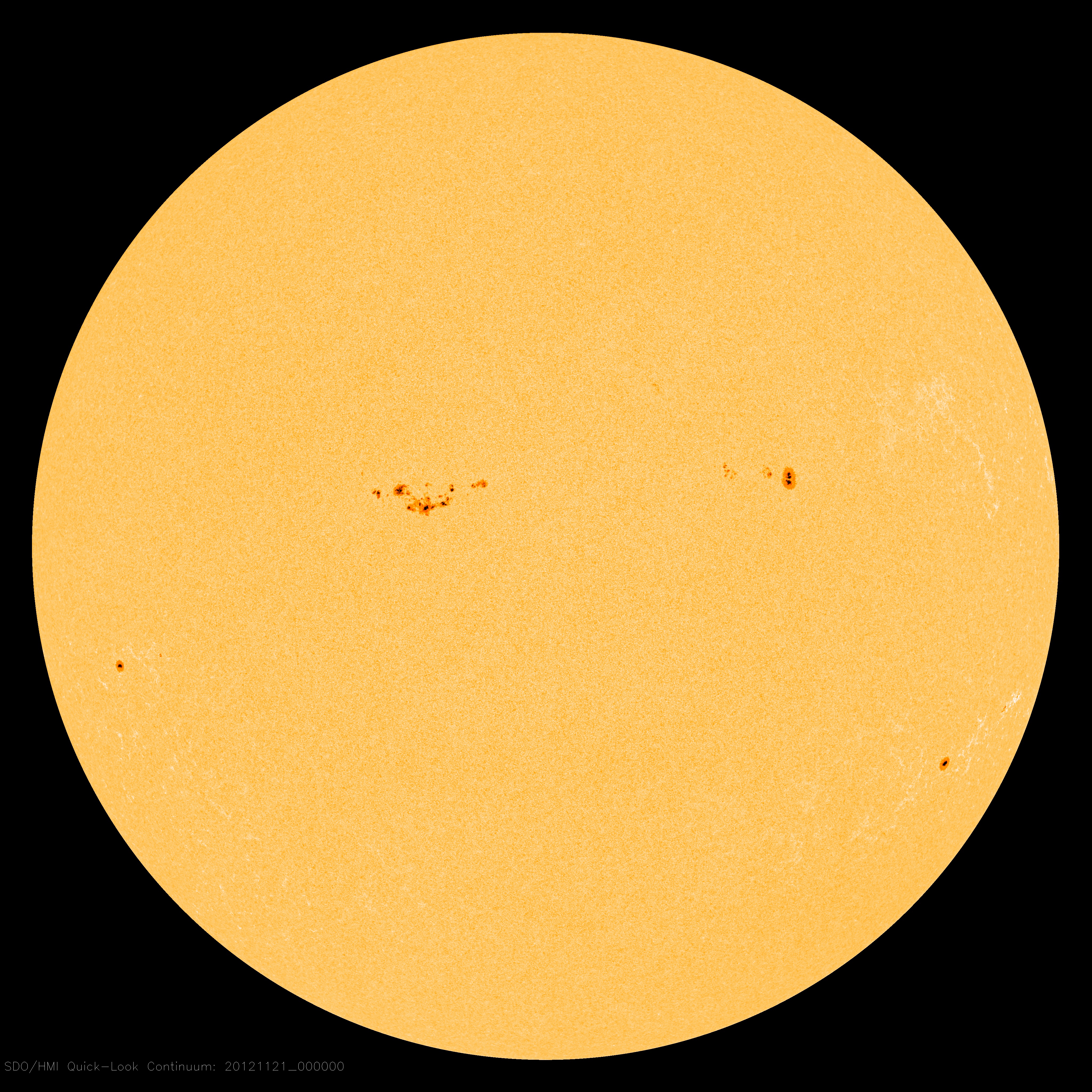
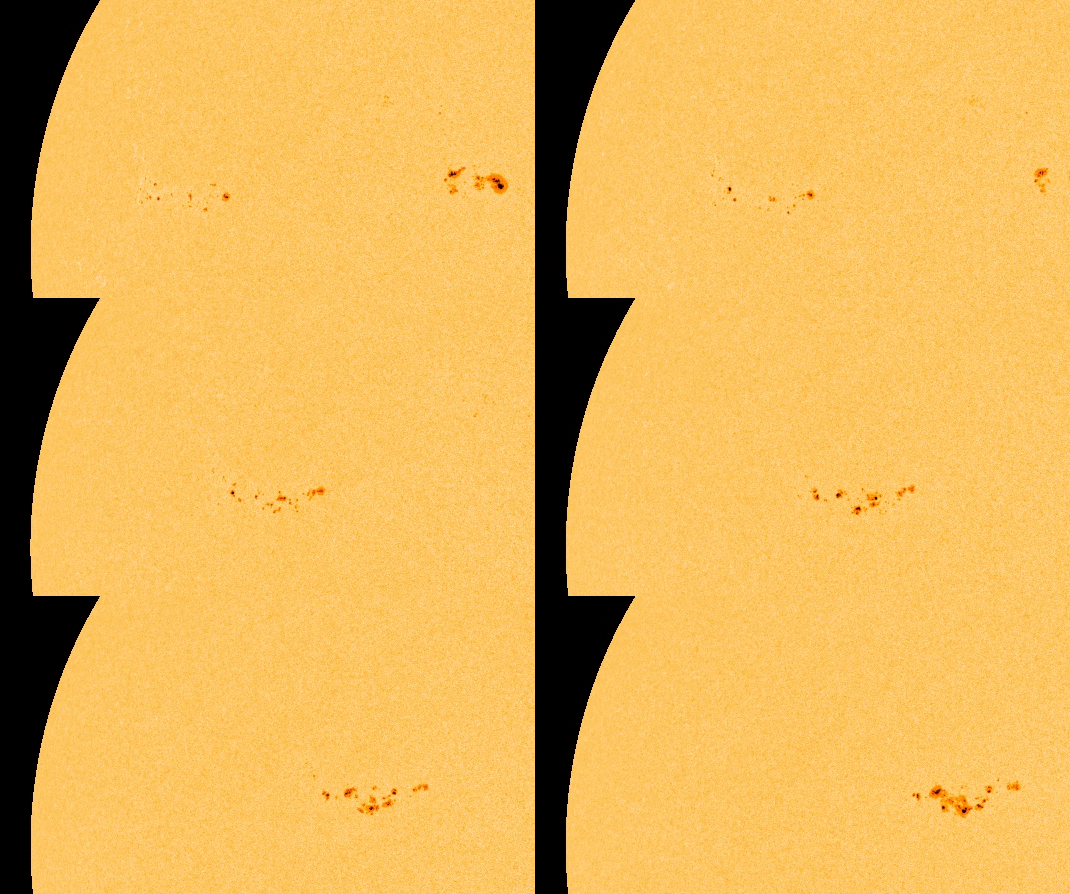
FAST-GROWING SUNSPOT (Updated Nov. 21): Only a few days ago, sunspot AR1618 was almost invisible. Now it is a behemoth more than 10 times wider than Earth. A movie from NASA's Solar Dynamics Observatory shows the sunspot's development on Nov. 20-21:
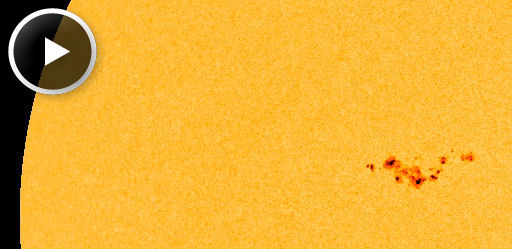
As the sunspot evolves, so does its intense magnetic field--and this means strong flares are in the offing. Fast-changing magnetic fields on the sun have a tendency to reconnect and erupt. NOAA forecasters estimate a 70% chance of M-class flares and a 15% chance of X-flares during the next 24 hours. Because of the sunspot's nearly central location on the solar disk, any eruptions will likely be Earth-directed. Solar flare alerts: text, voice.
Realtime Space Weather Photo Gallery
INSIDE THE SHADOW OF THE MOON: On Nov. 13/14, the Moon passed directly i front of the sun. This arrangement, which produced a total eclipse, cast the shadow of the Moon directly down on northeast Australia. Using a wide-field camera, eclipse-chaser Alan Dyer photographed the shadow as it raced across the sky over Lakeland Downs, Queensland. Scan the images, then read Dyer's account of the shadow-transit below:
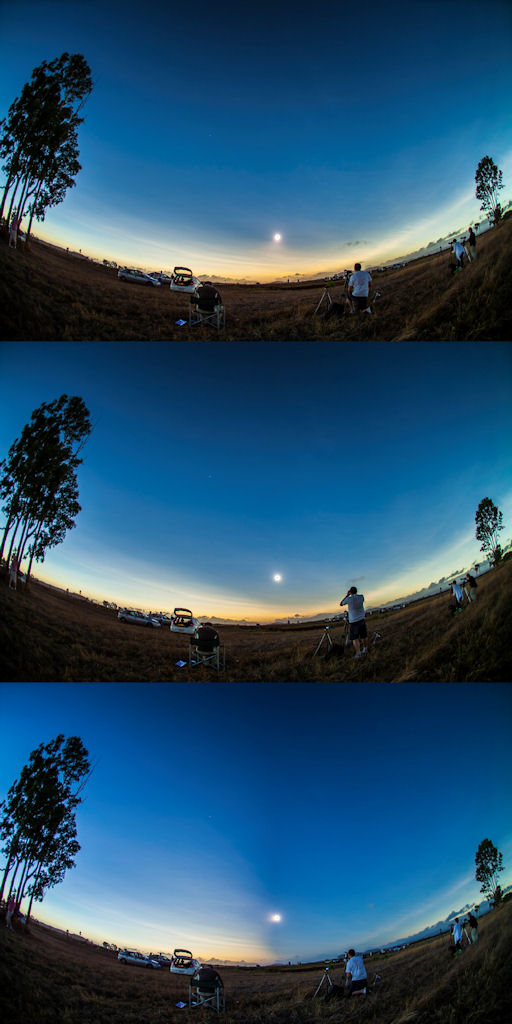
"This collage of wide-angle shots shows the motion of the Moon's conical shadow," he explains. "At top, you can see the bottom edge of the shadow just touching the Sun. This was second contact and the diamond ring effect that begins totality. The middle frame was taken near mid-eclipse and shows the bright horizon beyond the Moons shadow. However, the Sun is not centered on the shadow because we were located well north of the eclipse's center-line, where we had gone to escape nearby clouds. The bottom frame was taken at the end of totality as the first bit of sunlight bursts out from behind the Moon. Notice the sun sitting at the well-defined left edge of the Moon's shadow. The shadow moved off to the right."
People who have experienced total eclipses first-hand say the Moon's shadow is one of the most amazing aspects of the experience. Its arrival causes many birds to stop singing; a hush descends on the landscape as the sky darkens and the air temperature suddenly drops. The Moon's shadow lances more than a quarter million miles across the silent vacuum of space, and when it lands on Earth, it seems to bring a bit of otherworldly cold with it.
For more otherworldly images of the eclipse, browse the gallery:
Realtime Eclipse Photo Gallery
Realtime Noctilucent Cloud Photo Gallery
[previous years: 2003, 2004, 2005, 2006, 2007, 2008, 2009, 2011]