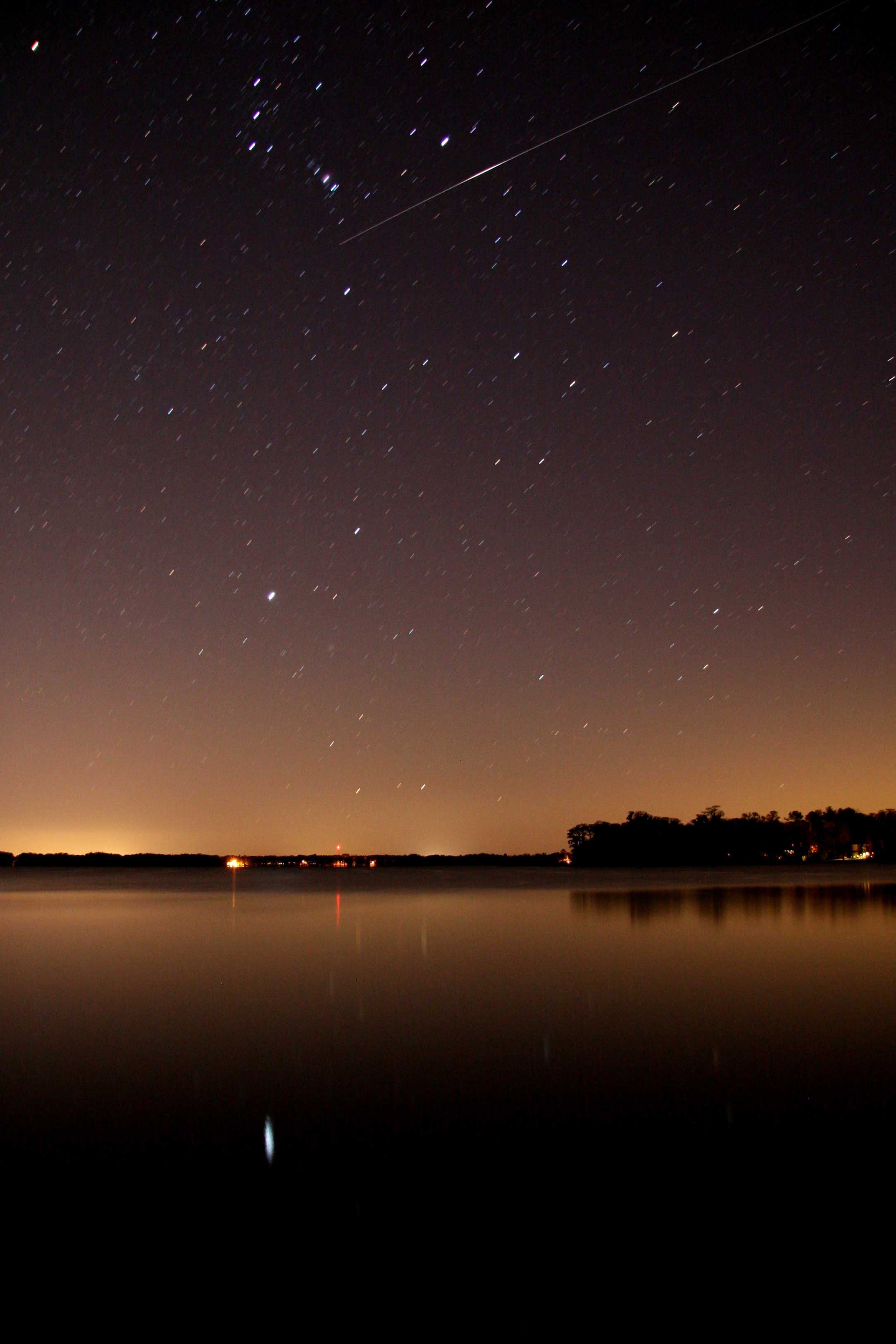
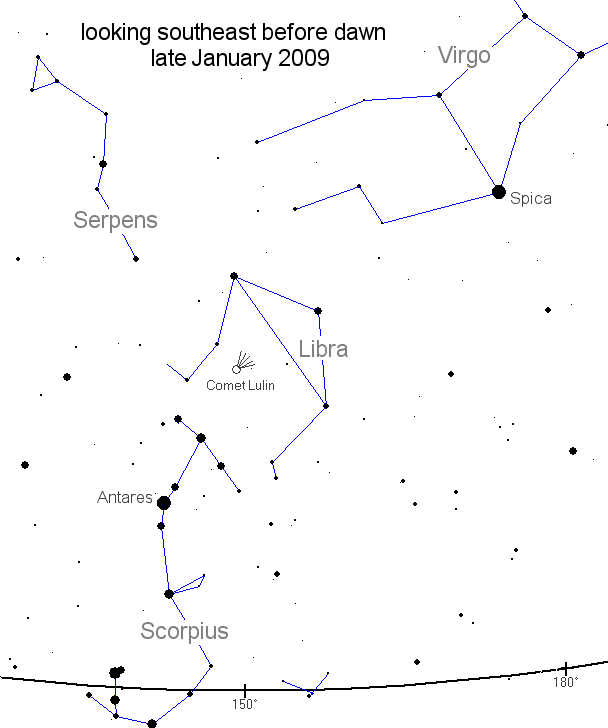
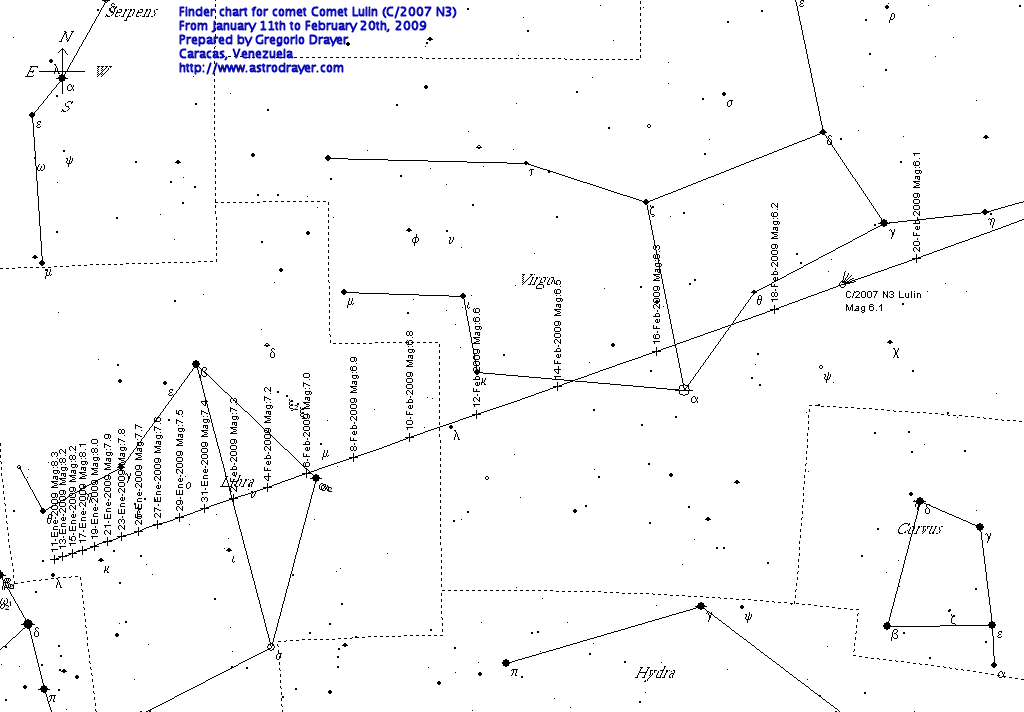
| COMET LULIN UPDATE: "Right now, Comet Lulin (C/2007 N3) is an easy target for binoculars and small telescopes," reports Mariano Ribas of Buenos Aires, Argentina. "It is visible despite our strong urban light pollution. I have been observing the comet during the hours before dawn and estimate its visual magnitude as +7. Maybe this will not be a 'great' comet like McNaught was two years ago, but I look forward to a good show in the weeks ahead as Comet Lulin approaches Earth." [gallery] [sky map] [finder chart] HUBBLE FLARE: The Hubble Space Telescope is not the brightest light in the night sky. Soaring overhead, it typically shines like a 2nd magnitude star, a pinprick of middling luminosity and nothing to get excited about--that is, not until it flares. "Last night, I saw the Hubble brighten dramatically," reports Mark Staples of Waldo, Florida. "It was almost as bright as Venus." He captured the flare during an 82-second exposure with his Canon 30D: 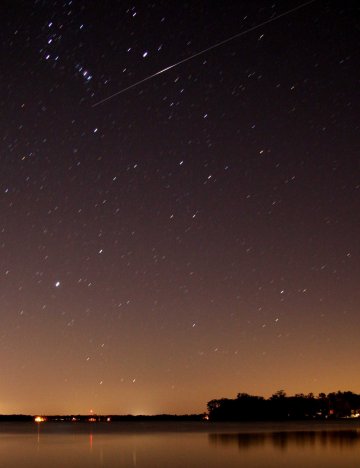
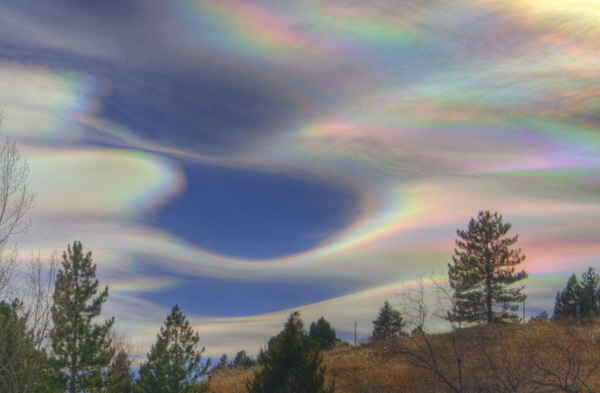
Hubble flares have been observed before. They are caused by sunlight glinting off the flat back surface of the spacecraft where the primary mirror is located. The sudden glints are practically impossible to predict. They depend not only on the ever-changing shape of the Sun-Earth-Hubble triangle, but also on the details of Hubble's observing schedule. The pointing of the telescope determines how the back-plane is tilted and, thus, the possibility of a flare. The only way to catch one is to spend time looking. Check the Simple Satellite Tracker to find out when Hubble is going to fly over your backyard. You may be in for a pleasant surprise! LEE WAVE IRIDESCENCE: Invisible to the human eye, air flowing over the Rocky Mountains bobs up and down in giant waves known as lee waves. On Jan. 2nd, these waves became temporarily visible when clouds caught in the wave-pattern lit up with beautiful iridescence: 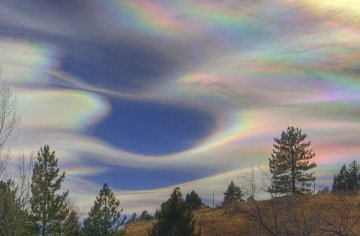
"The pastel colors were lovely and the billowing cloud shapes were quite fascinating," says photographer Harold Leinbach of Boulder, Colorado. "I took the picture using my Canon Rebel XT." Iridescence is caused by droplets of water diffracting sunlight. We often see hints of iridescent color in ordinary clouds far from mountain ranges. Lee waves intensify the phenomenon, creating a sky-wide tableau of vivid pastel. Atmospheric optics expert Les Cowley explains: "For brightly-colored iridescence you need cloud droplets of all the same size. You get that if all the droplets have formed at the same time and experienced the same history. Dynamic conditions inside a lee cloud are just what the doctor ordered. The clouds look stationary but inside there is a 'factory conveyor' with uniform droplets formed at one end and evaporated at the other. Voila - iridescence." Lee waves may be found downwind of all mountains--not just the Rockies. If you live in the lee, keep an eye out for pastels in the sky.
|