Metallic photos of the sun by renowned photographer Greg Piepol bring together the best of art and science. Buy one or a whole set. They make a stellar gift. | | |
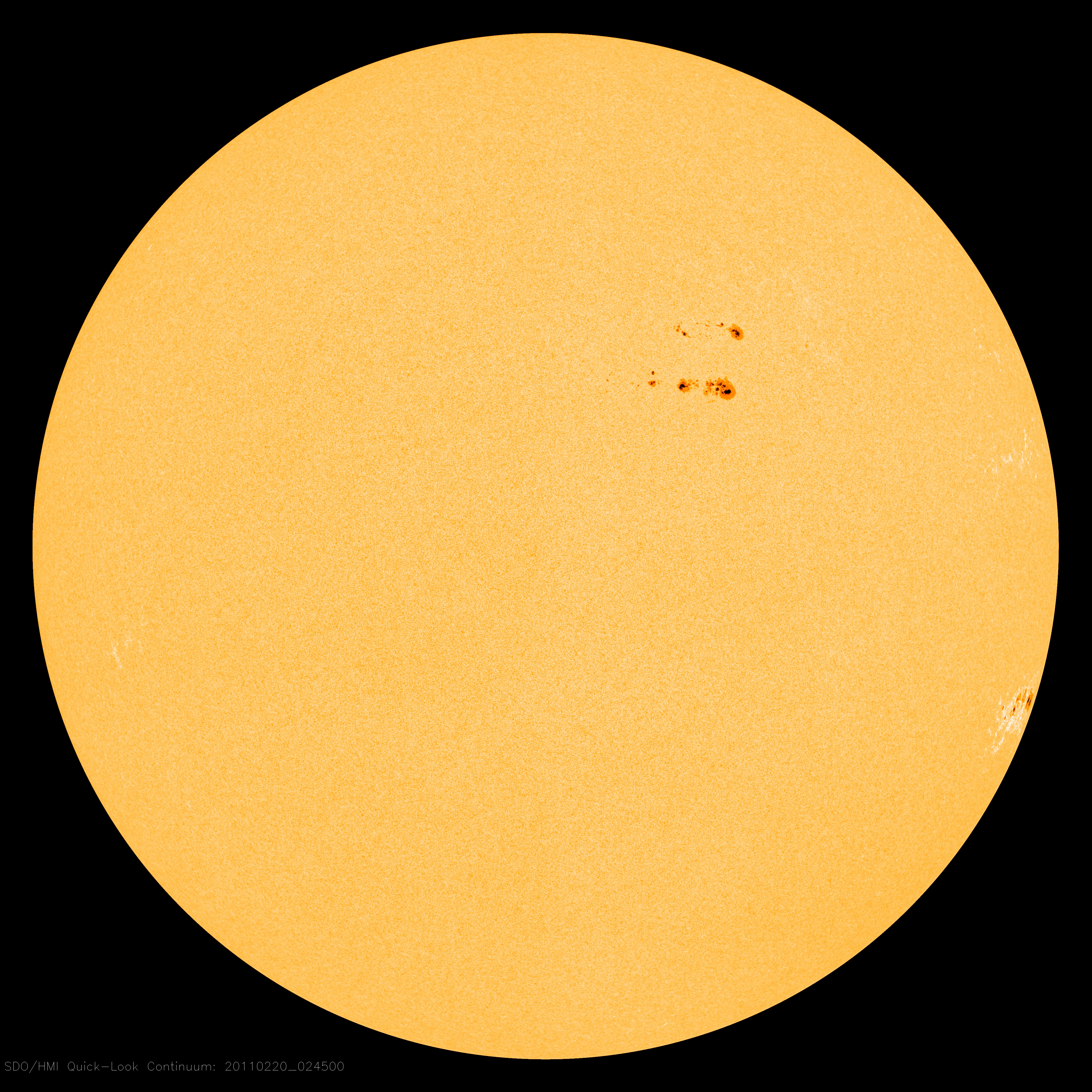
MEANWHILE ON THE FARSIDE: For the past week, all eyes have been on the Earth-side of the sun, where sunspots 1158 and 1161-1162 have unleashed some of the strongest flares in years. Meanwhile, the farside of the sun has been busy, too. Regard this movie from NASA's STEREO-B probe covering the first 20 hours of Feb. 19th. A huge active region is transiting the farside and crackling with flares; it will turn toward Earth in about a week. What's the best way to keep track of the sun's farside? Download 3D Sun for the iPhone and iPad. (Note: An Android version will soon be available.)
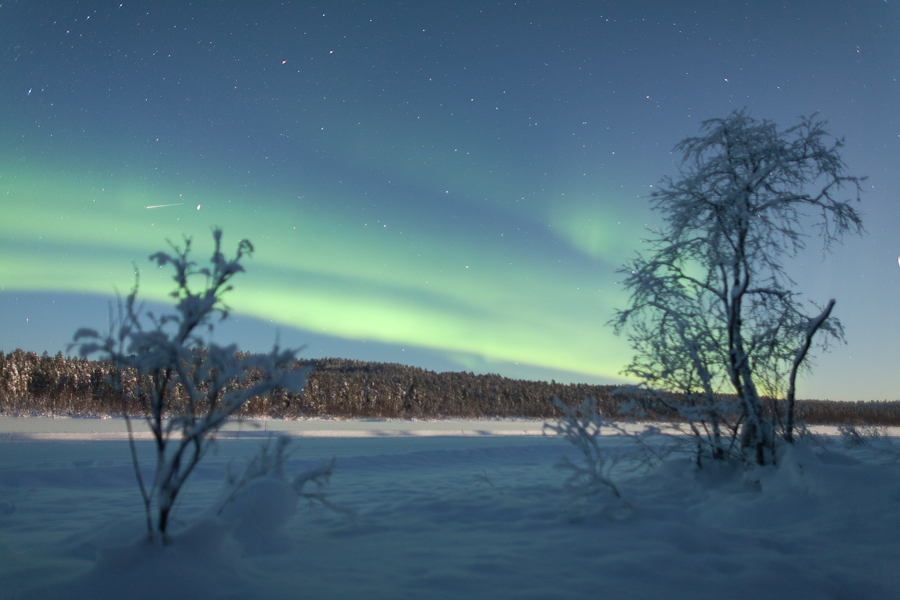
WEEKEND AURORAS: On Saturday night, Feb. 19th, the interplanetary magnetic field (IMF) near Earth tipped south. This opened a crack in Earth's magnetosphere; solar wind poured in and fueled a display of Northern Lights around the Arctic Circle:

"It was a truly wonderful night," says photographer Andy Keen of Inari, FInland. "We were out until 2am taking pictures of auroras dancing over the moonlit landscape."
Readers, would you like to see scenes like this with your own eyes? Keen is willing to take you on an aurora tour. Click here for details.
UPDATED: February 2011 Aurora Photo Gallery
[previous Februaries: 2010, 2009, 2008, 2007, 2006, 2004, 2003, 2002]
FLICKERING SOLAR SAIL: NASA has joined forces with Spaceweather.com to stage a solar sail photography competition. Top prize: $500. Peter Rosen hasn't won yet, but with this movie of NanoSail-D, he has definitely entered the contest:
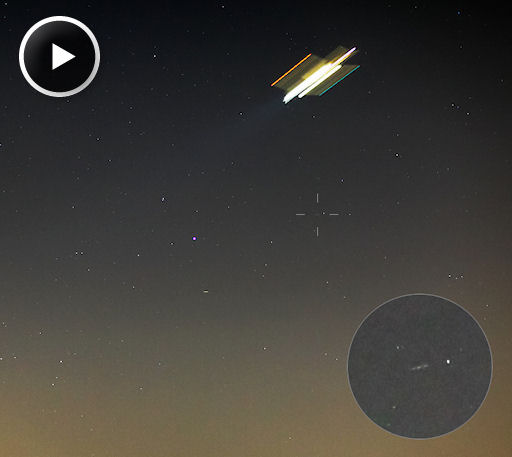
Photo details: Canon EOS 5D Mk II, 85/1.2 lens @ 1.2, 55 one-sec exposures at ISO 3200.
Not to be confused with the airliner at the top of the photo, NanoSail-D is the star-like object below denoted by a cross. Watch the movie again and note how the sail flickers in the inset circle.
Rosen describes what happened: "I photographed NanoSail-D from Stockholm, Sweden, on Feb. 4th. The sail was very low on the horizon, but I was able to catch it using my Canon EOS 5D digital camera. I estimate its magnitude between 6 and 7."
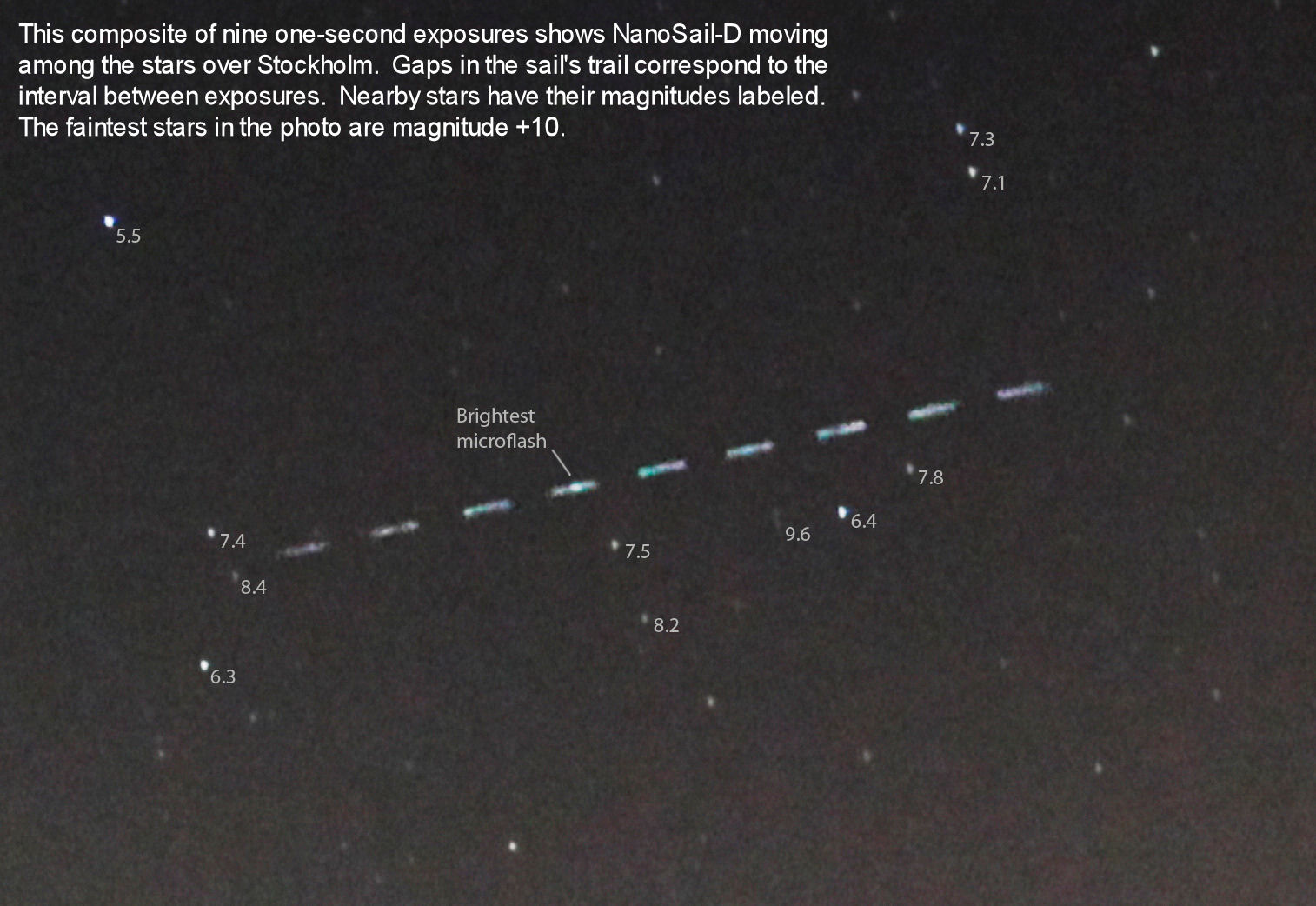
"There are many other satellites in the field of view and some airplanes coming in for landing at the local airport," he continues. "NanoSail-D behaves very differently from other satellites as its visibility seems to pulsate in short flashes sometimes several per second. This image zooms in on the phenomenon. I wonder if it due to small changes in the sail's direction and thus reflectivity?"
Indeed, sunlight is almost certainly glinting off the sail's reflective fabric. Researchers believe these flickers could, from time to time, develop into spectacular flares, outshining the brightest stars and perhaps even exceeding the luminosity of Iridium flares. At the moment, these flares are unpredictable because the sail's orientation is not known precisely enough to forecast sun-glints. The only way to catch one is to go outside and look.
NanoSail-D flyby times: on the web, on your cell phone.