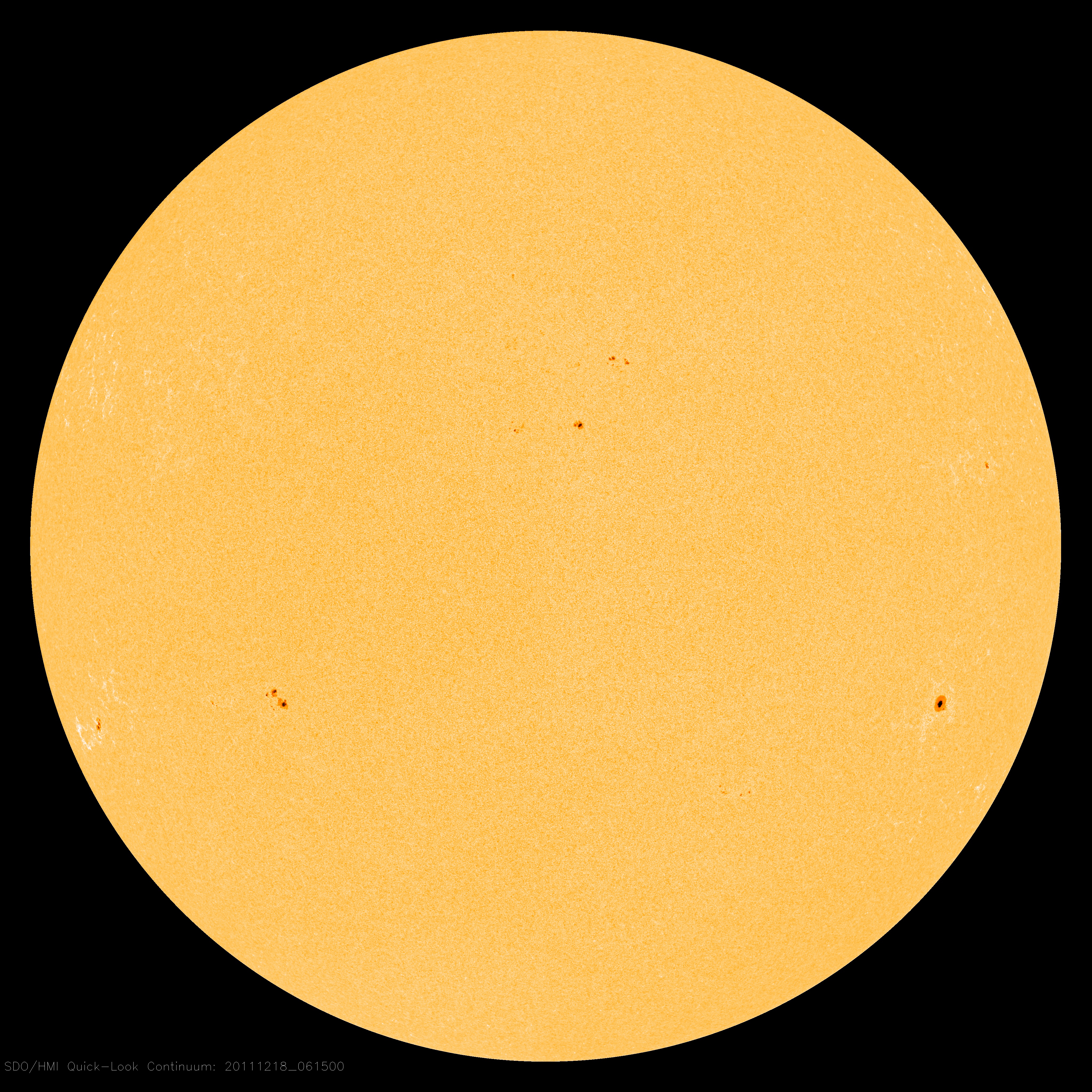
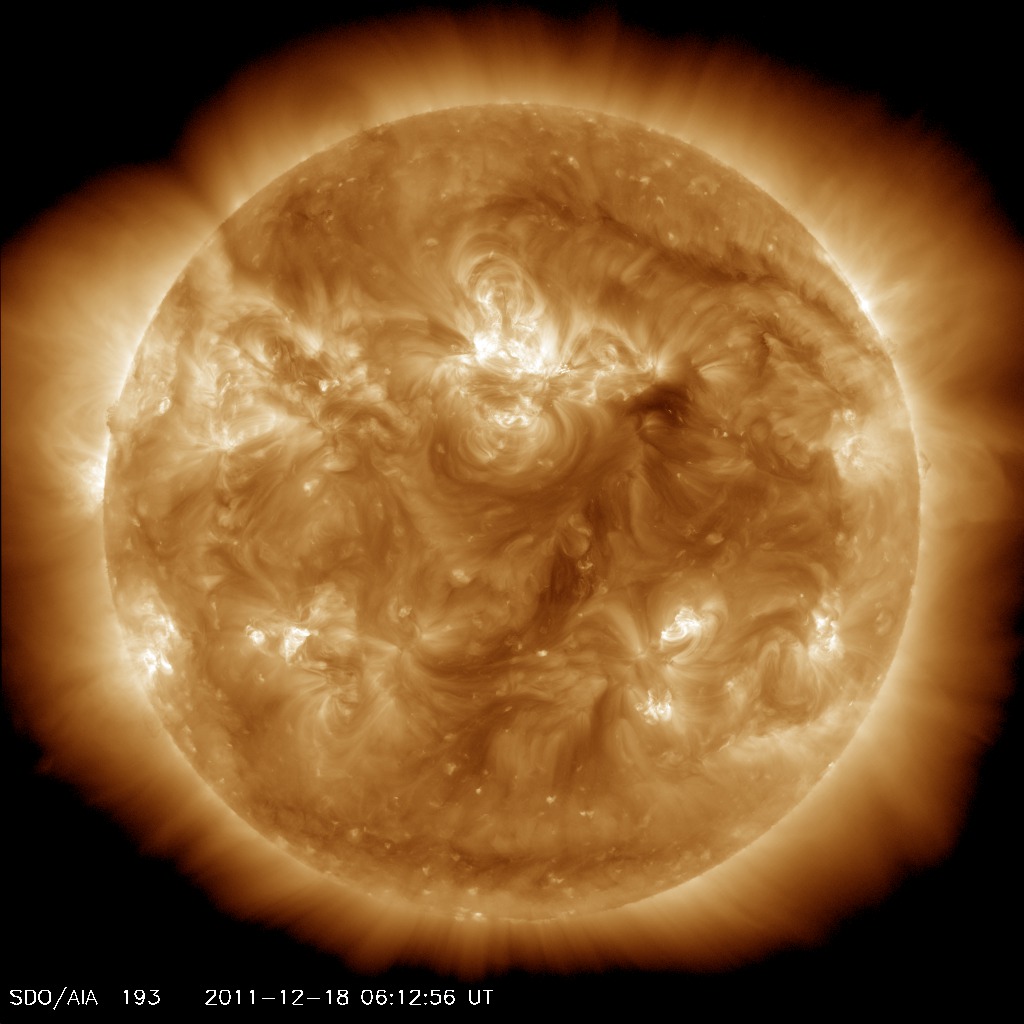
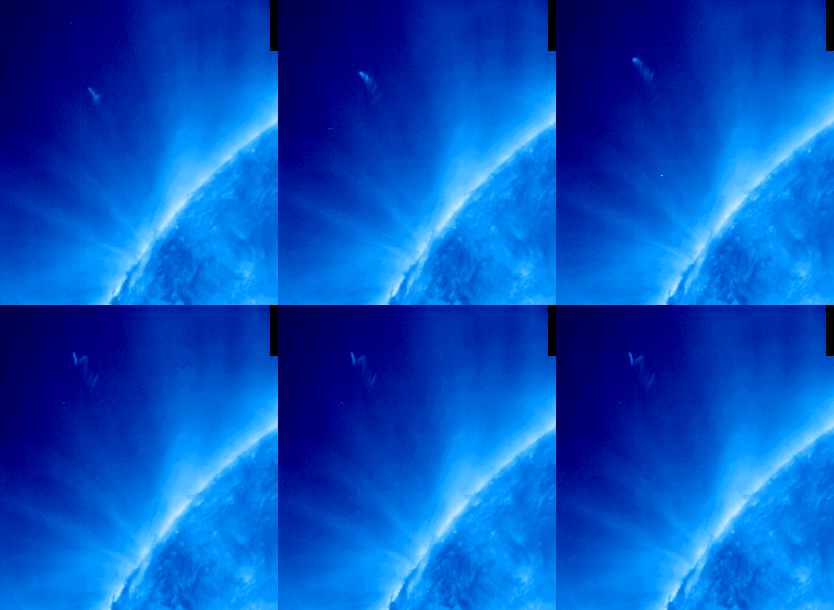
Metallic photos of the sun by renowned photographer Greg Piepol bring together the best of art and science. Buy one or a whole set. They make a stellar gift. | | | QUIET SUN: Solar activity is very low. WIth no sunspots producing strong flares, the sun's x-ray output has flatlined. Significant flares are unlikely this weekend. SPIRAL COMET TAIL: As Comet Lovejoy recedes intact from its Dec. 16th close encounter with the sun, researchers are pondering a mystery: What made the comet's tail wiggle so wildly in transit through the sun's atmosphere? The effect is clear in this sequence of extreme UV images recorded by NASA's STEREO-B spacecraft: 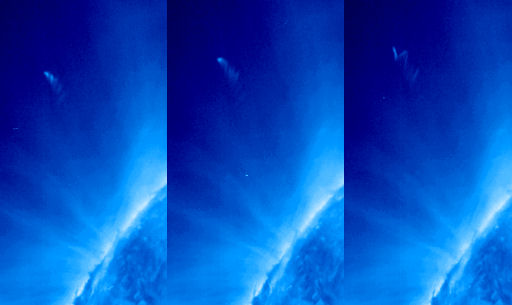
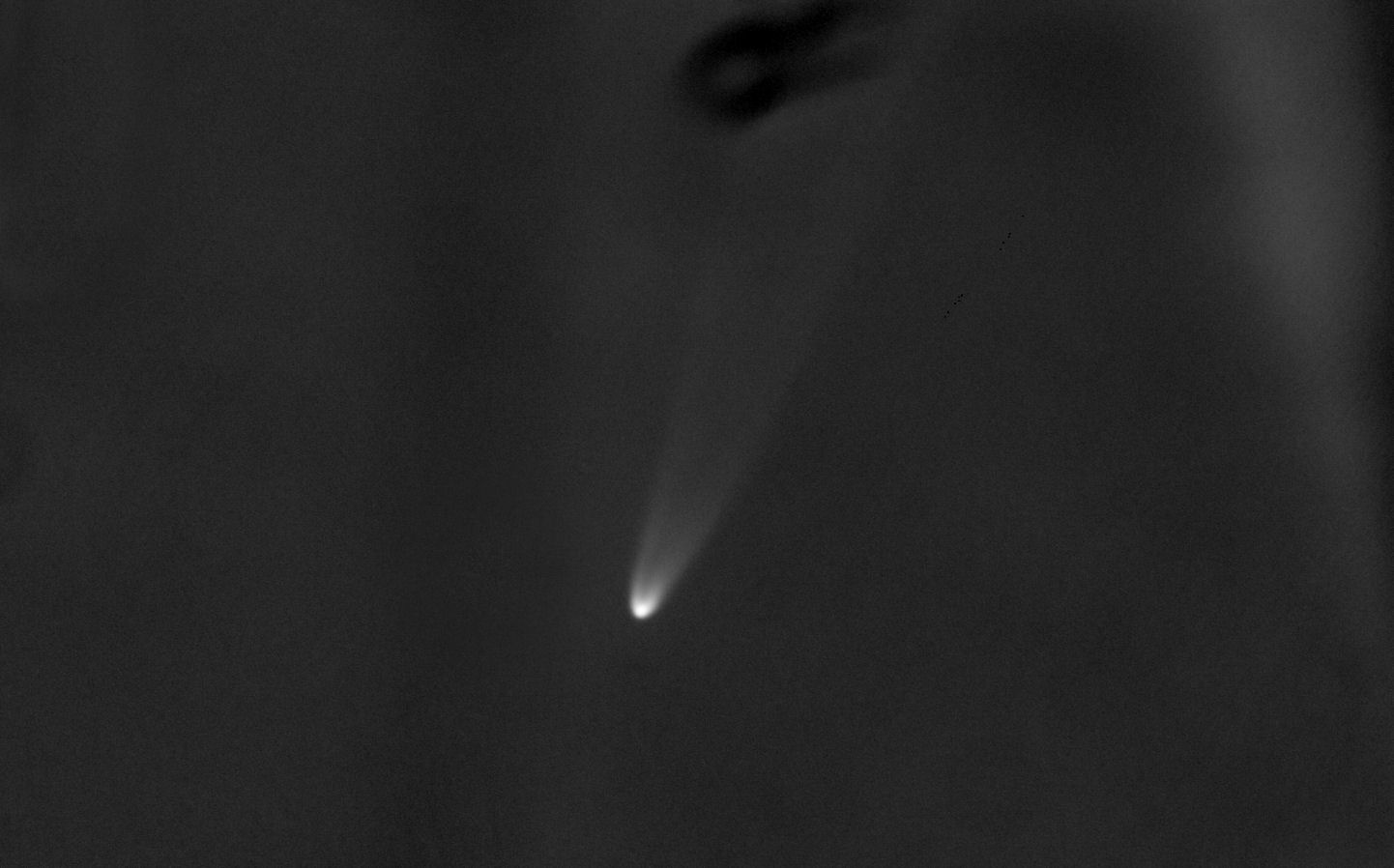
"Why the wiggles?" wonders Karl Battams of the Naval Research Lab. "We're not sure. There might be some kind of helical motion going on. Perhaps we're seeing material in the tail magnetically 'clinging' to coronal loops and moving with them. [Coronal loops are huge loops of magnetism that emerge from the sun's surface and thread the sun's atmosphere.] There are other possibilities too, and we will certainly investigate those!" Battams notes that these images can be combined with similar images from STEREO-A on the other side of the sun to produce a three dimensional picture. "When we pair these together, and throw in the SDO images too, we should be able to get an incredibly unique 3-D picture of how this comet is reacting the the intense coronal heat and magnetic loops. We are going to learn a lot." AMATEUR ASTRONOMERS TRACK LOVEJOY: Amateur astronomers are finding themselves able to photograph Comet Lovejoy as it emerges from the glare of the sun. A team led by Czech astronomer Jan Ebr captured this image at dawn on Dec. 17th: 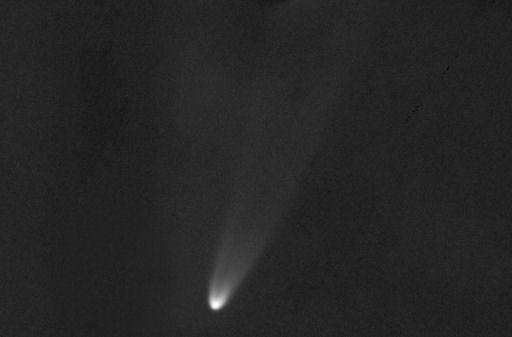
Credit: Jakub Cerny, Jan Ebr, Martin Jelinek, Petr Kubanek, Michael Prouza, Michal Ringes
"We used a remotely-controlled 12-inch telescope in Malargue, Argentina," says Ebr. "The sun was below horizon at the time we took the picture, but just barely. There was only a 30 minute window between the rise of the comet and that of the sun " more images: from Vincent Jacques of Breil-sur-Roya, France; from Robert Lowton of Whaley Bridge, High Peak, United Kingdom; from Andrew Cooper of Mauna Kea, Hawai'i; from Jim Werle of Las Vegas, Nevada;
Dec. 10th Total Lunar Eclipse Gallery Potentially Hazardous Asteroids ( PHAs) are space rocks larger than approximately 100m that can come closer to Earth than 0.05 AU. None of the known PHAs is on a collision course with our planet, although astronomers are finding new ones all the time. On December 18, 2011 there were 1272 potentially hazardous asteroids. Recent & Upcoming Earth-asteroid encounters: | Asteroid | Date(UT) | Miss Distance | Mag. | Size | | 2000 YA | Dec 26 | 2.9 LD | -- | 80 m | | 2011 SL102 | Dec 28 | 75.9 LD | -- | 1.0 km | | 2011 WS95 | Dec 28 | 7.1 LD | -- | 49 m | | 1991 VK | Jan 25 | 25.3 LD | -- | 1.9 km | | 433 Eros | Jan 31 | 69.5 LD | -- | 8.5 km | | 2009 AV | Feb 16 | 44.9 LD | -- | 1.2 km | | 2000 ET70 | Feb 19 | 17.7 LD | -- | 1.0 km | | 2011 CP4 | Feb 23 | 9.1 LD | -- | 255 m | | 2008 EJ85 | Mar 6 | 9.1 LD | -- | 44 m | | 1999 RD32 | Mar 14 | 57.9 LD | -- | 2.3 km | Notes: LD means "Lunar Distance." 1 LD = 384,401 km, the distance between Earth and the Moon. 1 LD also equals 0.00256 AU. MAG is the visual magnitude of the asteroid on the date of closest approach. | | The official U.S. government space weather bureau | | | The first place to look for information about sundogs, pillars, rainbows and related phenomena. | | | Researchers call it a "Hubble for the sun." SDO is the most advanced solar observatory ever. | | | 3D views of the sun from NASA's Solar and Terrestrial Relations Observatory | | | Realtime and archival images of the Sun from SOHO. | | | from the NOAA Space Environment Center | | | the underlying science of space weather | |