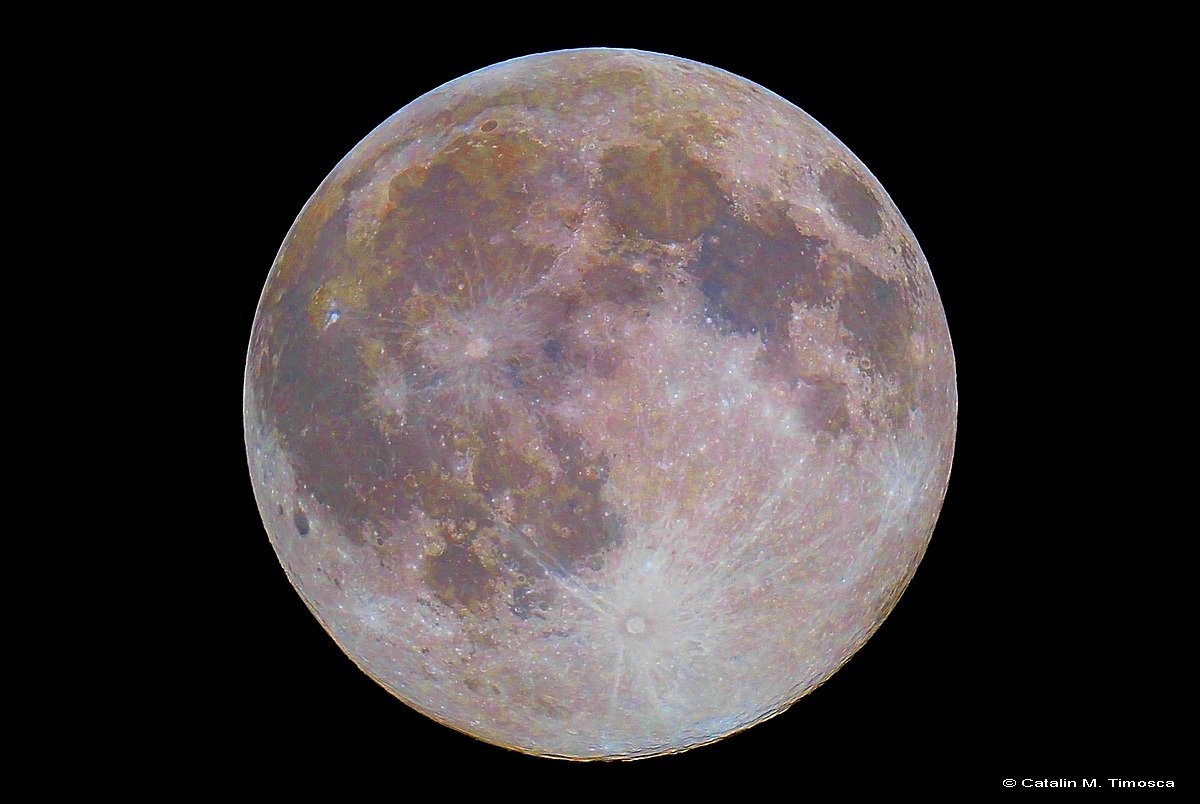
| BEHOLD THE SUN: Would you like to see fiery prominences and new-cycle sunspots with your own eyes? On sale now: Personal Solar Telescopes. | | | ASTEROID UPDATE: Last week when asteroid 2008 TC3 entered Earth's atmosphere over Sudan, "classified assets" were watching. Without naming names, the US government has released a summary of what they saw: "Sensors aboard US satellites detected the impact of a bolide over Africa on 7 October 2008 at 02:45:40 UT. Initial observations put the object at 65.4 km altitude at 20.9o N, 31.4o E. The object detonated at an altitude of approximately 37 km at 20.8 o N, 32.2o E. The total radiated energy was approximately 4.0X10¹¹ joules, equivalent to ~0.1 kilotons of TNT." ORANGE SEAS: The Moon is more than just shades of gray. Lunar seas are suffused with blue, purple, orange and other colors--you just can't see them at first glance. Last night, Catalin Timosca of Turda, Romania, took a picture that revealed the hidden palette of the Hunter's Moon: 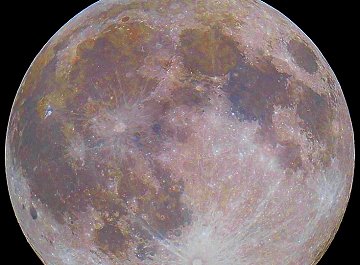
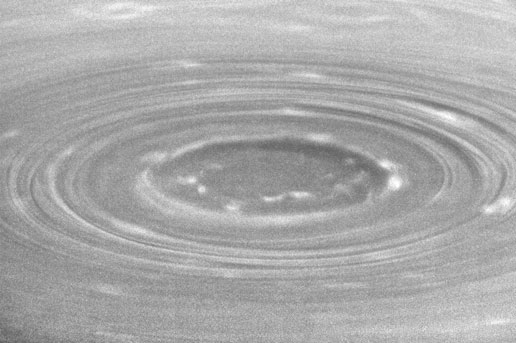
The colors are real. Blue hues reveal titanium-rich areas while orange and purple colors show regions that are low on iron. For the record, she used a Nikon D40X digital camera, but it wasn't the camera that did the trick. Careful but straightforward processing in Photoshop can turn almost any digital photo of the full Moon into a mineral map. Astronomers working with the Hubble Space Telescope use similar techniques to find valuable ores for future lunar settlements. Look at the Moon tonight. Does it really seem so gray? moon photos: from Piotr Majewski of Torun, Poland; from Mohammad Soltanolkottabi of Esfahan, Iran; from Thad V'Soske of Grand Valley, Colorado; from P-M Hedén of Vallentuna, Sweden; from Elias Chasiotis of Markopoulo, Greece; from Martin Mc Kenna of Maghera, Co. Derry, N. Ireland; from Tamas Ladanyi of Veszprem, Hungary; from C.J. Wood of Ridgely, Maryland; from Mila Zinkova of San Francisco, California; from Hunter Outten of Frankford, Delaware; from Edmund E Kasaitis of Manchester, Maryland; from Don Poggensee of Ida Grove, Iowa; MONSTER STORMS ON SATURN: New images from NASA's Cassini spacecraft reveal that both of Saturn's poles are ringed by "monstrous cyclones" hundreds of times stronger than the biggest hurricanes on Earth. In this side-looking view, shadows highlight the topography of Saturn's south polar vortex: 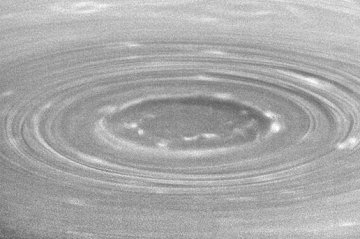
On the other end of the planet, a north polar storm is circumscribed by a strange cloudy hexagon that remains fixed in place while 300 mph winds swirl inside it. At the moment, Saturn's north pole is shrouded in darkness because it is winter there, but Cassini's infra-red cameras were able to photograph the vortex anyway by sensing the heat it emits into the night: movie. Researchers think these giant weather systems might powered by deep-seated thunderstorms, although no one can say for sure; the base of the vortices are too deep and cloudy to see. Get the full story from NASA.
Oct. 2008 Aurora Gallery
[Previous Octobers: 2007, 2006, 2004, 2003, 2002, 2001, 2000] |