Autumn is here, and it's a wonderful time for stargazing. Find out what's up from Spaceweather PHONE.
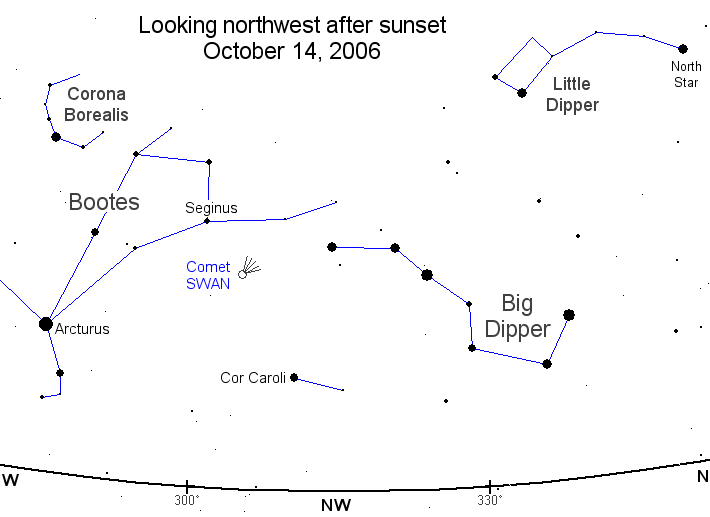
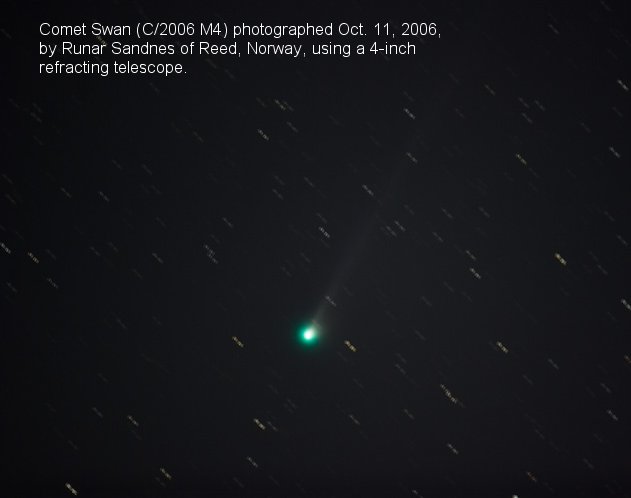
COMET SWAN: Where is Comet Swan? Look northwest after sunset, and the handle of the Big Dipper will guide you right to it: sky map. Although the comet is too dim to see with the unaided eye, it is an easy target for backyard telescopes. The comet's pretty emerald color shows that it is rich in cyanogen (CN), a poisonous gas, and diatomic carbon (C2). Both glow green when exposed to sunlight: photo.
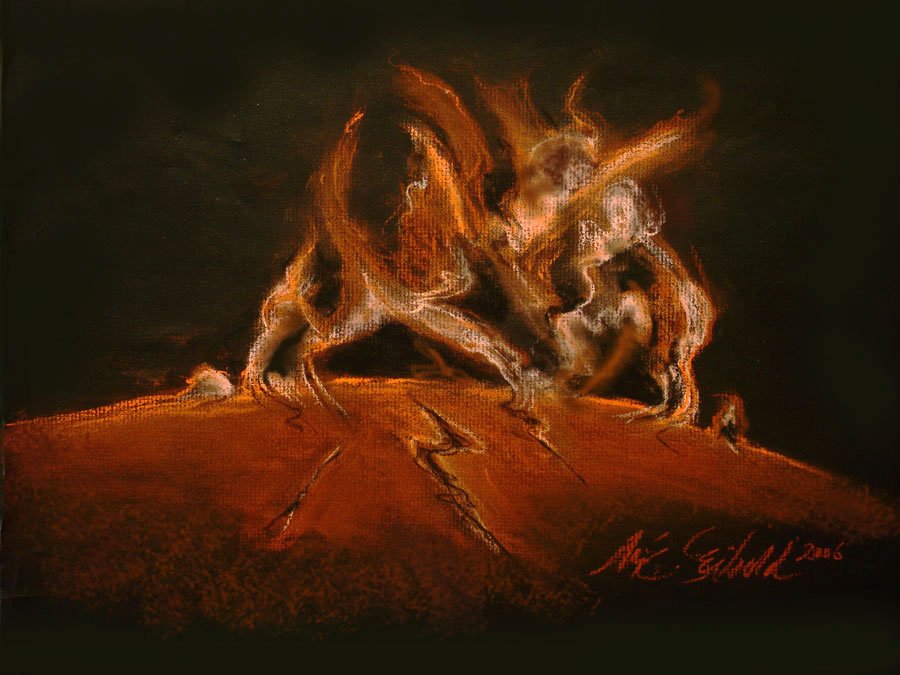
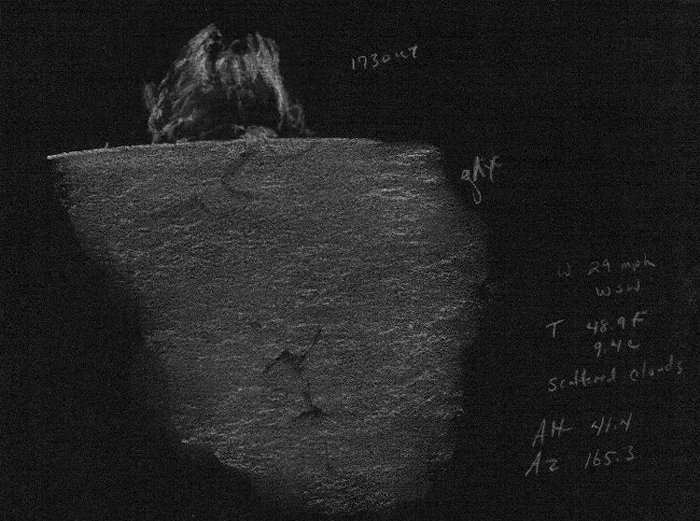
SOLAR ACTIVITY: Yes, solar observing is an art form. Inspired by what he saw through his sun-filtered telescope, Mark Seibold made this spirited pastel sketch of today's arched prominence:

Rendered in pastel: the view through a SolarMax40 solar telescope.
Although the scene is frozen in time, it gives a distinct impression of movement. Indeed, says Mark, "I made the sketch while watching the prominence change dynamically for 20 minutes."
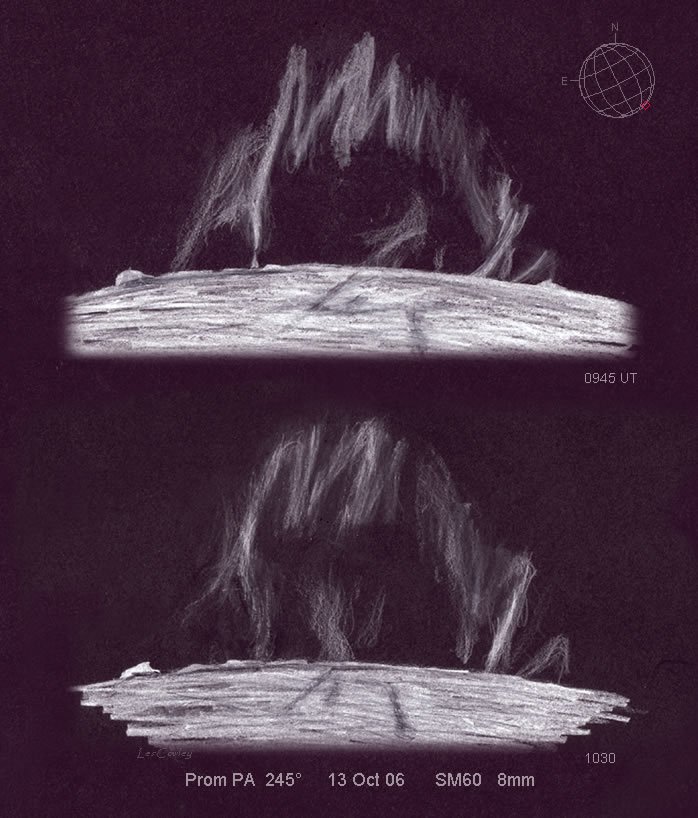
more drawings: from Les Cowley of the United Kingdom; from Erika Rix of Zanesville, Ohio.
WHITE RAINBOW: On Oct. 8th, a ghostly white rainbow materialized at the Pacifica Pier in Pacifica, California. "The fisherman couldn't care less," says photographer Mila Zinkova, "but I couldn't stop taking pictures."
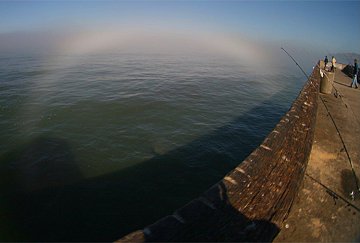
Photo credit: Mila Zinkova in Pacifica, California.
The correct name of this phenomenon is "fogbow." Atmospheric optics expert Les Cowley explains: "Always look for fogbows when a low sun starts to shine through mist or fog. They are almost colorless and sparkle and shimmer in the misty light. Fogbows are formed like rainbows, with tiny fog droplets taking the place of much larger raindrops. The light waves squeezed inside the small drops interfere to produce the broad diffuse bow."



 SPACE WEATHER
 SPACE WEATHER