SPACESHIP SIGHTINGS: Would you like a call when the space station is about to fly over your backyard? Sign up for Spaceweather PHONE. | | | METEOR RADAR: Got clouds? If you can't see this weekend's Geminid meteor shower, try listening instead. The US Air Force Space Surveillance Radar is scanning the skies above Texas, and when a meteor passes overhead--ping!--there is an echo. Tune into Spaceweather Radio for live audio. SURGING GEMINIDS: The Geminid meteor shower is intensifying. According to the International Meteor Organization, dark-sky observers are now counting 40+ meteors per hour. "The Geminids were pretty active last night (Dec. 12/13)," reports Pete Lawrence of Selsey, UK. "Here's one I caught on camera zipping past the star Alpha Hydrae." 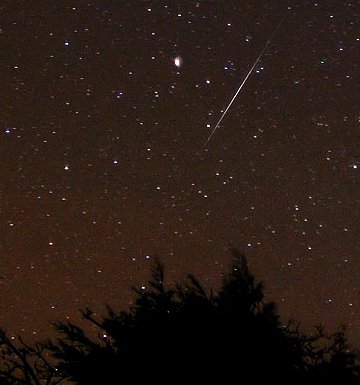
Martin McKenna reports from Maghera, Northern Ireland: "I did a visual watch between 03.20 and 06.20 local time on Dec. 13th and saw 157 meteors of which 135 were Geminids. I saw 57 Geminids in the first hour and my first sight of the session was 3 Geminids in 2 seconds. Many of them fell in triplets. I can't wait to see the peak!" Indeed, the best is yet to come. Forecasters expect rates to double or more during the next 24 hours. The best time to look is between 10 pm local time on Sunday night (Dec. 13) and sunrise on Monday morning (Dec. 14). Get the full story from Science@NASA. UPDATED: Geminid Meteor Gallery
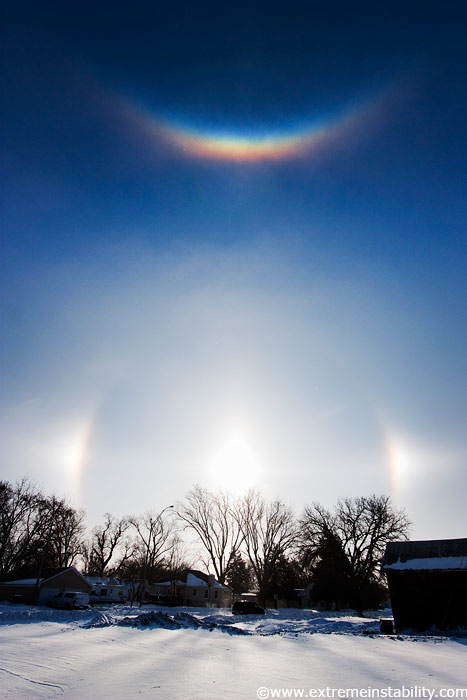
[sky map] [meteor radar] [Geminid counts] AFTER THE STORM: Last week, a powerful blizzard paralyzed parts of the US midwest. Mike Hollingshead of Blair, Nebraska, walked outside after the storm and this is what he saw: 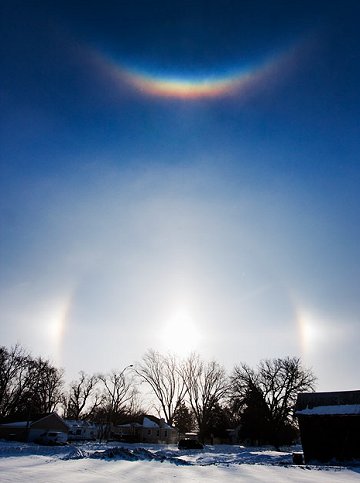
Sunlight shining through ice crystals had produced a bright pair of sundogs and a vivid circumzenithal arc. "These tend to appear on the backside of a storm's clearing line as ice crystals blow through the air," notes Hollingshead. "It's a beautiful sight but not a ton of fun to photograph at 5o F with winds blowing 40 mph." Photographers, bundle up! More weather is on the way and there should be plenty to see after the storm.
December Northern Lights Gallery
[previous Decembers: 2008, 2007, 2006, 2005, 2001, 2000]
Explore the Sunspot Cycle |