They came from outer space--and you can have one! Genuine meteorites are now on sale in the Space Weather Store. | | |
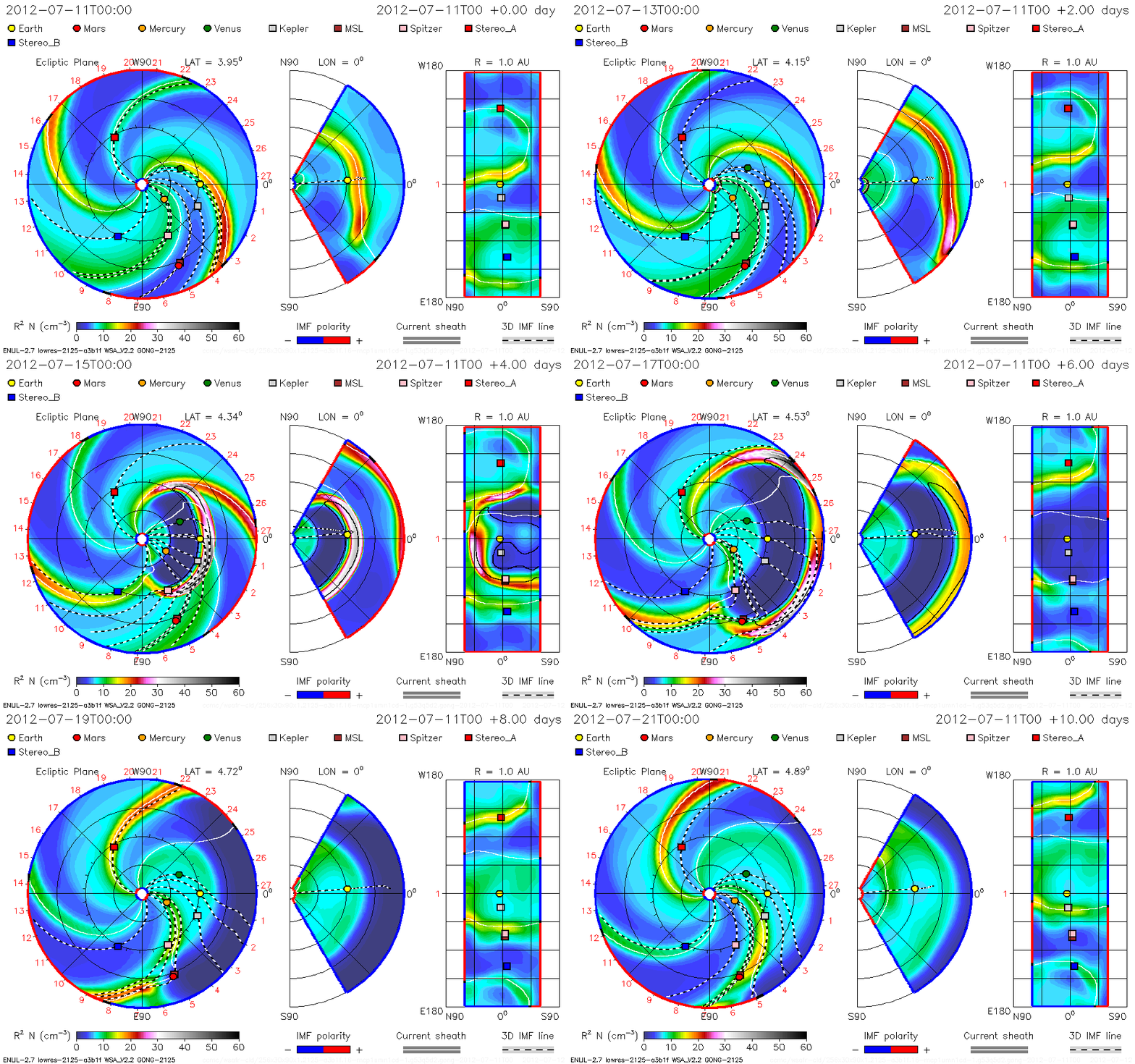
X-FLARE! Big sunspot AR1520 unleashed an X1.4-class solar flare on July 12th at 1653 UT. Because this sunspot is directly facing Earth, everything about the blast was geoeffective. For one thing, it hurled a coronal mass ejection (CME) directly toward our planet. According to a forecast track prepared by analysts at the Goddard Space Weather Lab, the CME will hit Earth on July 14th around 10:20 UT (+/- 7 hours) and could spark strong geomagnetic storms. Sky watchers should be alert for auroras this weekend. Geomagnetic storm alerts: text, voice.
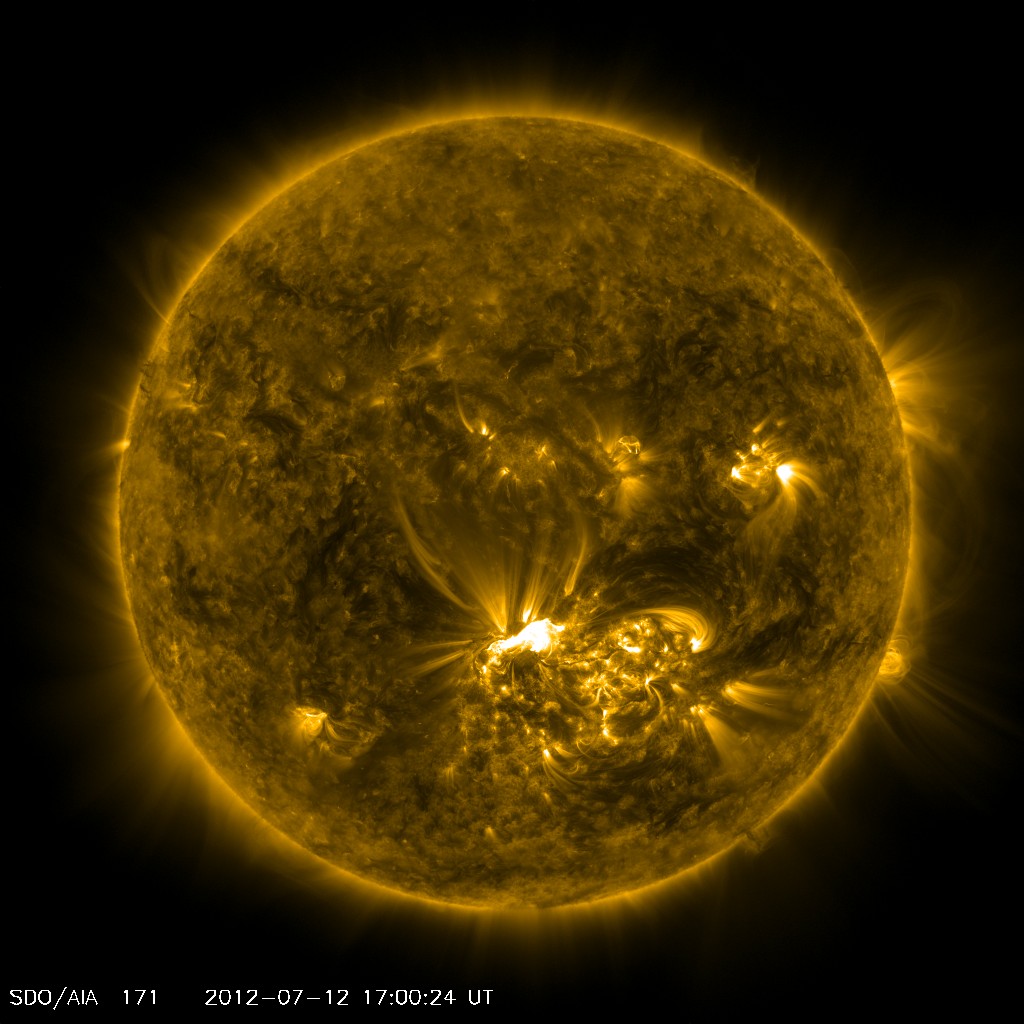
The explosion also strobed Earth with a pulse of extreme UV radiation, shown here in an image captured by NASA's Solar Dynamics Observatory:
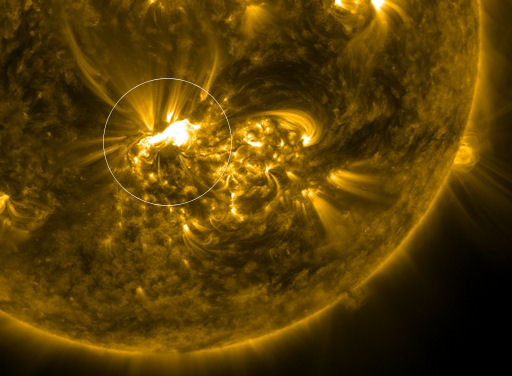
The UV pulse partially ionized Earth's upper atmosphere, disturbing the normal propagation of radio signals around the planet. Monitoring stations in Norway and Ireland recorded the sudden ionospheric disturbance.
Finally, solar protons accelerated by the blast are swarming around Earth. The radiation storm, in progress, ranks "S1" on NOAA space weather scales, which means it poses no serious threat to satellites or astronauts. This could change if the storm continues to intensify. Stay tuned.
Realtime Space Weather Photo Gallery
NOCTILUCENT CLOUDS: This morning a vast bank of electric-blue noctilucent clouds rippled across northern Europe. "It was like water in the sky," says Barbara Grudzinska, who photographed the display from Warsaw, Poland:
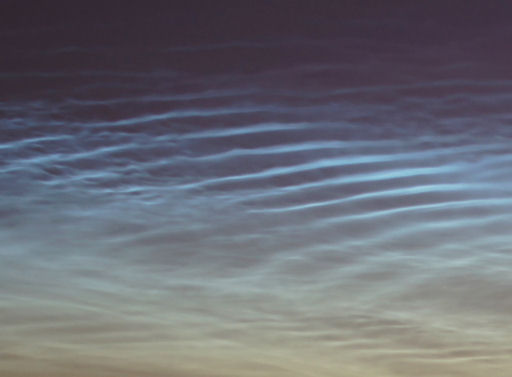
"These are the first noctilucent clouds this year so clearly visible at our latitude in Warsaw (52 N)," says Grudzinska.
When NLCs first appeared in the 19th century, the mysterious clouds were confined to the Arctic, most often seen in the same places as Northern Lights. In recent years, however, their "habitat" has been expanding, rippling as far south as Colorado, Virginia, Kansas, and Utah. (Here are some examples of sightings in the lower United States.) There is growing evidence that the expansion is a sign of climate change, although this remains controversial.
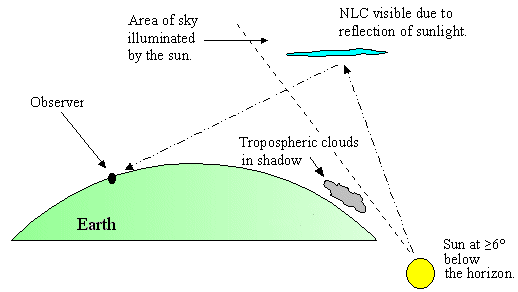
Whatever the reason, noctilucent clouds aren't just at high latitudes anymore, so sky watchers everywhere should be alert for them. Observing tips: Look west 30 to 60 minutes after sunset when the sun has dipped 6o to 16o below the horizon. If you see luminous blue-white tendrils spreading across the sky, you've probably spotted a noctilucent cloud.
Realtime Noctilucent Cloud Photo Gallery
[previous years: 2003, 2004, 2005, 2006, 2007, 2008, 2009, 2011]
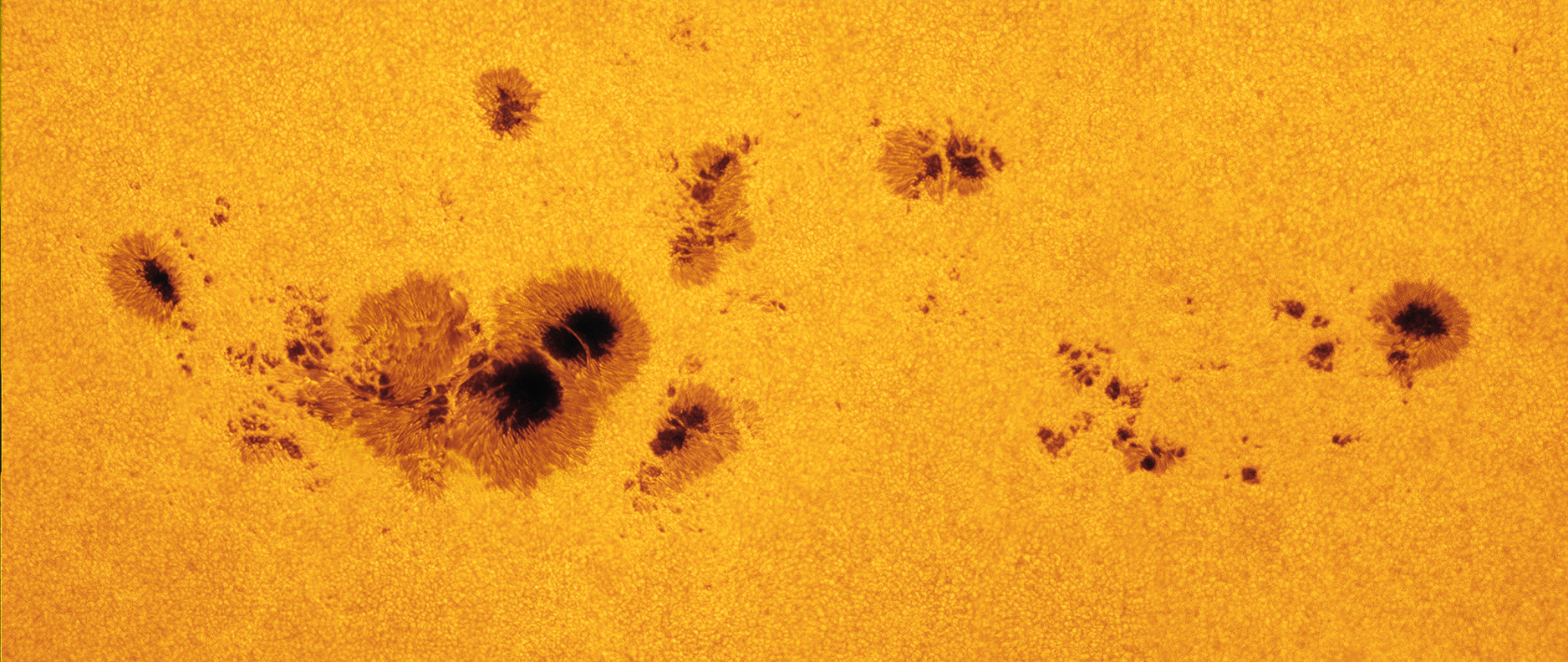
SOLAR ARCHIPELAGO: Sunspots are magnetic islands on the sun. Sunspot AR1520 is a complete archipelago. Scroll down to scan more than 200,000 miles of island chain:
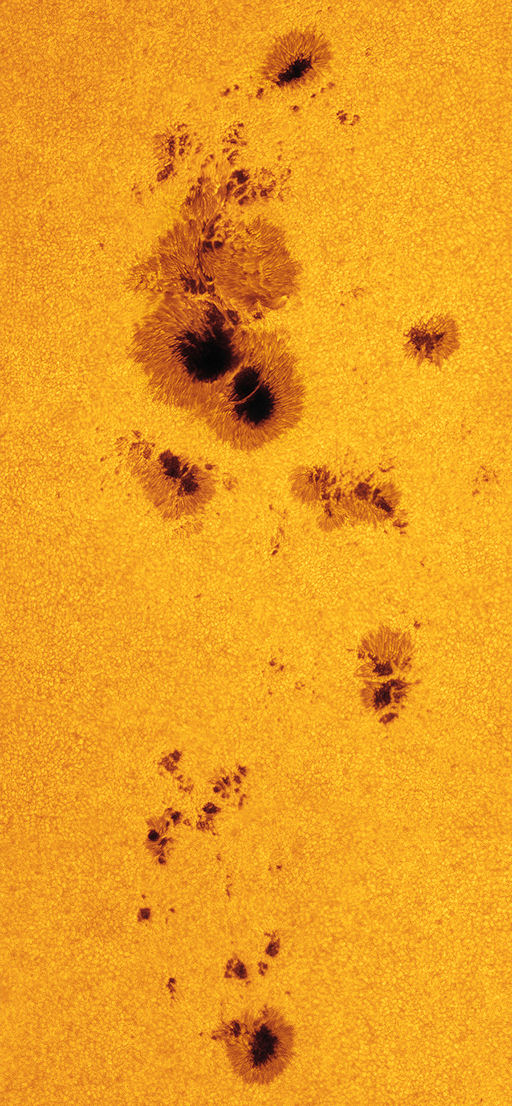
Amateur astronomer Alan Friedman took the picture on July 10th from his backyard observatory in Buffalo, New York. "AR1520 is a tremendous archipelago and a wonderful target for backyard solar telescopes," he says.
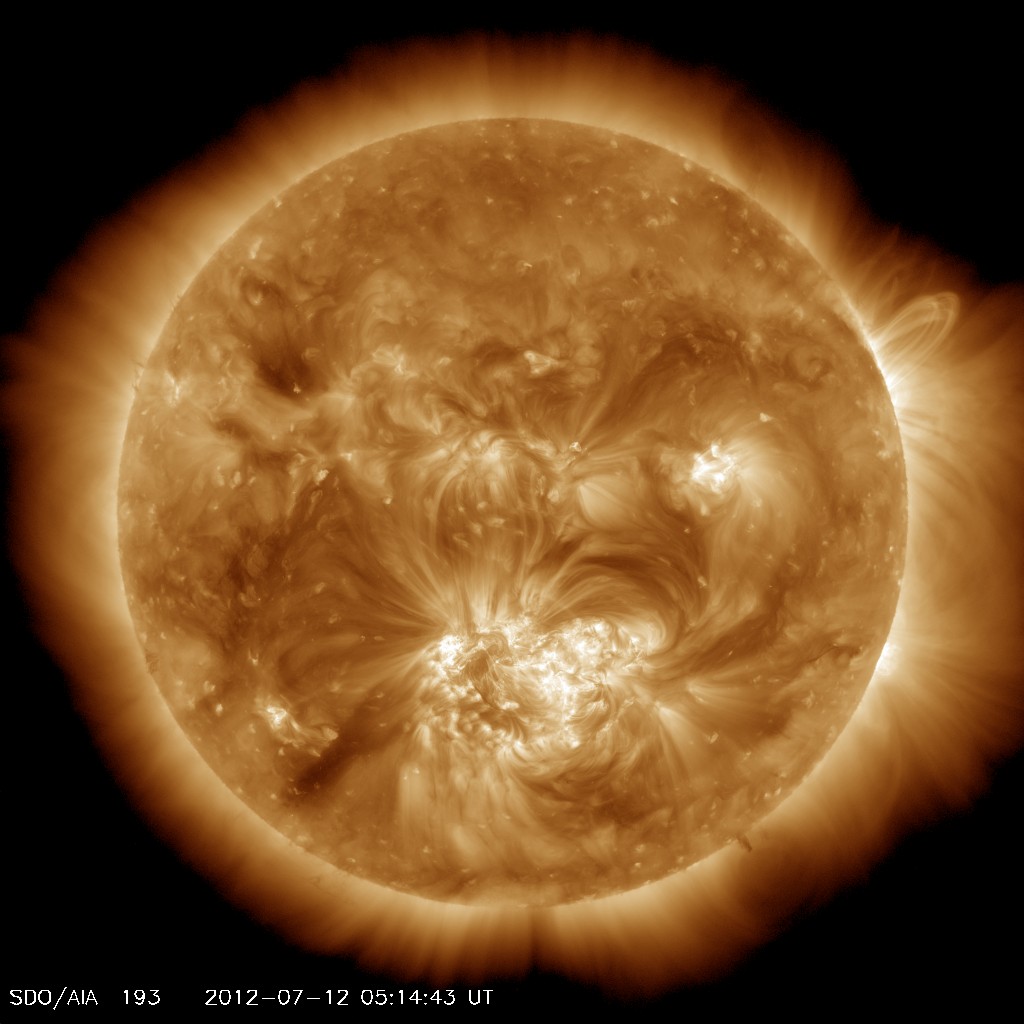
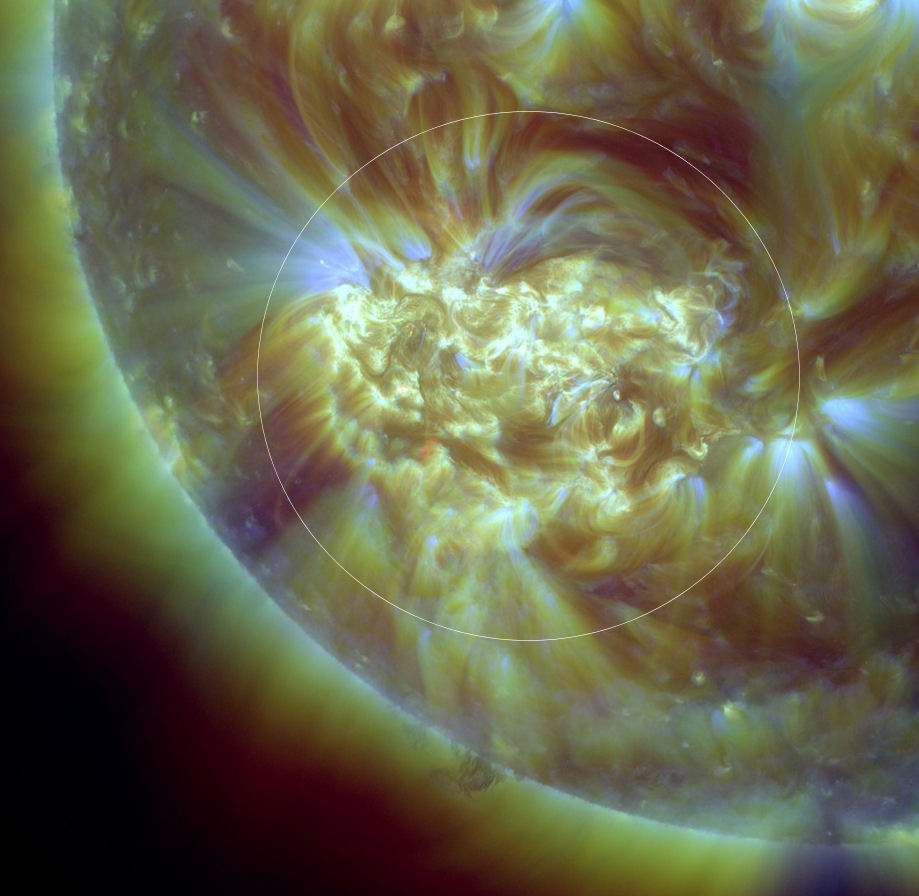
The tangled magnetic canopy of the sunspot group, shown here in an extreme UV image from NASA's Solar Dynamics Observatory, harbors energy for strong solar flares. NOAA forecasters estimate an 80% chance of M-class flares and a 15% chance of X-class flares during the next 24 hours. Solar flare alerts: text, voice.
Realtime Sunspot Photo Gallery
Realtime Space Weather Photo Gallery
Realtime Planets Photo Gallery
[NASA video: A Good Reason to Wake Up at Dawn]