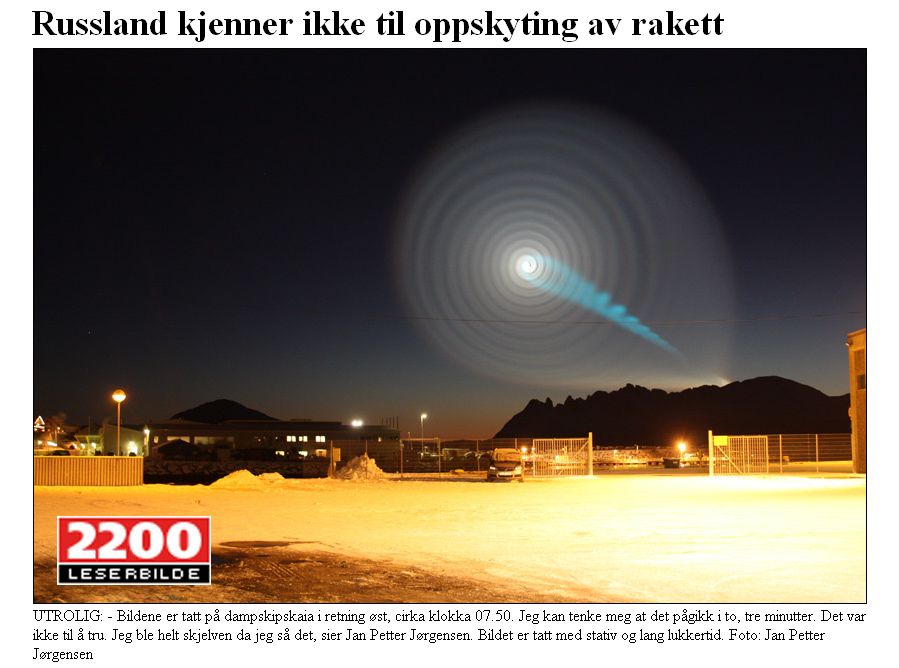
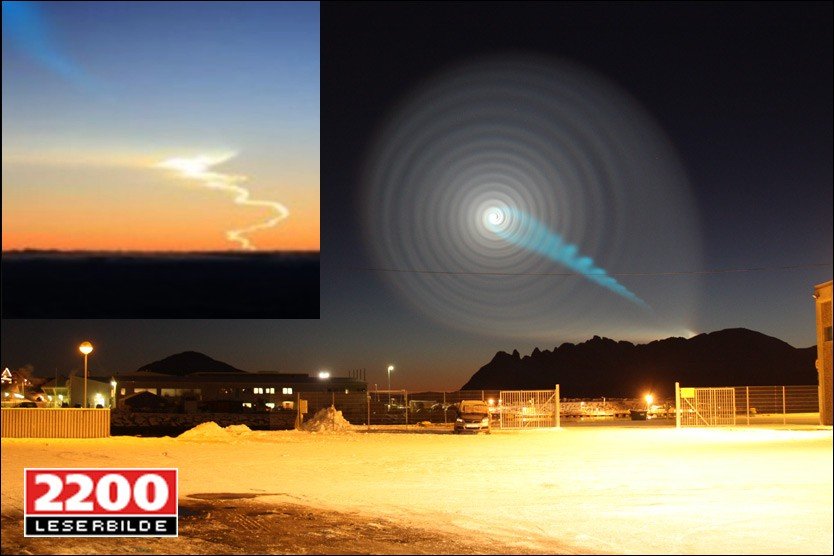
SPACESHIP SIGHTINGS: Would you like a call when the space station is about to fly over your backyard? Sign up for Spaceweather PHONE. | | | METEOR RADAR: The US Air Force Space Surveillance Radar is scanning the skies above Texas. When a satellite or meteoroid passes overhead--ping!--there is an echo. Activity is picking up this week as Earth enters a stream of debris from extinct comet 3200 Phaethon, source of the annual Geminid meteor shower. Tune into Spaceweather Radio for live audio. STRANGE LIGHTS OVER NORWAY: Wednesday morning, Dec. 9th, people in arctic Norway were stunned when a gigantic luminous spiral formed in the northern sky. "We are used to seeing lots of auroras here in Norway, but this was different," says Nick Banbury of Harstad who witnessed the phenomenon on his way to work "between 7:50 and 8:00 a.m. local time." Jan Petter Jorgensen took this photo: 
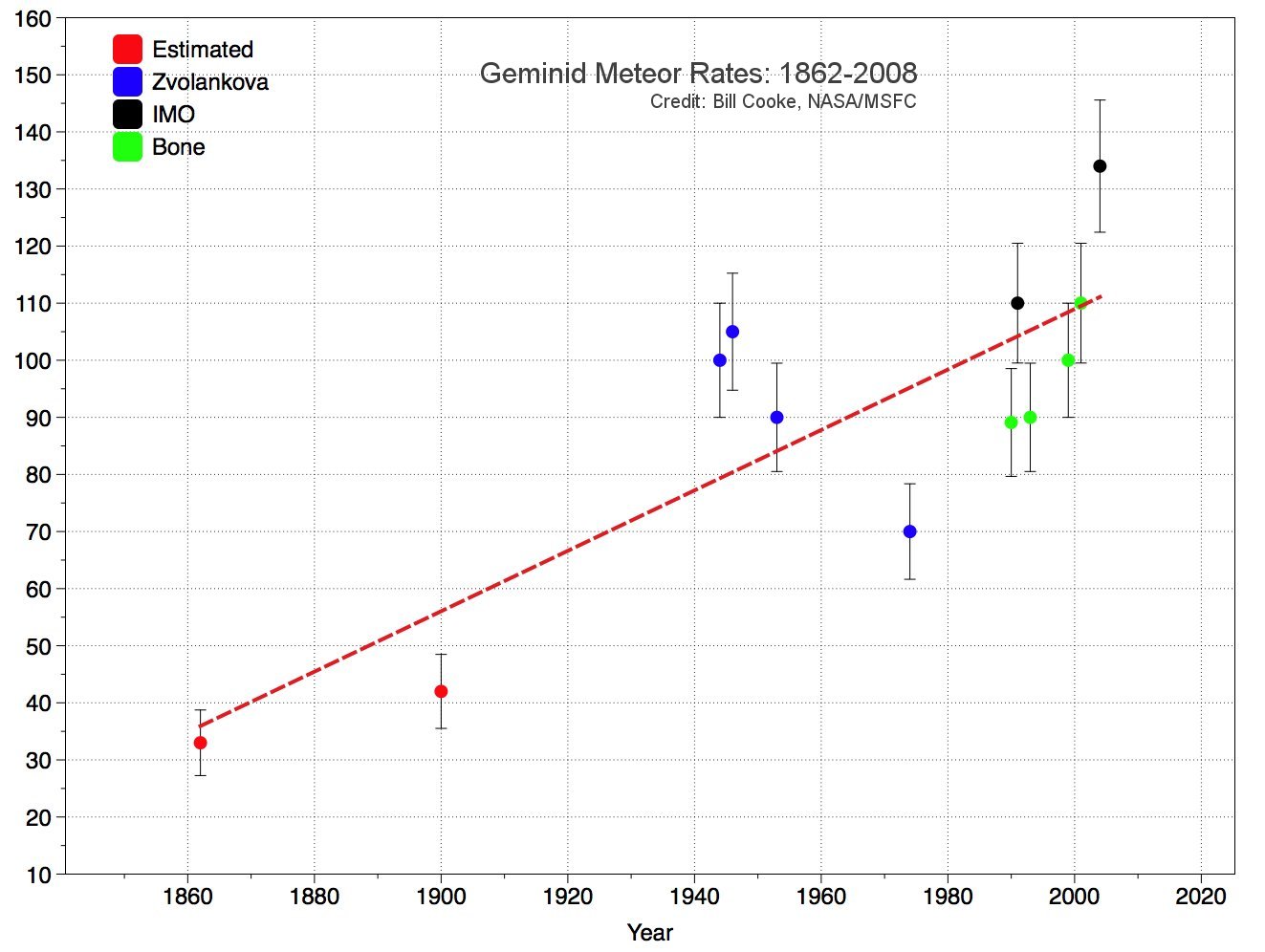
The first reaction of many readers when they see this picture is Photoshop! Surely this must be a fake. But no, many independent observers witnessed and phtotographed the apparition. It is real. Banbury continues: "It consisted initially of a green beam of light similar in color to the aurora with a mysterious rotating spiral at one end. This spiral then got bigger and bigger until it turned into a huge halo in the sky with the green beam extending down to Earth. According to press reports, this could be seen all over northern Norway and must therefore have been very high up in the atmosphere to be seen hundreds of km apart." HYPOTHESIS: Evidence is mounting that the phenomenon was caused by a malfunctioning suborbital rocket, possibly a Bulava ICBM launched from a Russian submarine in the White Sea. A Navtex no-fly alert was issued for the White Sea on Dec. 9th, and photographers have recorded what appears to be the initial boost phase of a launch beneath the spiral (see inset). A rocket motor spinning out of control could indeed explain the spiral pattern, as shown in this video of a Trident II missile launched from a US submarine in 2007. CONFIRMED: The Russian Defense Ministry has confirmed the launch and subsequent failure of a submarine-based missile: BBC Report. More reports and videos: #1, #2, #3, #4, #5. HOW STRONG WILL THE GEMINIDS BECOME? Long ago, on a cold December night in the 19th century, the first Geminid meteors appeared. In those days, the display was so weak (a dozen or so meteors per hour) that only the most alert observers could say they had seen a Geminid. How times have changed. According to data compiled by Bill Cooke of NASA's Meteoroid Environment Office, the Geminid meteor shower has intensified almost five-fold to become one of the best showers of the year: 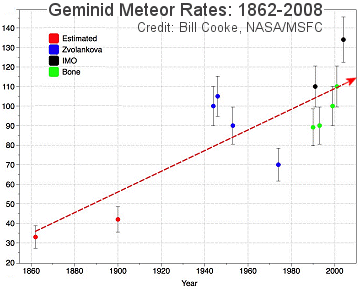
What's driving the surge? The source of the Geminids is extinct comet 3200 Phaethon. A stream of debris from the comet has been sweeping across Earth's orbit for more than a century, and we are plunging deeper into the stream with each December crossing. Computer models suggest that the Geminids will continue to intensify with meteor rates jumping another 20% to 50% in the decades ahead. Researchers will be watching the 2009 Geminids to see if the trend does indeed continue. Rates could exceed 140 meteors per hour when the shower peaks on Dec. 13th and 14th. Get the full story and observing tips from Science@NASA.
December Northern Lights Gallery
[previous Decembers: 2008, 2007, 2006, 2005, 2001, 2000]
Explore the Sunspot Cycle |