AURORA ALERTS: Did you miss the Northern Lights? Next time get a wake-up call from Space Weather PHONE | | |
INTERNATIONAL SPACE WEATHER INITIATIVE: Prompted by a recent increase in solar activity, more than a hundred researchers and government officials are converging on Helwan, Egypt, this week to discuss the peril of storms from the sun. Get the full story from Science@NASA.
COMET OUTBURST: Comet Ikeya-Murakami (C/2010 V1) is definitely undergoing an outburst event. Italian astronomers Ernesto Guido and Giovanni Sostero assembled the following animation from images they obtained between Nov. 4th and Nov 9th:
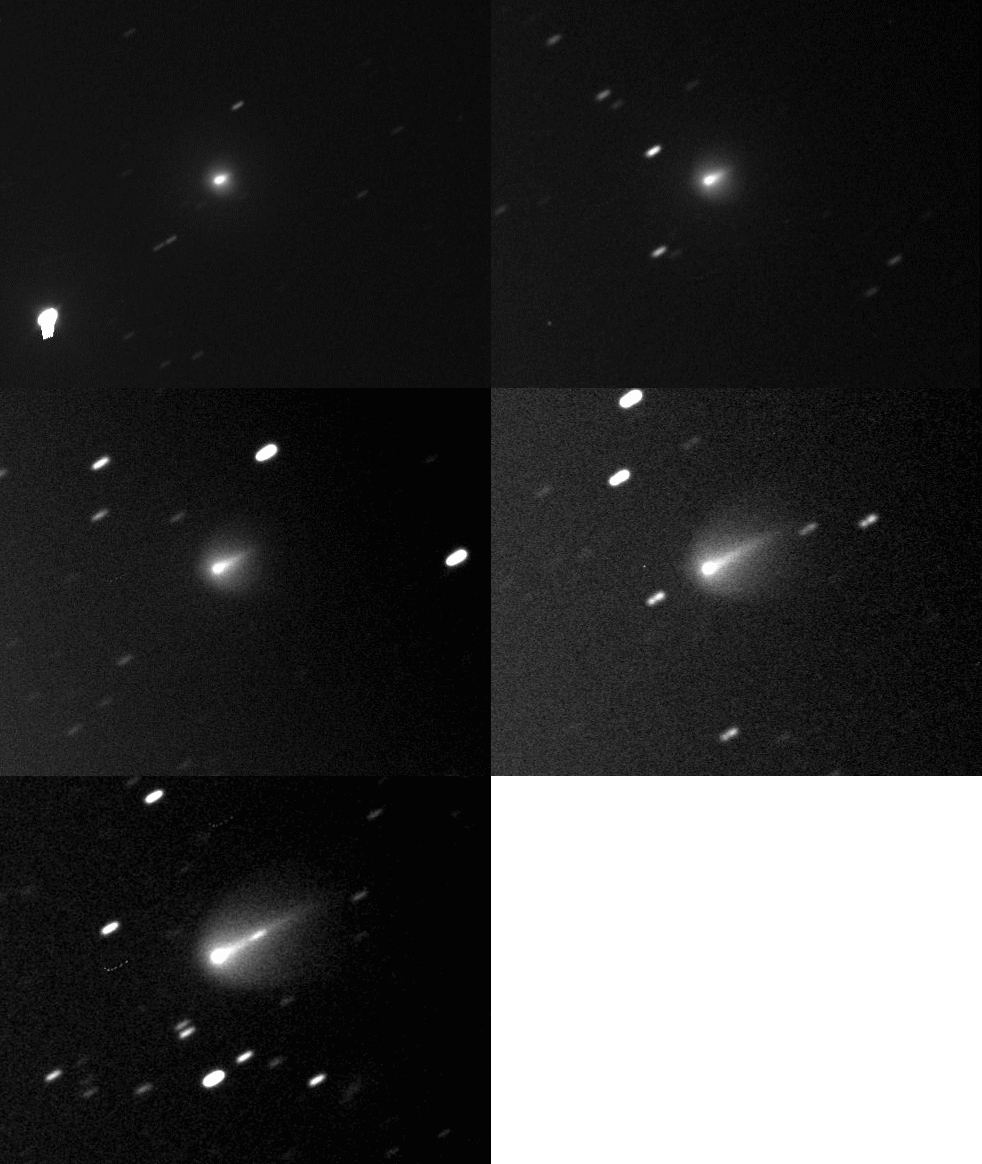
The sequence clearly shows an explosion in progress. "Only Nov. 7th is missing," they say, "because of rare cloudy skies over New Mexico, where the remotely-controlled telescope we used is located."
Another New Mexico observer, Leonid Elenin, estimates the size of comet's expanding atmosphere as 4x6 arcminutes. "There is also some evidence of two symmetrical jets emerging from the nucleus of the comet," he says.
The behavior of this comet reminds many onlookers of exploding Comet Holmes in 2007. Researchers believe Holmes exploded when an icy cavern in the comet's nucleus collapsed. Perhaps something similar has happened to Comet Ikeya-Murakami. The icy visitor from the outer solar system made its closest approach to the Sun in late October, so it has just received a dose of solar heating that could trigger such an event.
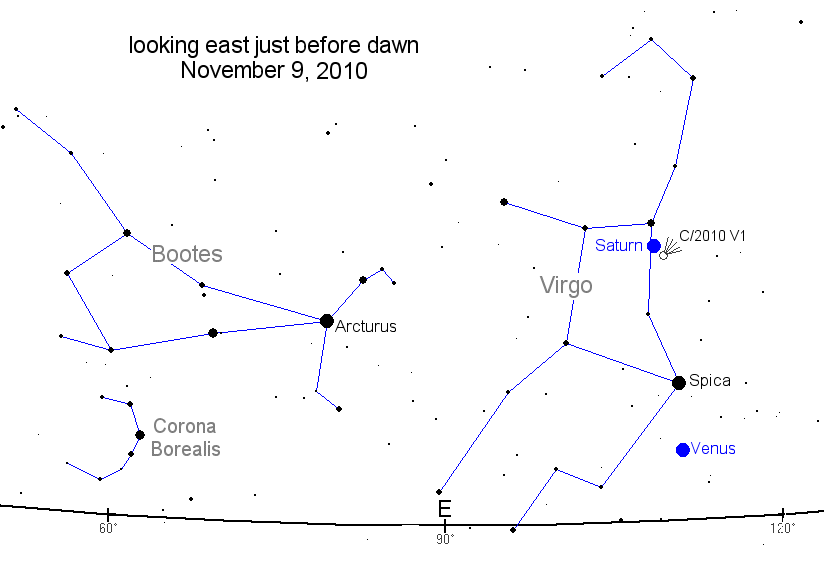
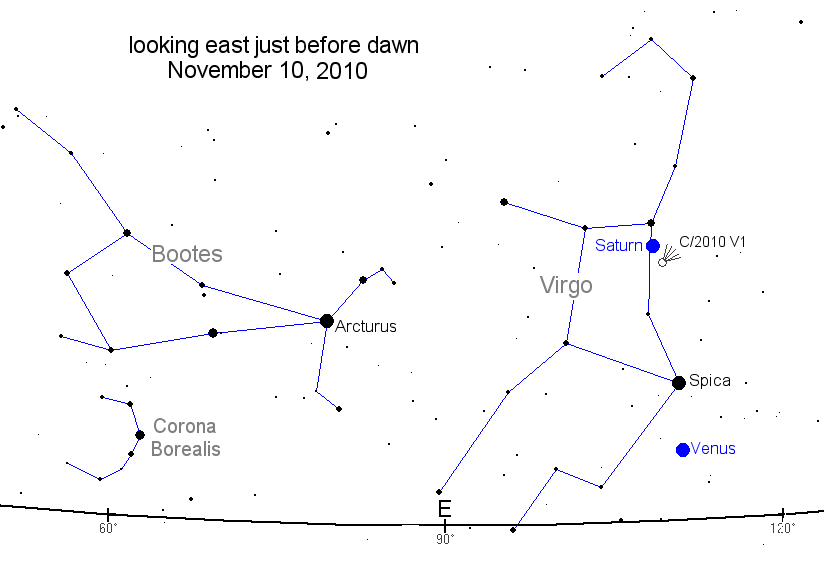
Amateur astronomers are encouraged to monitor developments. Various reports put the brightness of the comet between 7th and 9th magnitude, invisible to the naked eye but an easy target for telescopes such as the Comet Hunter. It's easy to find, too, little more than a degree from Saturn in the eastern sky before dawn. Set your alarm and happy hunting! [Sky maps: Nov. 9, 10, 11] [3D orbit] [ephemeris]
more images: from Joseph Brimacombe using a robotic telescope in New Mexico (Nov.8); from Gil Esquerdo of Whipple Observatory, Mt. Hopkins, Arizona (Nov. 8); from Tenho Tuomi of Lucky Lake, SK, Canada (Nov. 7); from Gregg Ruppel of Ellisville, Missouri (Nov. 7); from Feys Filip of Crete, Greece (Nov. 6); from Gregg Ruppel of Ellisville, Missouri (Nov. 6); from Gregg Ruppel of Ellisville, Missouri (Nov. 5); from Luca Buzzi of the G.V. Schiaparelli Astronomical Observatory in Varese, Italy (Nov. 4);
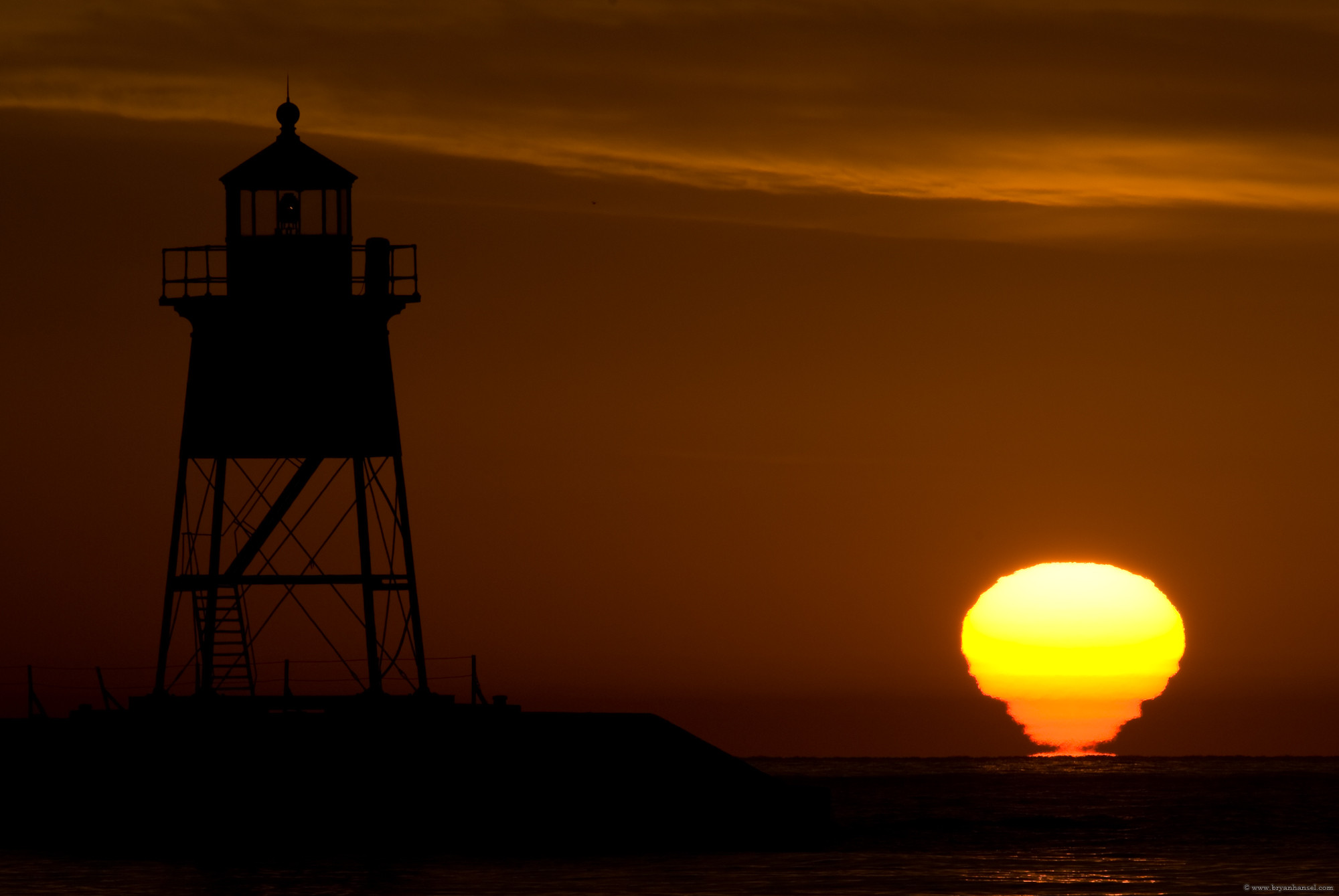
RELUCTANT SUNRISE: On Nov. 7th, the sunrise over Grand Marais, Minnesota, could only be described as reluctant. "The sun just wanted to stick to Lake Superior," says Bryan Hansel who snapped this picture:
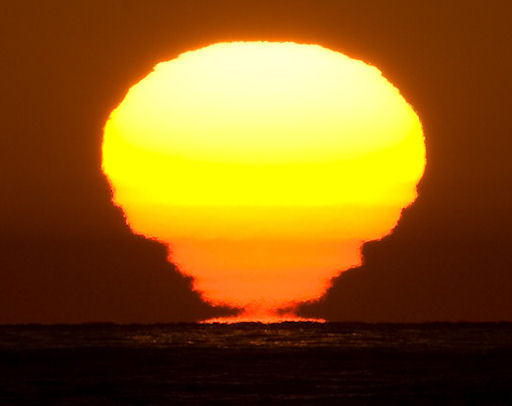
Photo details: Nikon D200, Nikkor 300 f/4, 1.4x multiplier, 100 ISO, f/16, 1/640.
"I know the feeling," he says. "I just wanted to stick to my bed, but the lake and sunrise called, and I'm glad I answered!"
This is an excellent example of a sunrise mirage. The great volume of water in Lake Superior holds a lot of heat. During the long cold night of Nov.6th, air nestled against the lake's surface was kept relatively warm. By sunrise on Nov. 7th, a temperature inversion had formed, setting the stage for a distorted "sticky sun."
more images: from Keith Aaron of Virginia Beach, Virginia; from Lyle Anderson of Duluth, Minnesota; from Robert of San Francisco, California; from Mila Zinkova of San Francisco, California
October 2010 Aurora Gallery
[previous Octobers: 2009, 2008, 2007, 2006, 2004, 2003, 2002, 2001]
Potentially Hazardous Asteroids (
PHAs) are space rocks larger than approximately 100m that can come closer to Earth than 0.05 AU. None of the known PHAs is on a collision course with our planet, although astronomers are finding
new ones all the time.
On November 9, 2010 there were 1164potentially hazardous asteroids.
Notes: LD means "Lunar Distance." 1 LD = 384,401 km, the distance between Earth and the Moon. 1 LD also equals 0.00256 AU. MAG is the visual magnitude of the asteroid on the date of closest approach. | | The official U.S. government space weather bureau |
| | The first place to look for information about sundogs, pillars, rainbows and related phenomena. |
| | Researchers call it a "Hubble for the sun." SDO is the most advanced solar observatory ever. |
| | 3D views of the sun from NASA's Solar and Terrestrial Relations Observatory |
| | Realtime and archival images of the Sun from SOHO. |
| | from the NOAA Space Environment Center |
| | the underlying science of space weather |