What's the name of that star? Where's Saturn? Get the answers from mySKY--a fun new astronomy helper from Meade.
ASTEROID FLYBY: This week asteroid 1862 Apollo is flying past Earth. Closest approach: 11 million kilometers on May 8th at 1500 UT. Discovered in 1932, Apollo was the first asteroid recognized to cross Earth's orbit. It measures 1.7 km wide and has a tiny 75 meter wide moon. In the nights ahead, southern hemisphere astronomers with big backyard telescopes may be able to photograph Apollo glowing like a 13th magnitude star as it glides through the constellations Microscopium and Grus: ephemeris.
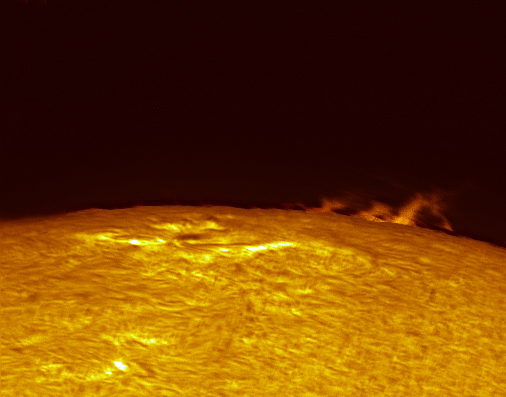
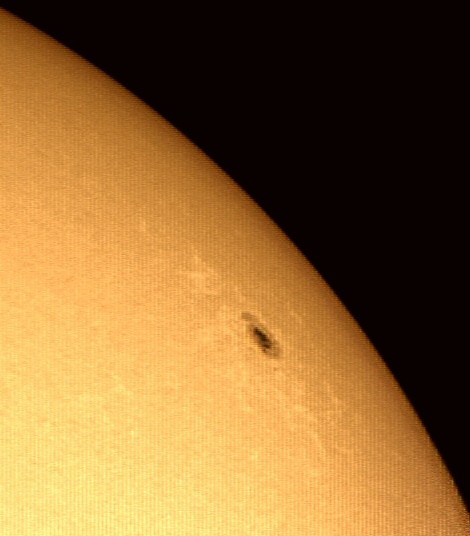
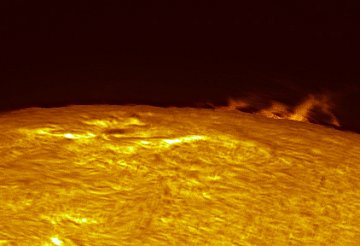
GOODBYE 953: Photogenic sunspot 953 is approaching the sun's western limb where it will soon disappear, carried around the bend by the sun's 27-day rotation. Photographers B. Morrissette and J. Stetson took this picture today from South Portland, Maine:
Sunspot 953: The view through a Coronado SolarMax90
Note the dark filament emerging from the core of the sunspot. As the sunspot crosses over the limb, the filament briefly will jut out into space, possibly creating a nice photo-op for astronomers with solar telescopes. Stay tuned!
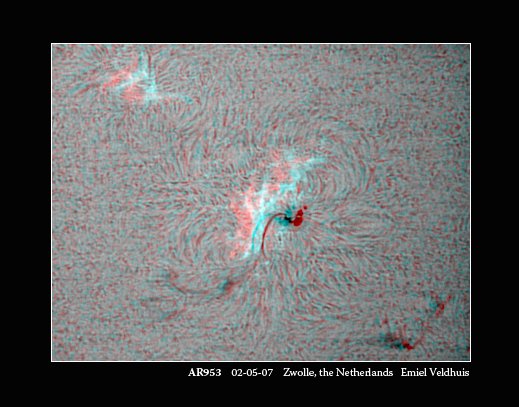
3D BONUS: Using digital trickery, Emiel Veldhuis of the Netherhands, transformed a flat photo of sunspot 953 he took on May 2nd into a fun 3D anaglyph. The filament leaps right out at you! Put on your 3D glasses and take a look.
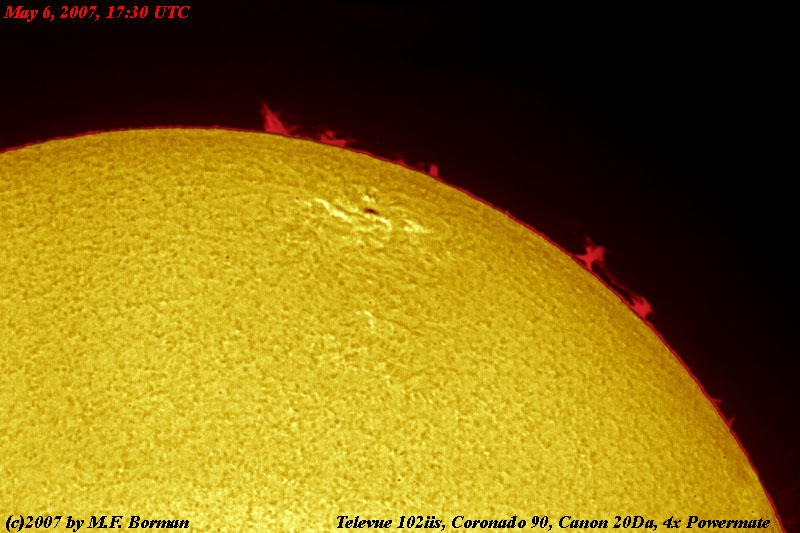
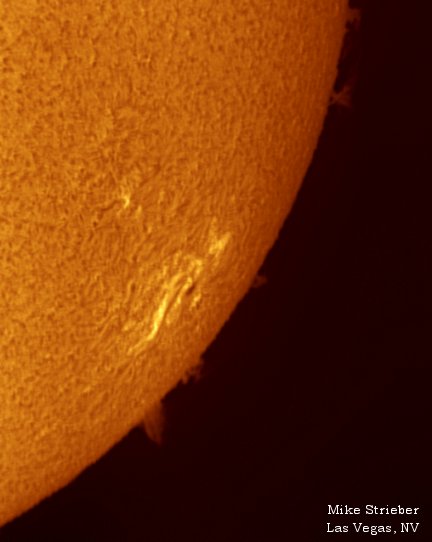
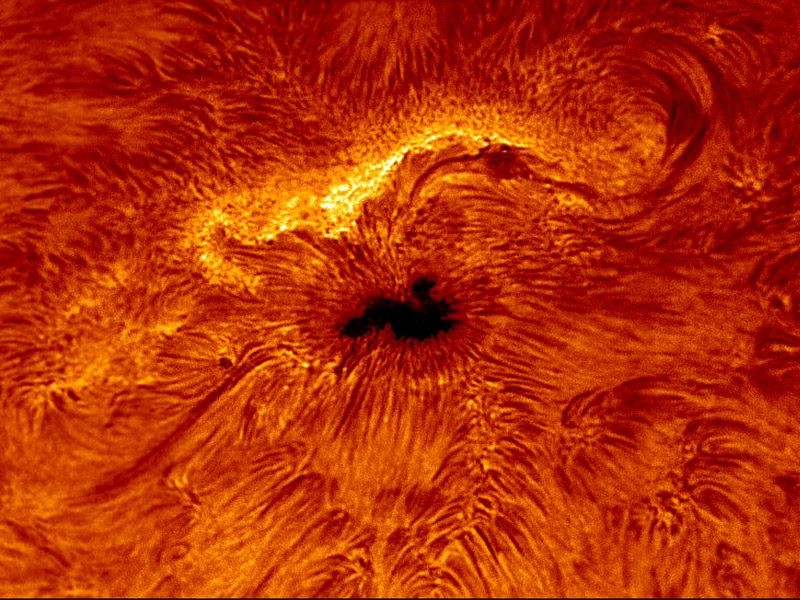
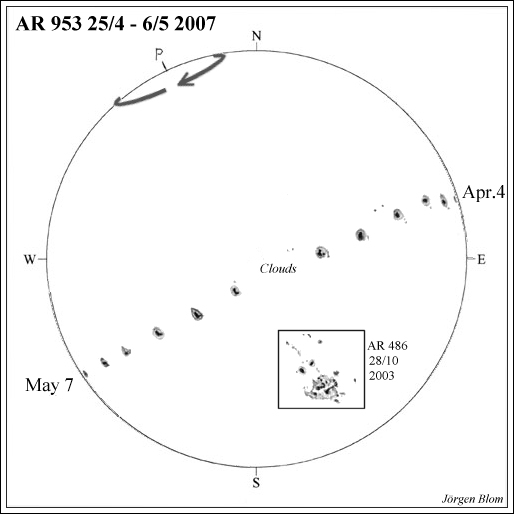
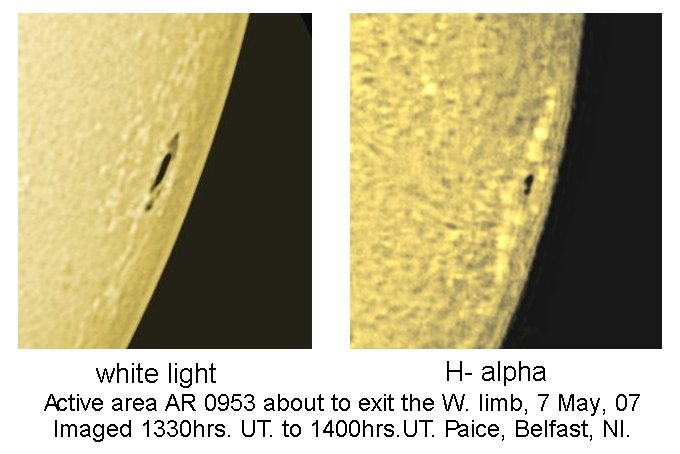
more images: from Michael Borman of Evansville, Indiana; from John C McConnell of Maghaberry, Northern Ireland; from Mike Strieber of Las Vegas, Nevada; from Dave Tyler of Buckinghamshire, UK; from Jörgen Blom of Stockholm, Sweden; from Peter Paice of Belfast, Northern Ireland.
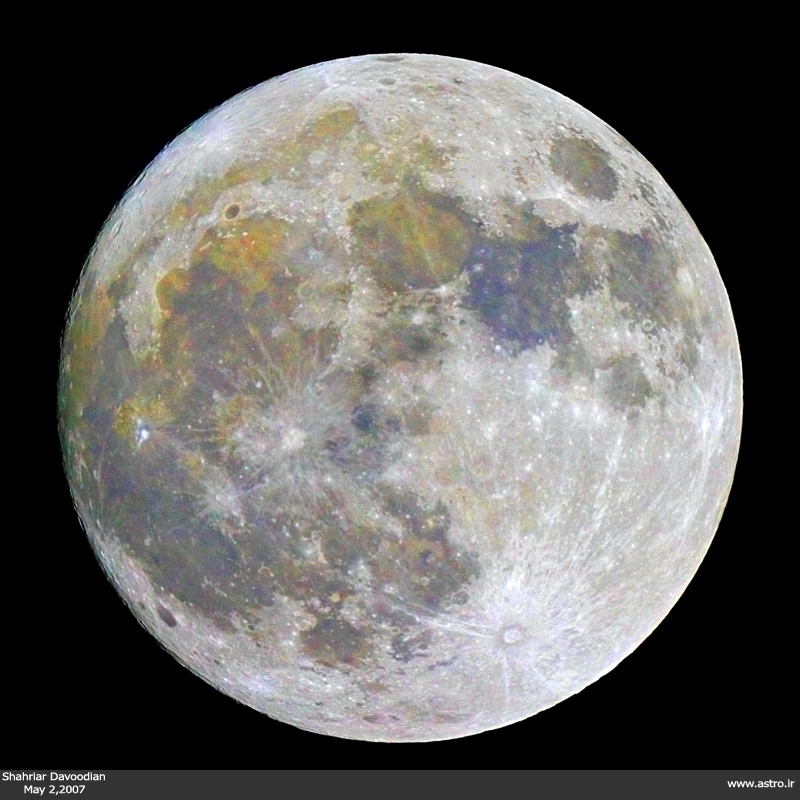
BLUE IS GOOD: At first glance, the Moon seems thoroughly gray, but astronomers have long known that lunar terrain is full of subtle color. Consider this picture of last week's full Moon taken by Shahriar Davoodian of Tehran, Iran:
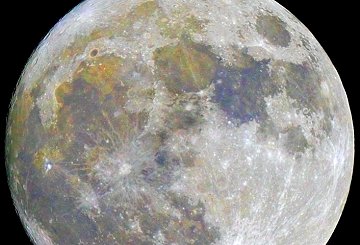
Photo details: Canon EOS 30D, ISO 200, 1/1000 exposure
"I did not use any filter," says Davoodian. He didn't need one; the colors are naturally present and only need a bit of boosting with Photoshop to see. The method is described here.
What do the colors mean? Blue denotes areas rich in titanium, while orange is titanium poor. The titanium-rich zones are particularly interesting to NASA. Most lunar titanium is bound to oxygen; the common lunar mineral ilmenite, for instance, is rich in titanium oxides. This oxygen may be easily extracted, providing future explorers a source of air to breath and oxidizer for rocket engines. Blue is good!



 SPACE WEATHER

 SPACE WEATHER