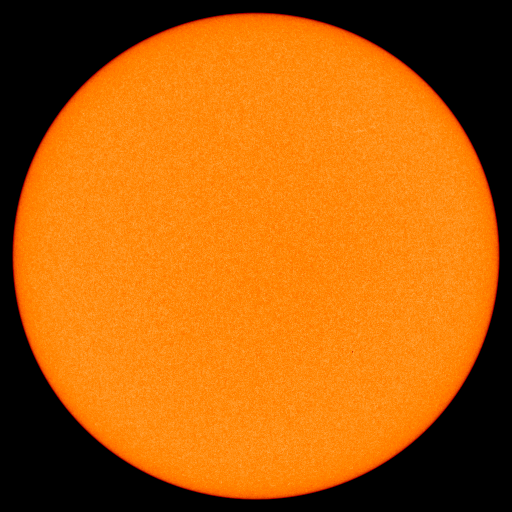
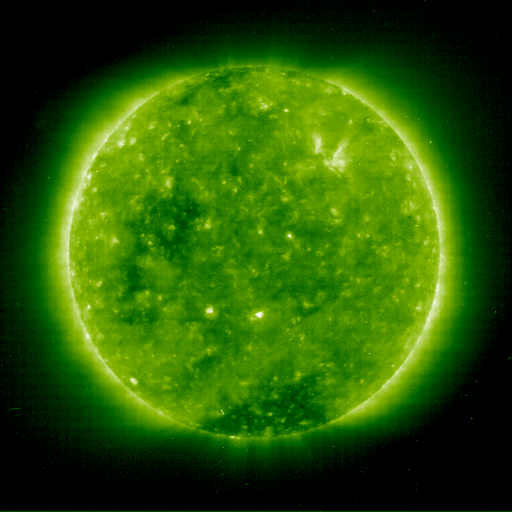
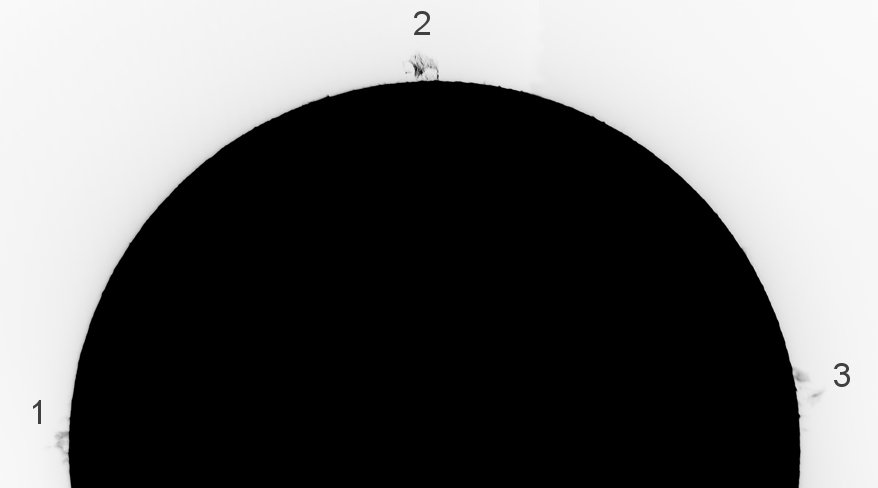
| ALASKANS SAMPLE LUNAR LIFESTYLE: By coating the countryside with gritty, abrasive, electrostatically-charged volcanic ash, Mt. Redoubt is giving Alaskans an unexpected taste of what it's like to live on the Moon. Get the full story from Science@NASA. BLANK SUN: The face of the sun is so blank, renowned sun-photographer Greg Piepol no longer bothers to show it in his photos. Even with the surface blanked out, however, there is still something to see: 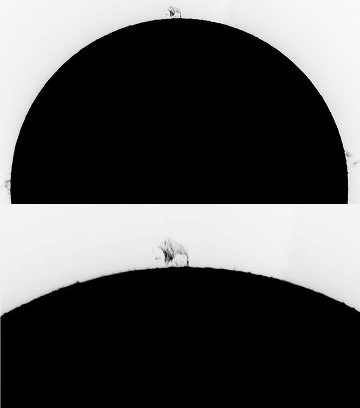
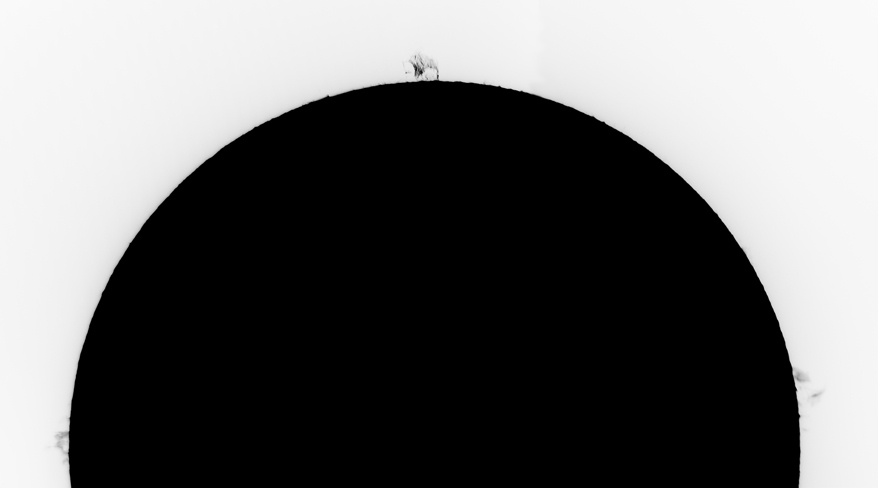
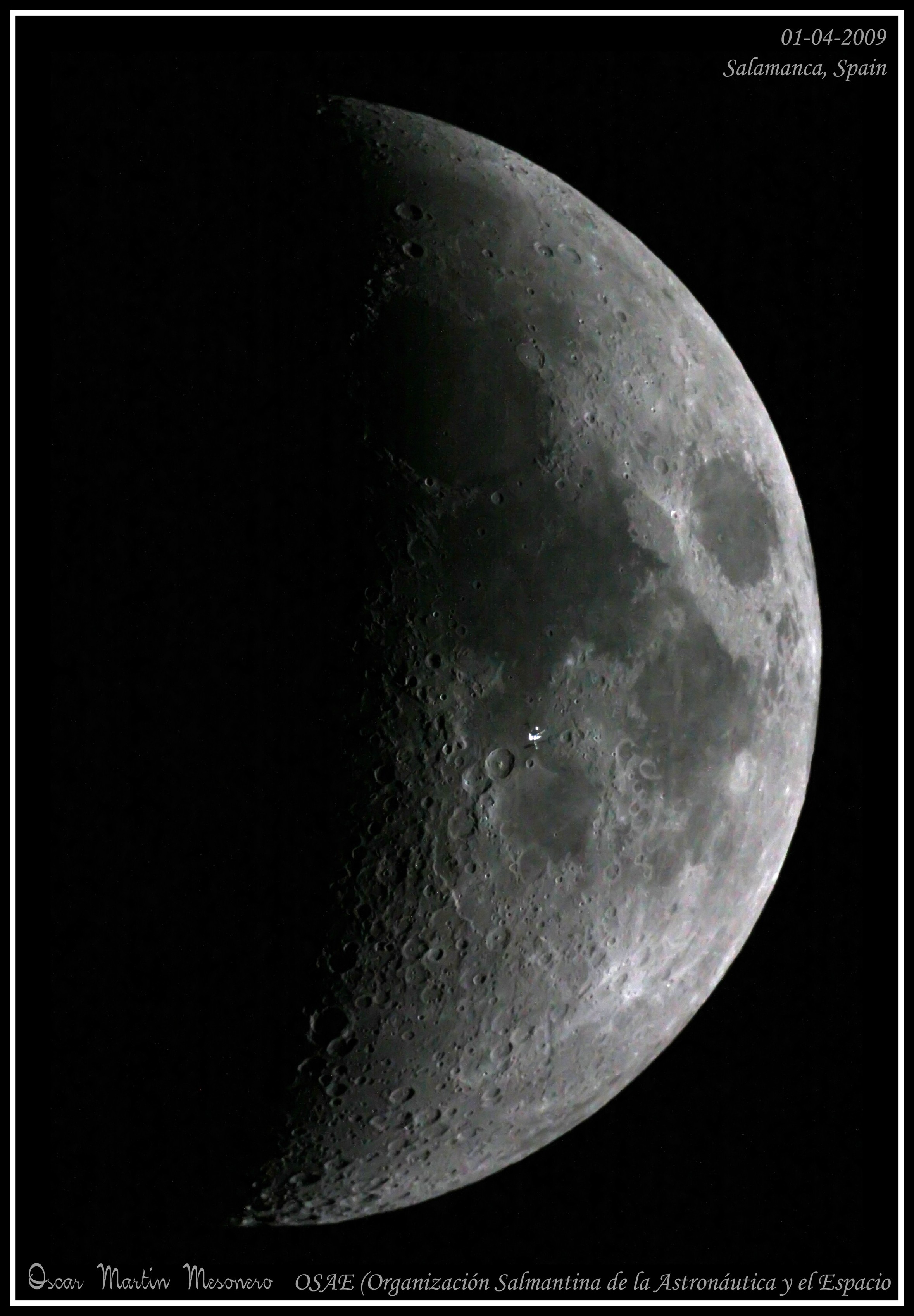
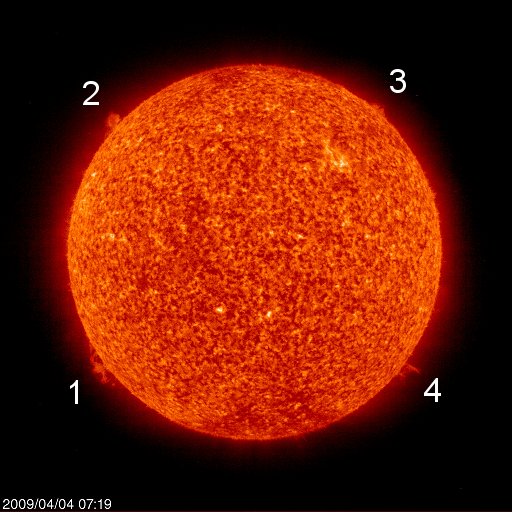
"Thank goodness for prominences!" says Piepol who took the picture on April 3rd from his backyard observatory in Rockville, Maryland. "They are one form of solar activity that seems to continue even during a Deep Solar Minimum." It's true, clouds of hydrogen dance along the solar limb throughout the 11-year solar cycle. Yesterday, Piepol counted three, and today there are four. The "prominence number" is much larger than the sunspot number, giving solar astronomers reason to keep looking at the sun. "To photograph the prominences, I used a brand new type of H-alpha scope, the LS100THa from Lunt Solar Systems," adds Piepol. "These images are the very first light through the scope." more images: from Eric Roel of Orion Observatory, Rancho La Compañía, México; from Steve Rismiller of Milford, Ohio; from Guenter Kleinschuster of Feldbach, Styria, Austria ISS MOON TRANSIT: The International Space Station has grown so big and bright, you can see it even when it is directly in front of the Moon. Oscar Martin Mesonero of Salamanca, Spain, took this picture on April 1st: 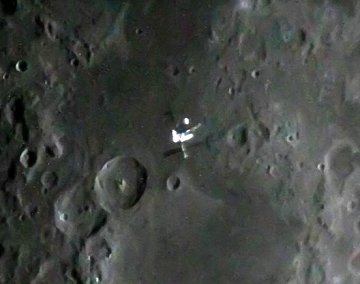
"I recorded the transit using my 8-inch Celestron telescope and a Canon EOS 50D," says Mesonero. "The ISS was much brighter than the lunar background." His snapshot caught the space station passing over the Sea of Nectar (Mare Nectaris). Just to the north of the transit path is the Sea of Tranquility where Apollo 11 astronauts landed 40 years ago. The ISS seems so close to lunar soil that the crew could hop out for a visit of their own. In fact, the Moon is about 384,000 km away from the Earth-orbiting spacecraft. Astronauts won't be truly close to Nectar until 2020. The ISS will join the Moon in the evening sky again this weekend. Check the Simple Satellite Tracker for viewing times. more images: from Thorsten Boeckel of Fuerstenfeldbruck, Germany; from P. Nikolakakos of Nafplio, Greece; from Joe Westerberg of Palm Springs, California; from Oscar Martin Mesonero of Salamanca, Spain
March 2009 Aurora Gallery
[previous Marches: 2008, 2007, 2006, 2005, 2004, 2003, 2002]
Explore the Sunspot Cycle |