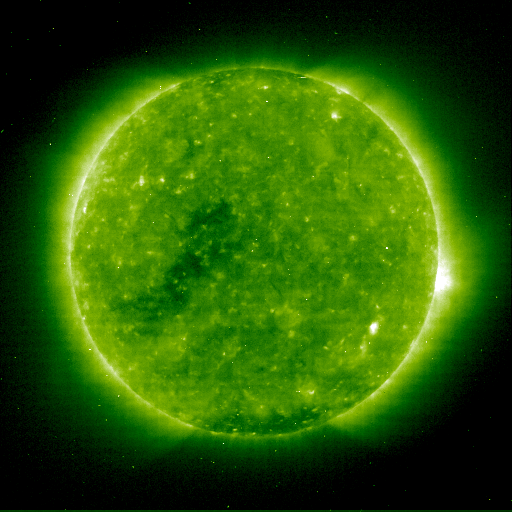
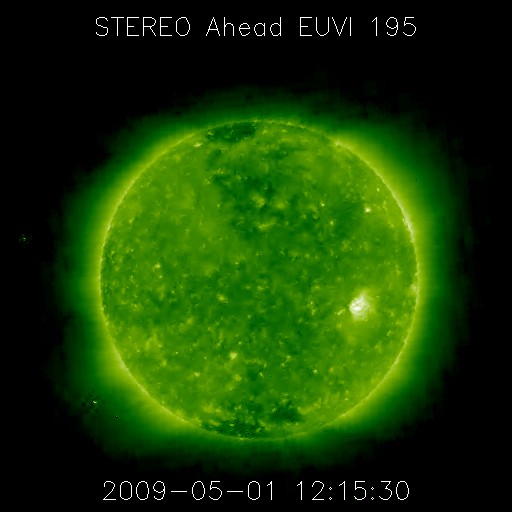
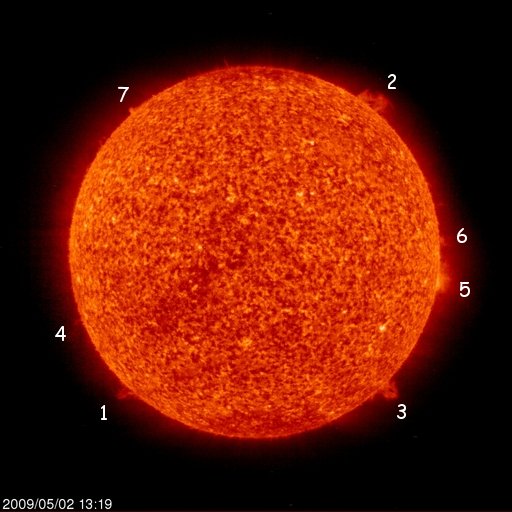
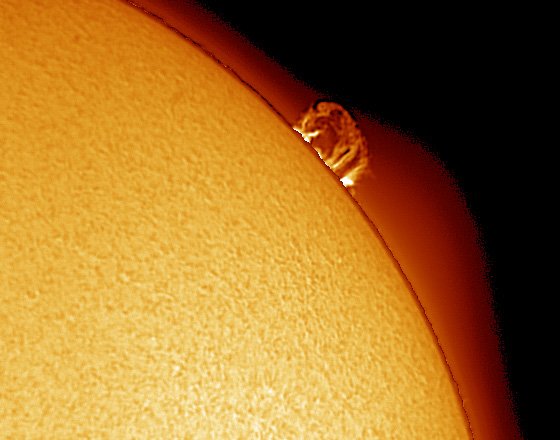
| SOLAR PROMINENCES: Today, the solar prominence count is seven. The largest one is a gorgeous arch shown here in a photo from amateur astronomer James Screech of Bedford, England. "I took the picture using my Personal Solar Telescope," he says. For scale, a pair of planet Earth's could fit through the enormous loop with room to spare. BLANKETY-BLANK SUN: Sunspot 1016 has vanished. Yesterday it rotated over the western limb of the sun where it can no longer be seen from Earth. But has it really vanished? According to NASA's STEREO-A spacecraft, the sunspot still exists. It is circled in this extreme UV image just beamed back to Earth: 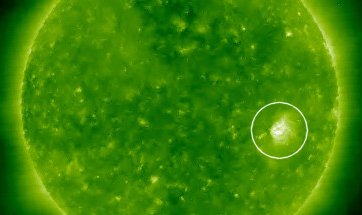
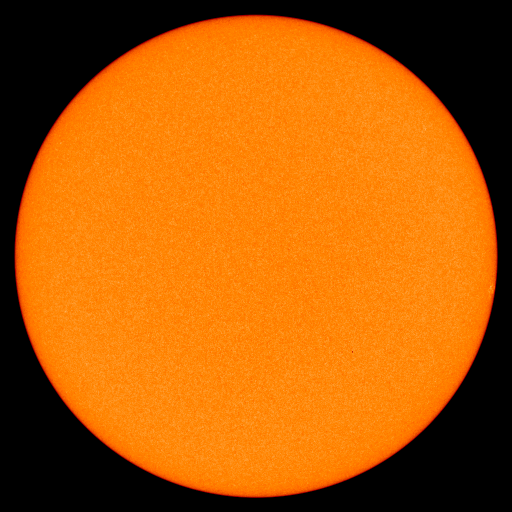
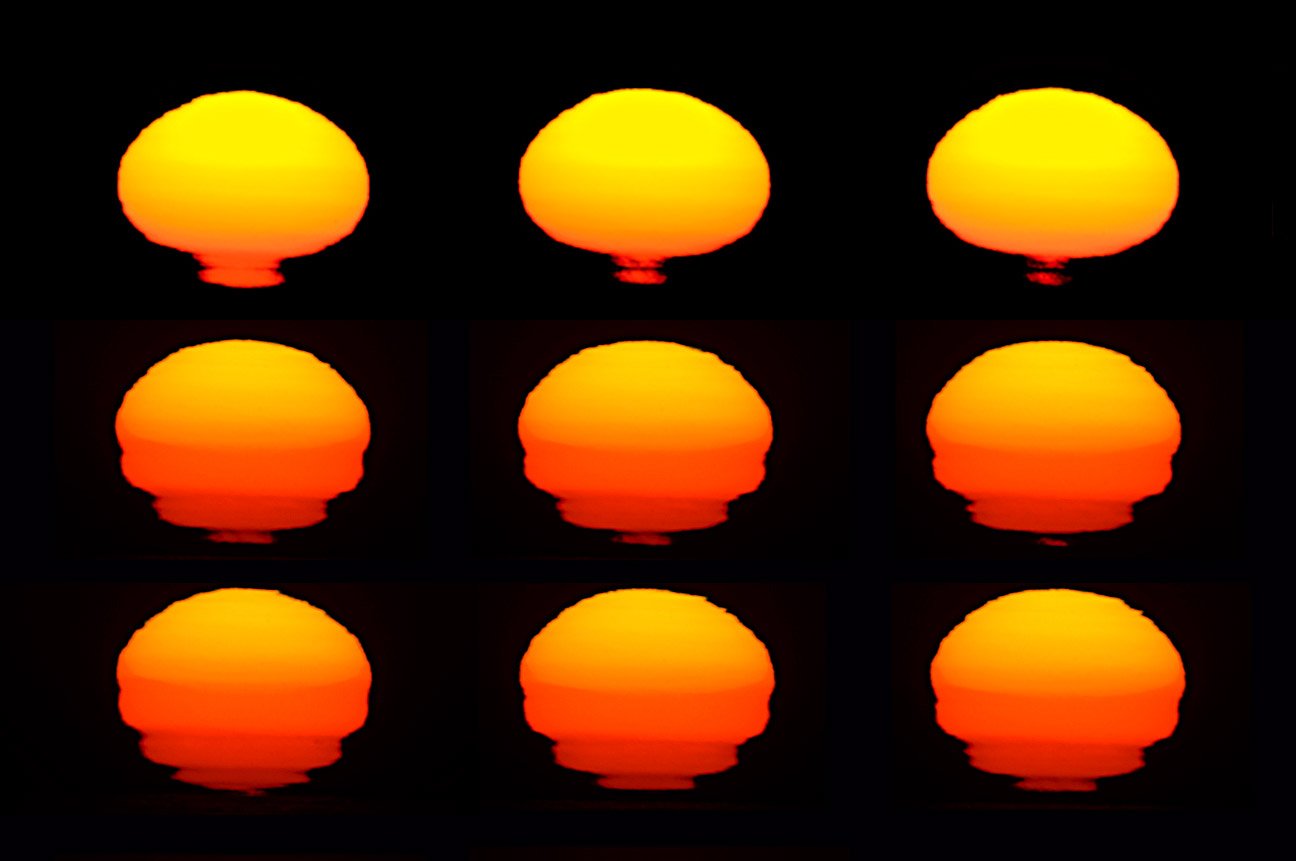
STEREO-A is stationed above the western limb of the sun. From that vantage point, the spacecraft can track sunspots for days after they leave the range of terrestrial telescopes. Back on Earth, the sunspot number has dropped to zero, but STEREO-A is still counting. So is the sun blank--or not? For more than 200 years, astronomers have counted spots on the Earth-facing side of the sun and called that the sunspot number. Farside spots couldn't be seen and didn't count. Continuing this tradition makes sense because it allows us to compare data across the centuries. So, today, the sun is officially blank even if STEREO-A knows better. MAINE SUNRISE: In Cape Elizabeth, Maine, the last sunrise of April was a doozy. Standing on the shore of Casco Bay on April 30th, photographer John Stetson captured this sequence of images: 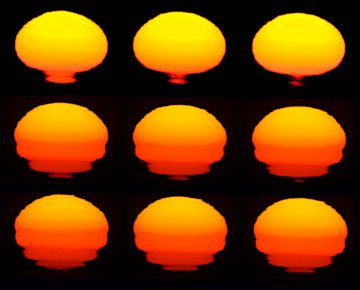
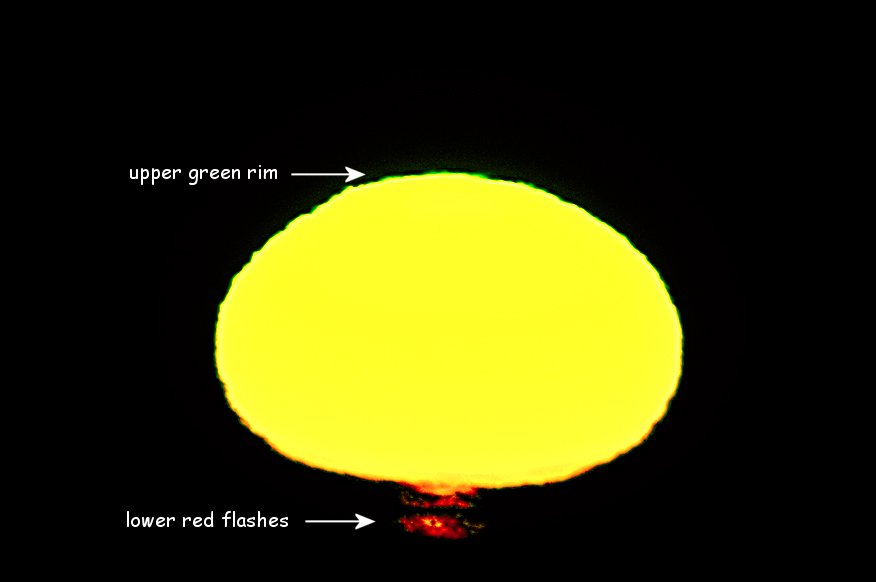
"Our sun can appear in interesting shapes," says Stetson with understatement. "This is a result of Earth's atmosphere acting as a lens to refract the light that we see." Atmospheric optics expert Les Cowley elaborates: "In John’s sequence the solar image struggles upwards through multiple atmospheric temperature inversion layers. Each has unusually cooler air trapped beneath warmer, and each splits the sun’s light into two images – one rising, one inverted and sinking. Where they overlap we see a bulging 'spare tire'! Such mirages are the stuff of a special type of green flash, a 'mock-mirage' that is frequently photographed but is very rarely seen with the unaided eye." A close-up look at the distorted sun reveals even more: "John has caught several instances of the green upper rim flash and lower 'red flashes' where the last fragment of an image caught between inversion layers is reddened and vertically stretched." What kind of sunrises will May bring? Stay tuned.
April 2009 Aurora Gallery
[previous Aprils: 2008, 2007, 2006, 2005, 2004, 2003, 2002]
Explore the Sunspot Cycle |