 Did you miss the aurora surprise of August 7th? Next time get a wake-up call: Spaceweather PHONE.
PERSEID METEORS: Over the weekend, Earth passed through the dusty tail of Comet Swift-Tuttle. Innumerable bits of comet dust traveling 130,000 mph hit Earth's atmosphere and became Perseid meteors. It was a good show in spite of much bright moonight: photo gallery.
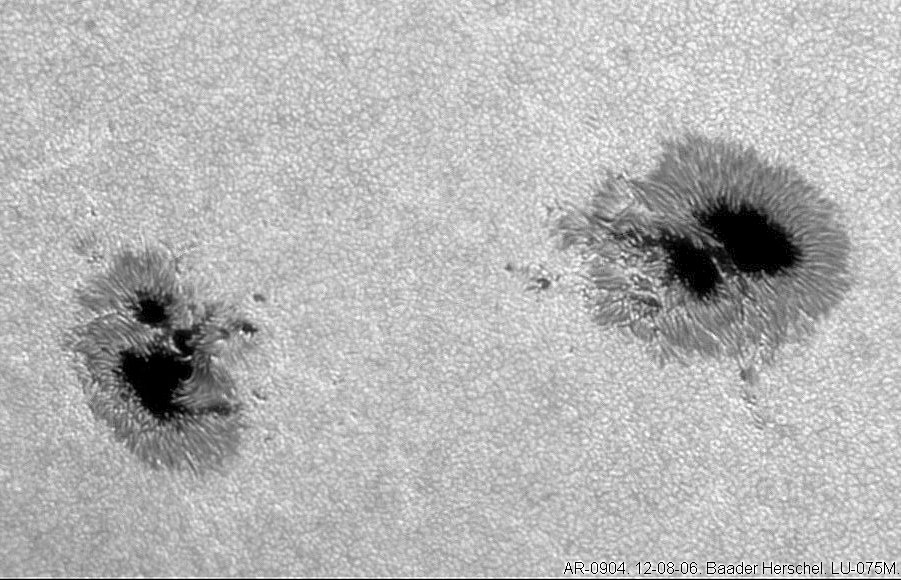
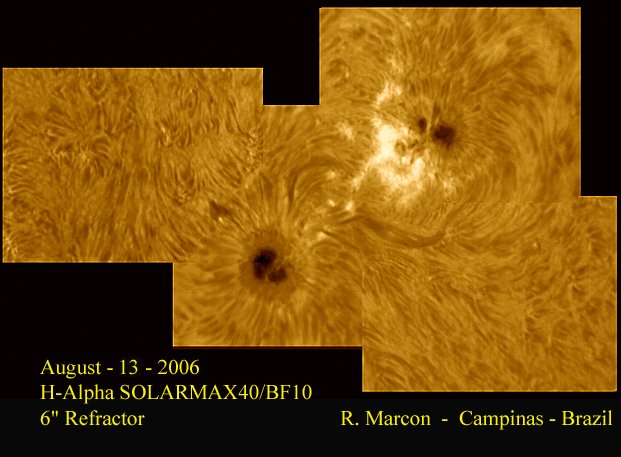
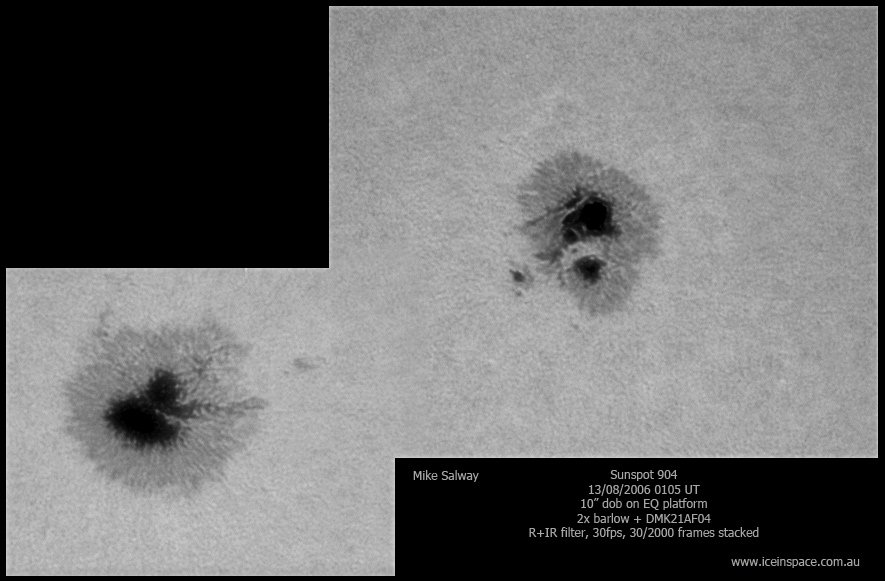
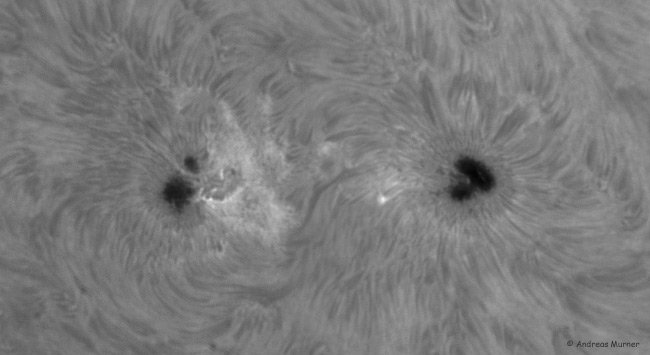
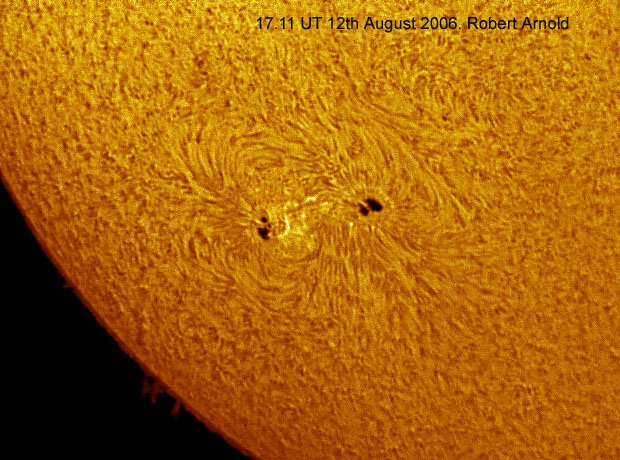
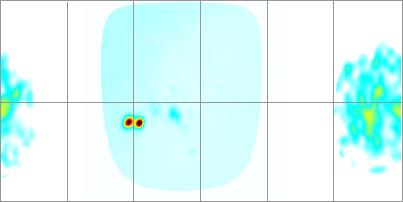
SUNSPOT 904: There's a giant magnet on the sun today: Bipolar sunspot 904. Sunspots are made of pure magnetism. The two ragged components of sunspot 904 are actually magnetic poles, north (N) on the left and south (S) on the right: (continued below)
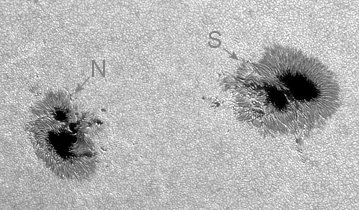
Sunspot 904 photographed by Eric Roel of Valle de Bravo, México.
Solar flares occur when opposite magnetic polarities clash together. Perhaps sunspot 904 has been so quiet lately because its poles are far apart. Almost 100,000 kilometers separate N from S. If the two ends of this sunspot group should begin to converge... stay tuned for fireworks.
more images: from Rogerio Marcon of São Paulo, Brazil; from Mike Salway of Central Coast, NSW, Australia; from Andreas Murner of Lake Chiemsee, Germany; from Robert Arnold on the Isle of Skye, Scotland.
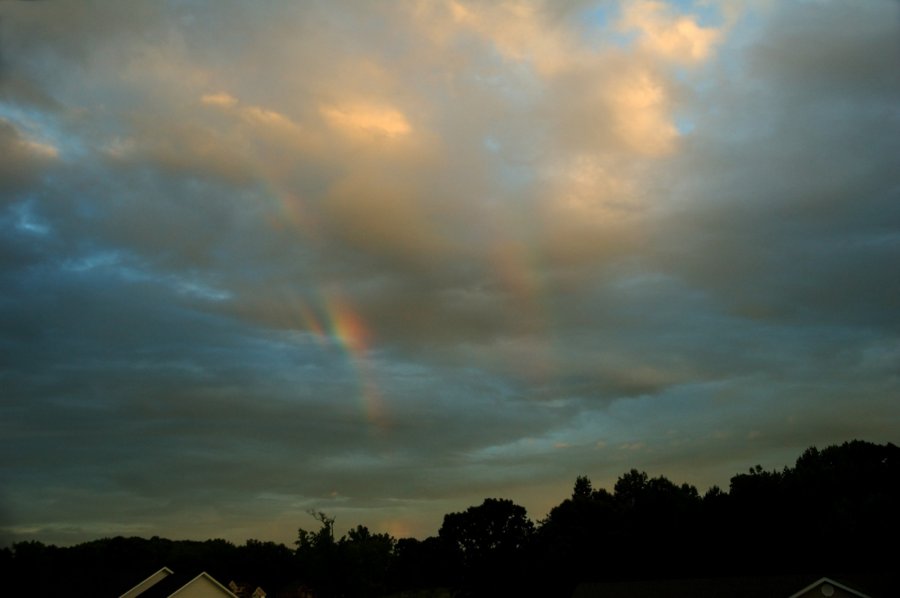
RAINBOW MYSTERY: July 29th was a long, rainy day in Statesville, North Carolina. When the evening clouds finally parted, photographer Charles Tilley saw something wonderous: "The southern sky was filled with multiple rainbows. A complete arc was never seen, but parts of five different rainbows appeared at the same time."
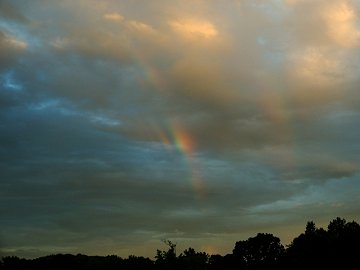
What could cause such a strange, fragmented rainbow? Answering that question became a "nice little exercise in atmospheric optics detective work" for rainbow-expert Les Cowley.
In short, it took several localized showers drizzling extra-tiny raindrops to produce the display. The full solution is a lengthy, but interesting read for serious rainbow-philes. Says Cowley, "You will not see something like that again for a very long time!"



 SPACE WEATHER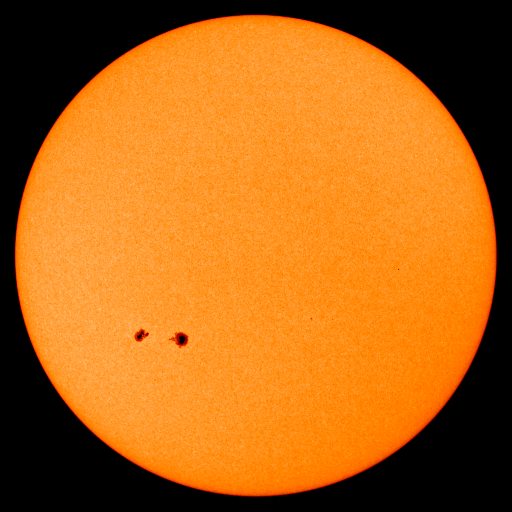
 SPACE WEATHER