| Where's Saturn? Is that a UFO--or the ISS? What's the name of that star? Get the answers from mySKY--a fun new astronomy helper from Meade. | |  | VANISHING RINGS: Amateur astronomers around the world have noticed, something is happening to Saturn. The planet's rings are rapidly narrowing and, if this continues, before long they'll be a wafer-thin line almost invisible to backyard telescopes. Get the full story from Science@NASA. ARTHUR C. CLARKE: Sir Arthur C. Clarke has died in Sri Lanka at the age of 90. Clarke penned many classic science fiction novels such as 2001: A Space Odyssey, Childhood's End, A Fall of Moondust, Rendezvous with Rama and more than 80 others. But he was not limited to fiction. Clarke is widely credited for conceptualizing geosynchronous orbits (sometimes called Clarke orbits) and communication satellites, and he posited Clarke's Law: "Any sufficiently advanced technology is indistinguishable from magic." 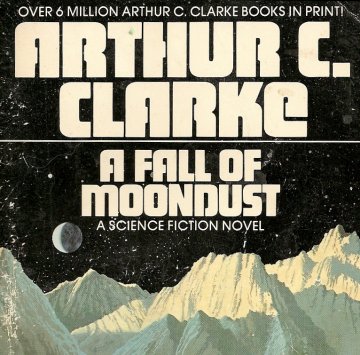
Above: Dr. Tony Phillips' childhood copy of A Fall of Moondust.
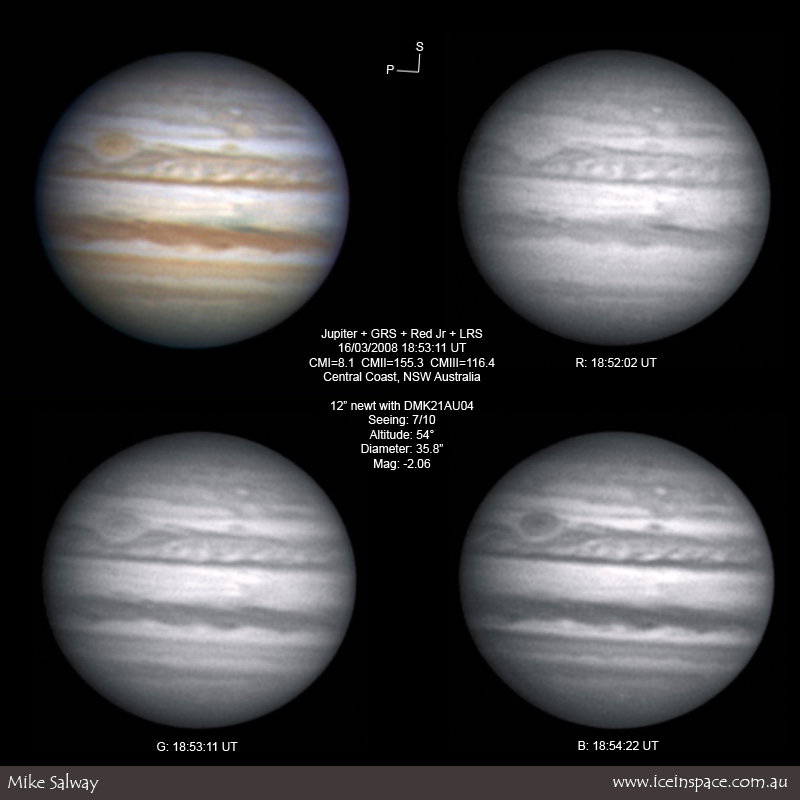
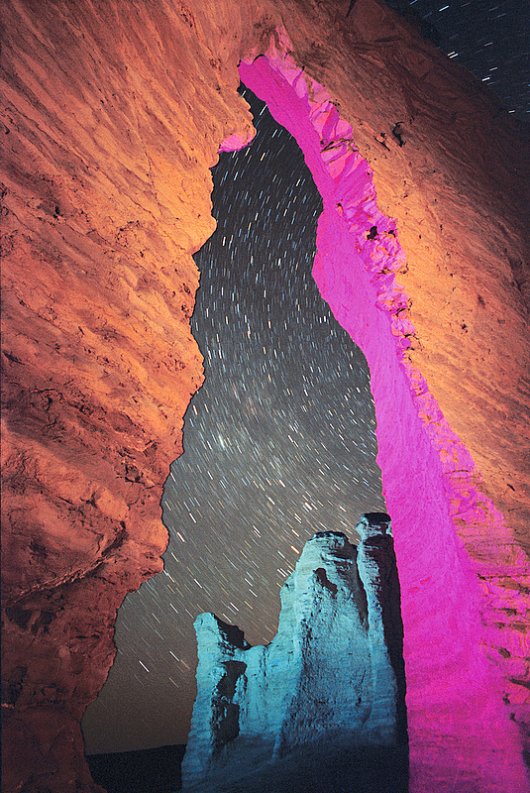
His work was an inspiration to countless young writers and scientists of the middle to late 20th century. "Although his personal odyssey here on Earth is now over, his vision lives on through his writing," says Alan Stern, associate administrator of NASA's Science Mission Directorate in Washington DC. "He will be sorely missed." PHOTO TRIBUTE: "I join with all who mourn the loss of the incomparable Arthur C. Clarke," says space photographer Doug Zubenel. "When I saw the film 2001 in the spring of 1969, it left an indelible impression upon me. This photo entitled Spacegate, which I took on March 2, 1994, at Monument Rocks National Natural Landmark in Kansas, was heavily influenced by the imagery near the end of that mind-expanding movie." Obituaries: BBC, LA Times, Associated Press, CNN. THREE RED SPOTS: How many red spots does Jupiter have? On March 17th, Mike Salway of Australia looked through his 12-inch telescope and counted three: 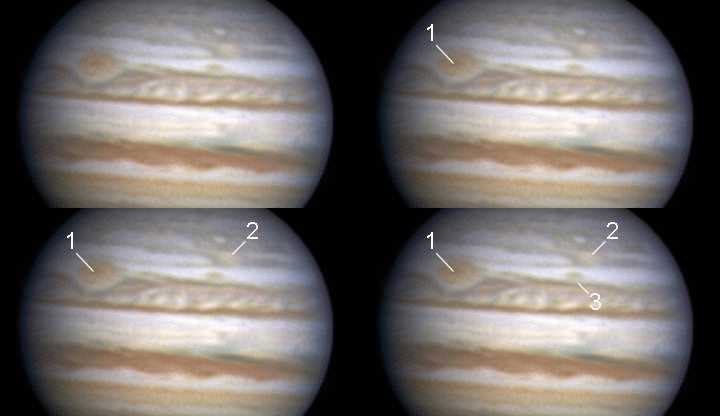
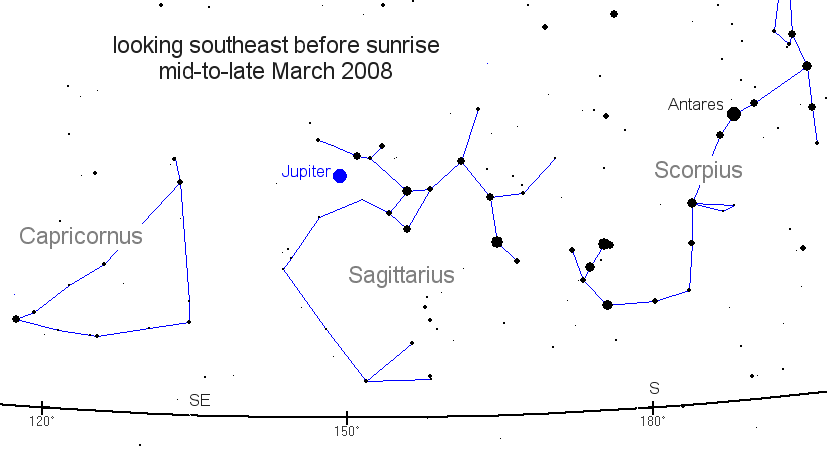
Red spot #1 is the Great Red Spot you've heard about, hundreds of years old and twice as wide as Earth. Red spot #2 is Oval BA, which formed white in 2000 and turned red in 2006. Red spot #3 is a newcomer, "the Little Red Spot," says Salway, possibly only weeks old. All these spots are storms--anticyclones big enough to swallow a rocky planet. What makes them red? Curiously, no one knows why the Great Red Spot itself is red. A favorite idea is that the storm dredges "chromophores" (color-changing compounds) from deep inside Jupiter up to the cloudtops where sunlight triggers a chemical reaction with red by-products. But what are the chromosphores and what is the chemical reaction? It's a mystery--now multiplied by three. Jupiter is emerging from the glare of the sun as a bright morning star, visible in the southeast before sunrise: sky map. "I'm still waiting for some 'excellent' morning to deliver the best resolution and detail," says Salway, "but as Jupiter keeps climbing I'm sure it will come soon." Stay tuned! |