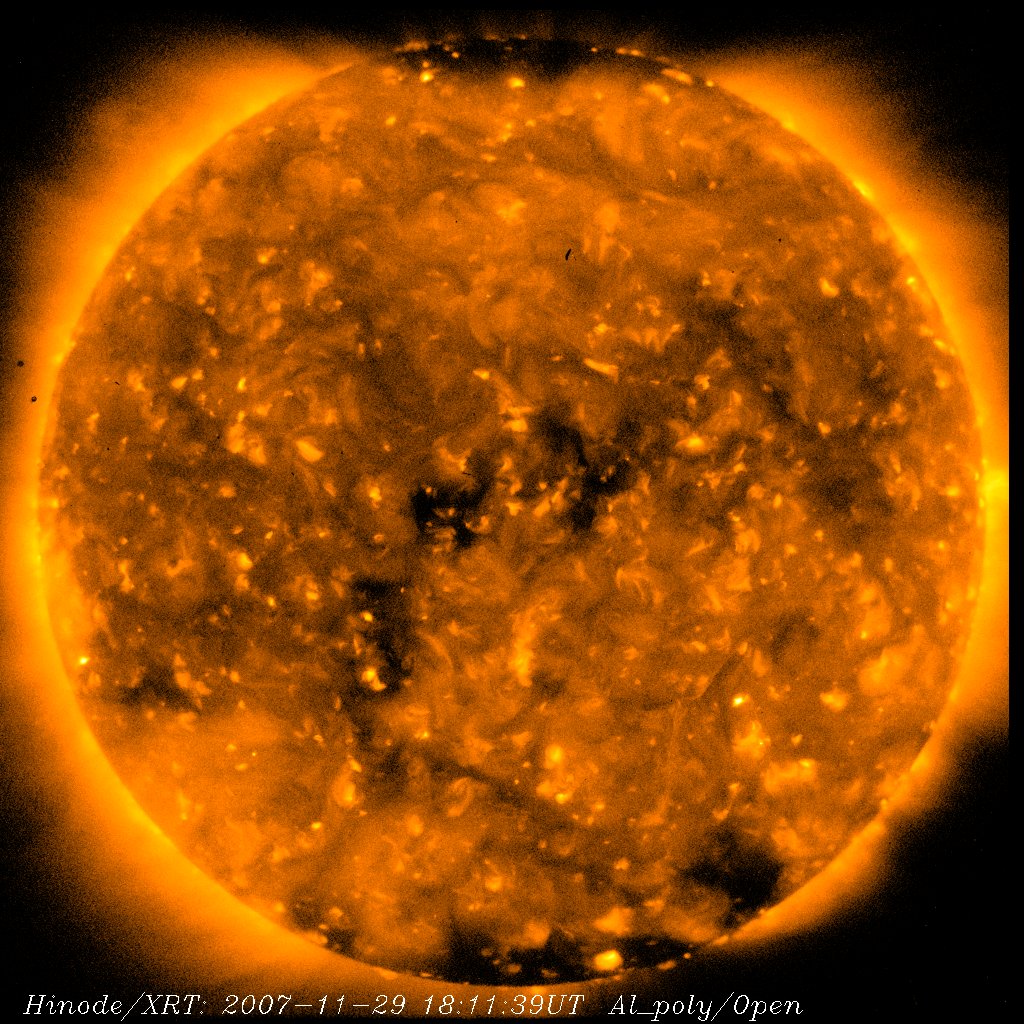
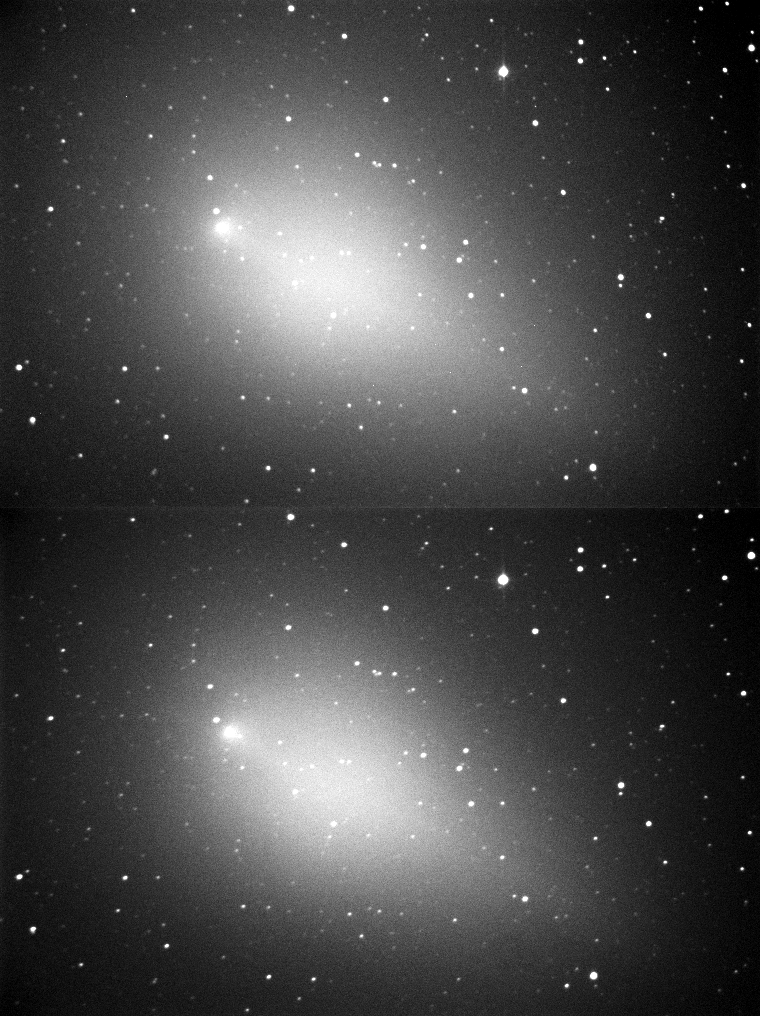
Where's Saturn? Is that a UFO--or the ISS? What's the name of that star? Get the answers from mySKY--a fun new astronomy helper from Meade. Where's Saturn? Is that a UFO--or the ISS? What's the name of that star? Get the answers from mySKY--a fun new astronomy helper from Meade. SOLAR WIND DRIES VENUS: The European Space Agency's Venus Express spacecraft has made an important discovery: the solar wind dries out Venus. Unlike Earth, Venus has no global magnetic field to deflect particles from the sun; when solar wind hits Venus it actually erodes the upper atmosphere. Hydrogen and oxygen atoms fly into space, removing from Venus the chemical building blocks of water. The process makes an already hellish planet even worse. Get the full story from the ESA. COMET 17P/HOLMES: Comet 17P/Holmes has been expanding relentlessly since it exploded in late October and it now spans an angle nearly 1o wide in the night sky. "The comet is so large that we hardly fit it in a single CCD frame," says Apostolos Christou and David Asher of the Armagh Observatory who made this 2-frame movie of the comet moving among the stars on Nov. 22nd: 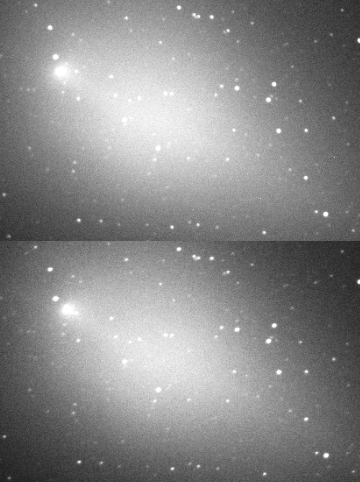
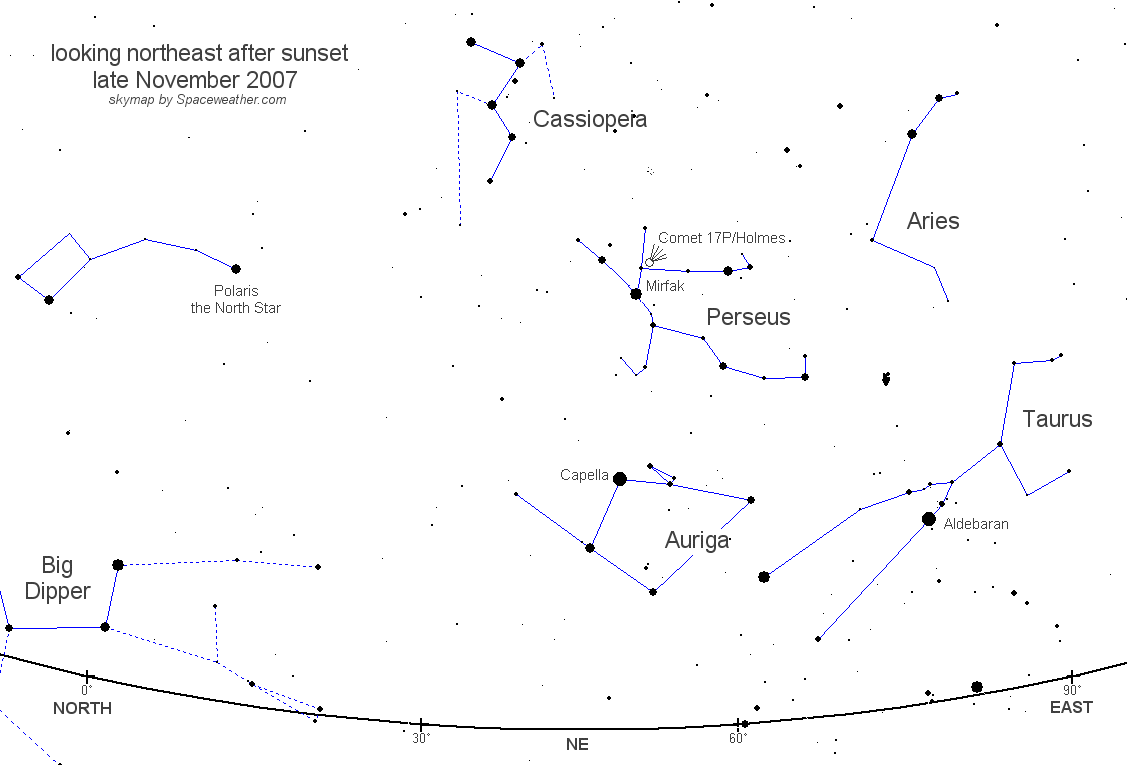
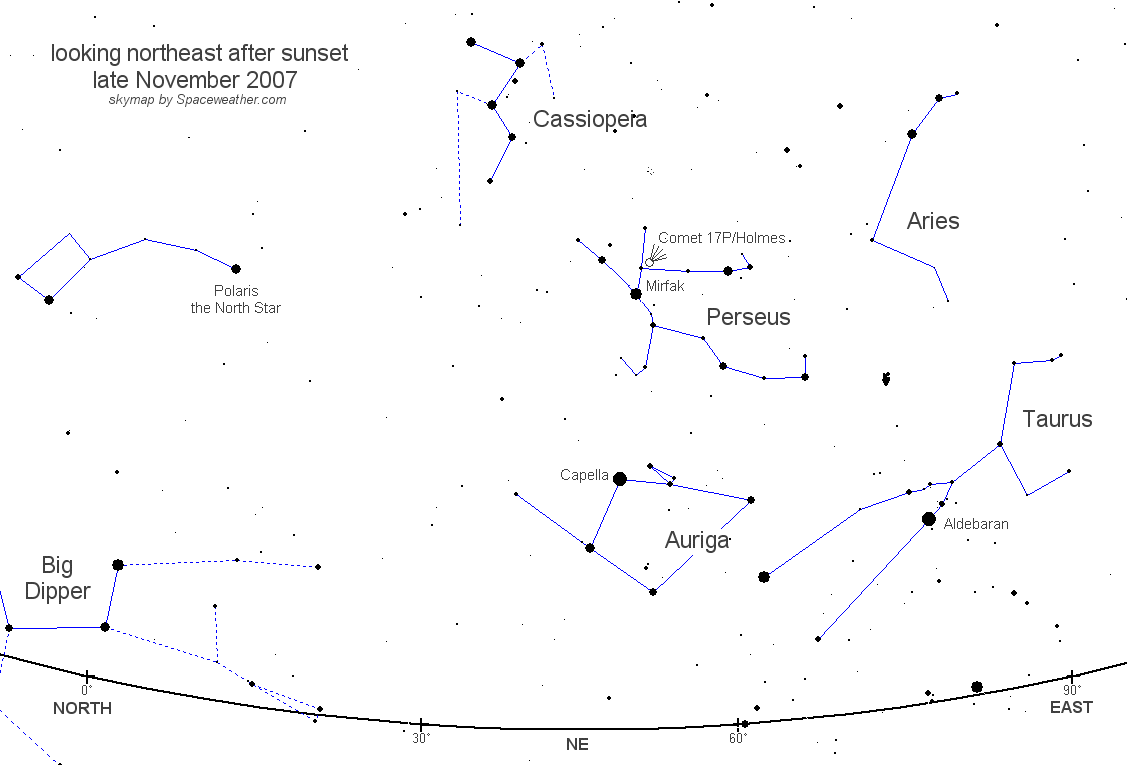
Each frame is a 30-second exposure through a Celestron 6-inch telescope. The time elapsed between frames is 45 minutes. As Comet Holmes has expanded, so has it dimmed. Yet it is still possible to spot the comet with the naked eye from dark places in rural areas: sky map. From light-polluted cities, binoculars are recommended or, if you have them, try night vision goggles. "Comet Holmes is really spectacular when viewed through night vision goggles," reports Mike Collins of the New York State Police Aviation Unit. "Our medevac operation uses them for added safety when landing at pickup scenes. Part of the nightly ritual is alignment and focusing them after attaching to our flight helmets. Even at light polluted Albany Airport the comet pops right out." Comet 17P/Holmes Photo Gallery
[Interactive World Map of Comet Photos]
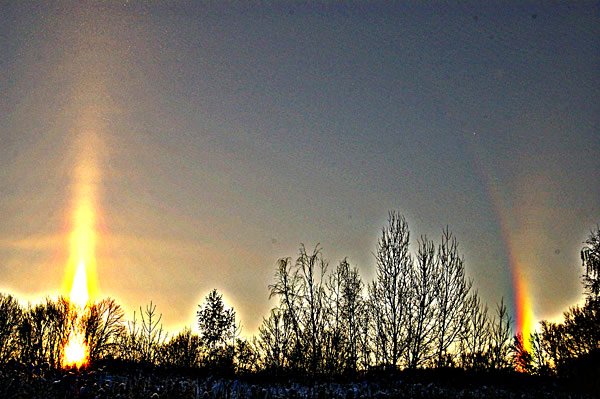
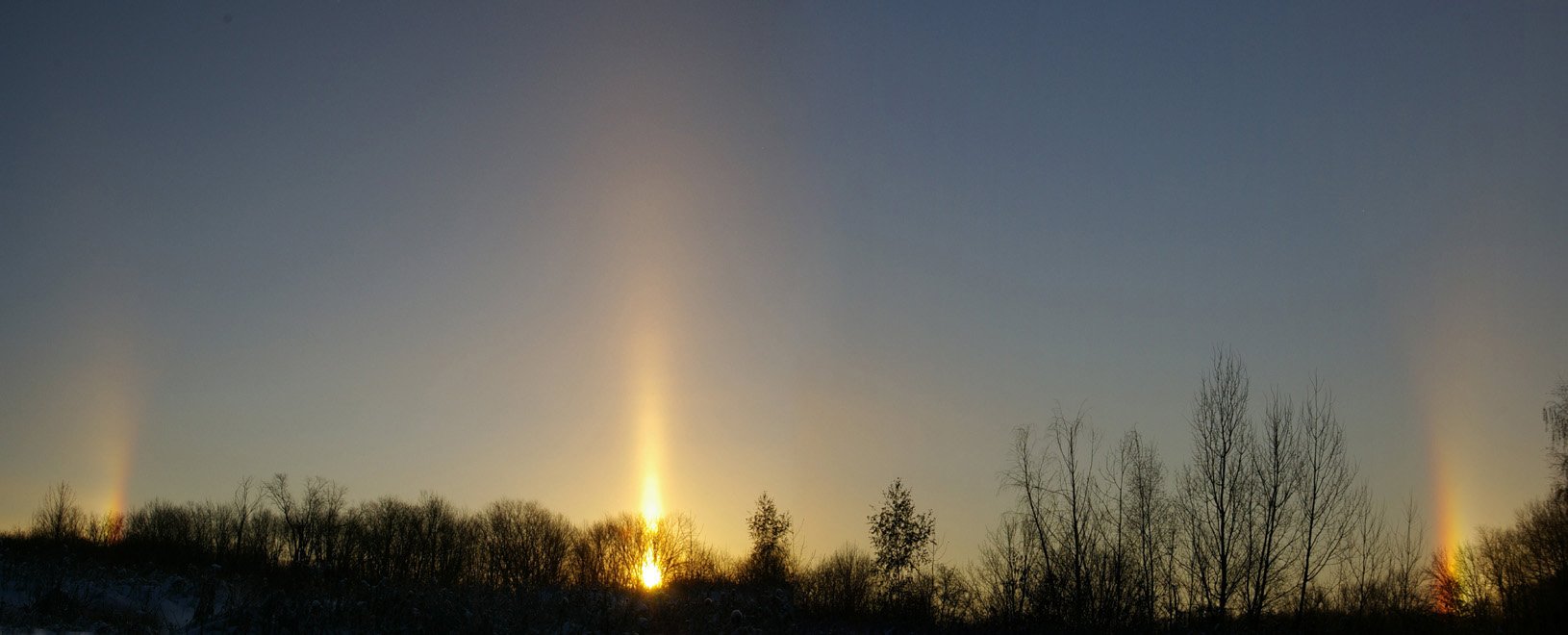
[sky map] [ephemeris] [3D orbit] [Night Sky Cameras] LOWITZ ARCS! On Nov. 23rd, Lori C. of King City, Canada, went outside at sunrise--"the temperature was minus 9 degrees with snowy crystals in the air," she says--and photographed what at first appeared to be a garden-variety ice halo: photo. Closer inspection, however, reveals something rare and extraordinary: "Lori captured the fabled Lowitz arc," says atmospheric optics expert Les Cowley. 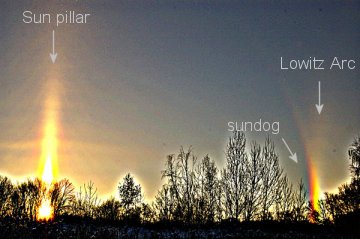
"The 'garden variety' arcs in Lori's photo are a sun pillar flanked by two sundogs. Look carefully at the sundogs and you will see the extremely rare Lowitz arcs curving upwards and outwards away from the sun," he points out. "Tobias Lowitz first sketched them in St Petersburg over 200 years ago and controversy has raged over their very existence ever since. They were first photographed in the 1990s but they are still a hot topic of debate. Lori’s arcs are ungerade-Lowitz arcs, ungerade because sunlight had an odd number of reflections inside the Lowitz ice crystals. Next time you see bright sundogs look carefully, Lowitz arcs could be lurking there too!" |