Turn your cell phone into a field-tested satellite tracker. Works for Android and iPhone. | | |
GEOMAGNETIC STORM: A strong-to-severe geomagnetic storm is in progress following the impact of a coronal mass ejection (CME) at approximately 12:15 UT on Sept. 26th. The Goddard Space Weather Lab reports a "strong compression of Earth's magnetosphere. Simulations indicate that solar wind plasma [has penetrated] close to geosynchronous orbit starting at 13:00UT." Geosynchronous satellites could therefore be directly exposed to solar wind plasma and magnetic fields. High-latitude sky watchers should be alert for Northern and Southern Lights after nightfall. Aurora alerts: text, voice.
aurora photos: from Minoru Yoneto of Queenstown, New Zealand; from Ole Ambrosiussen of Hvinningdal, Silkeborg, Denmark; from Steven Graham of Christchurch, New Zealand; from Mika Puurula of Sotkamo, Finland; from Jonathan Tucker of Whitehorse, Yukon; from Julius Jahre Sætre of Vestfold, Norway
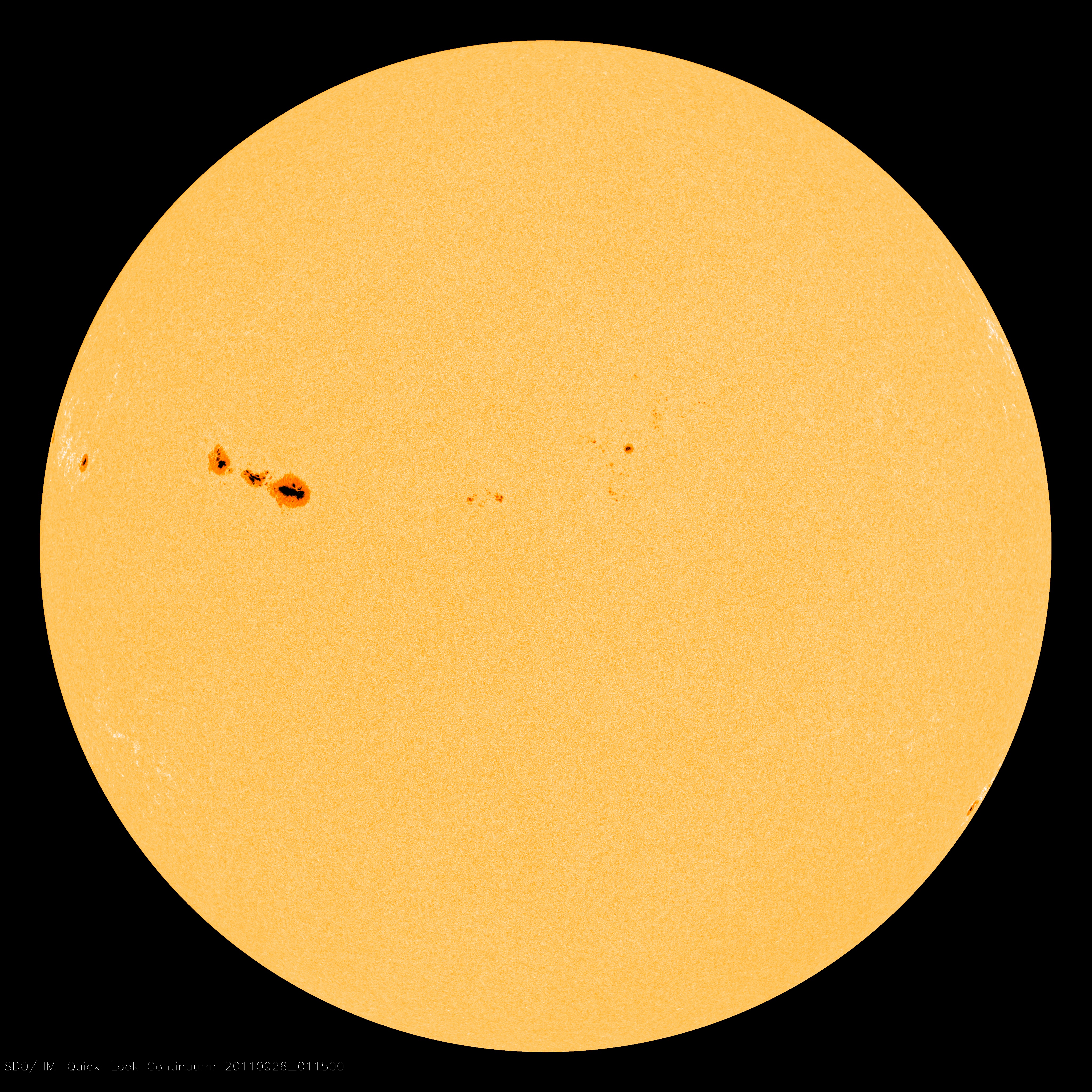
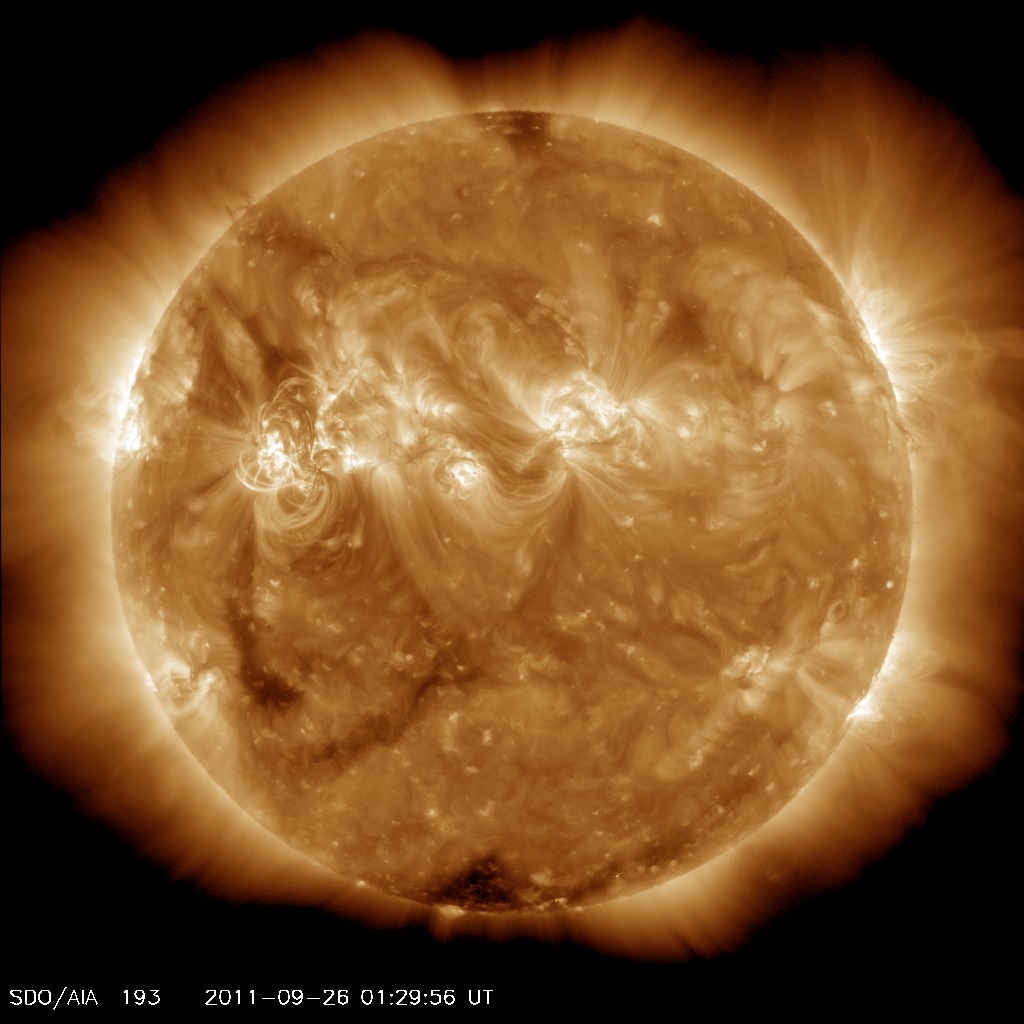
STRONG SOLAR ACTIVITY: Having already unleashed two X-flares since Sept. 22nd, sunspot AR1302 appears ready for more. The active region has a complex "beta-gamma-delta" magnetic field that harbors energy for strong M- and X-class eruptions. Flares from AR1302 will become increasingly geoeffective as the sunspot turns toward Earth in the days ahead.
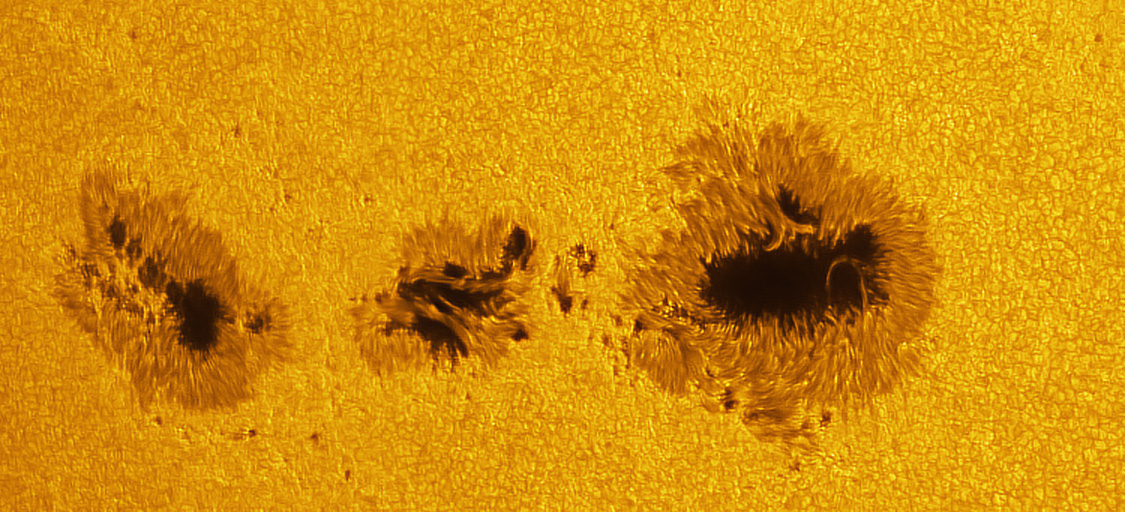
On Sunday, Sept. 25th, Dutch astrophotographer Emil Kraaikamp took a magnificent picture of the active region, which is so big only half of it fits on the screen. Click to view the entire sunspot:

"This is how the sunspot looked through my solar-filtered 10-inch Newtonian telescope," says Kraaikamp. "Due to the always-variable daytime seeing here in the Netherlands, it took a couple of hours to finally capture one good set of images, but it was well worth the effort to get this view of the huge sunspot formation."
more images: from Andy Devey of Barnsley South Yorkshire; from Alan Friedman of Buffalo, NY; from Monika Landy-Gyebnar of Balatonfured, Hungary; from Piet Berger of Simpelveld, Netherlands; from Howard Eskildsen of Ocala, Florida; from Dzmitry Kananovich of Tallinn, Estonia; from Chris Schur of Payson, Az; from John Stetson of Falmouth, Maine; from Grenier of Paris France; from Maximilian Teodorescu of Magurele, Romania; from Cai-Uso Wohler of Bispingen, Germany; from Philippe Van den Doorn of Rixensart, Belgium; ;
SOLAR STATIC: Active sunspot 1302 has turned the sun into a shortwave radio transmitter. Shock waves rippling from the sunspot's exploding magnetic canopy are exciting plasma oscillations in the sun's atmosphere. The result: Bursts of static are issuing from the loudspeakers of shortwave radios on Earth. Amateur radio astronomer Thomas Ashcraft recorded this sample from his backyard observatory in New Mexico on Sept. 24th:
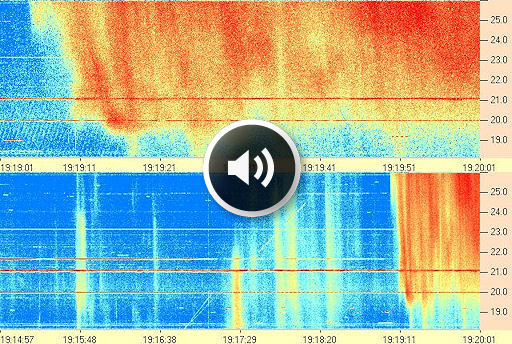
Dynamic spectrum: The horizontal axis is time (h:m:s), the vertical axis is frequency (MHz). Image credit: Wes Greenman
"Saturday was a super-strong solar day with near continuous flaring and radio sweeps," says Ashcraft. "The sound file (above) corresponds to an M3 flare at 1918 UTC. It was the strongest radio sweep of the observing day."
"Try listening to the radio bursts in stereo," he advises. "I was recording on two separate radios at 21.1 MHz and 21.9 MHz, and I put each one into its own channel of the audio file. This gives a spatial dimension as the bursts sweep down in frequency."
September 2011 Aurora Gallery
[previous Septembers: 2010, 2009, 2008, 2007, 2006, 2005, 2004]