| SPACE STATION FLYBYS: Sky watchers in Europe and North America are in for a treat. For the next few days, the International Space Station will be orbiting over the two continents, appearing brightly in the morning and evening sky. Check the Simple Satellite Tracker to find out when to look. images: from Alan Dyer of Alberta, Canada; from Adrian New of San Antonio, Texas; from Jim Tegerdine of Marysville, Washington RAINBOWS AT NIGHT: "Last night I went outside hoping to photograph some noctilucent clouds. Instead, I was treated to a very rare phenomenon--a rainbow at night," says Martin McKenna of Maghera, Northern Ireland. "It was visible to the naked eye with colors as obvious as any daytime 'bow." 
click to view more images
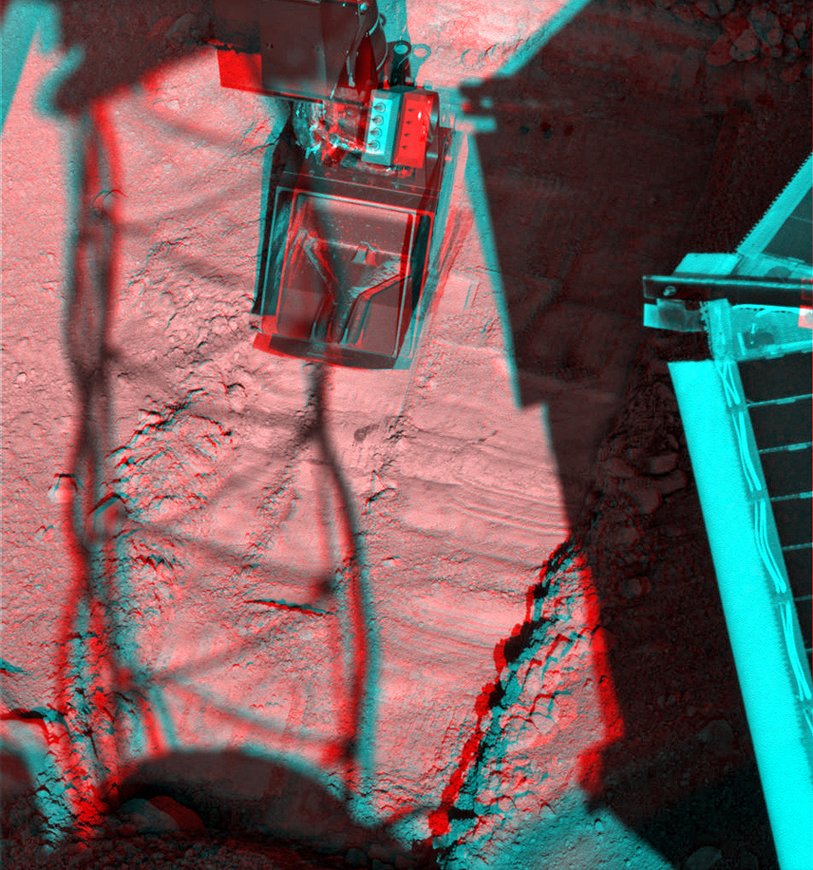
Usually, rainbows appear when sunlight hits falling rain. There's no sunlight after dark, but in this case none was needed: "The full Moon was very bright and it illuminated a frontal system bringing in heavy showers, producing the best moonbows I've ever seen. They sported supernumeray arcs and even secondary bows. Taking pictures in the rain was difficult but I managed to get many images. A few passing cars obliged me with some nice trails." more images: from Mike Sessions at Mauna Kea, Hawaii; from Jay Maxwell at Haleakala, Maui; from John C McConnell of Maghaberry Northern Ireland; from Conor McDonald of Co.Derry, Northern Ireland; from Michael McElhatton of Durham County, England DIGGING MARS: (3D glasses required) NASA's Phoenix lander is hard at work digging in the icy soil of arctic Mars, and here is one of the trenches: 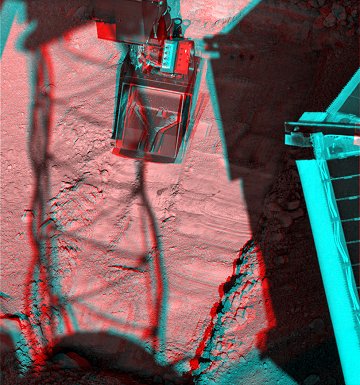
Spaceweather reader Stuart Atkinson of Kendal, England, created the anaglyph by combining left- and right-eye images from Phoenix's stereo camera. "I love this view," he says. "It shows so much detail: Phoenix's scoop hovering above the ground; the shadow of the camera mast on the scoop and the ground beneath it; the ragged edge of the trench, with small rocks and stones tumbling into it; scratches and scrapes on the trench floor made by the sharp edge of the scoop. It's just like being there." At the moment, Phoenix is drilling into a layer of ice at the bottom of the trench using a motorized rasp located on the back of the scoop. The purpose is to create a pile of "shaved ice" that the scoop can pick up and dump into one of Phoenix's ovens for analysis. Mission scientists want to know if martian ice contains nutrients and minerals that might support microbial life. Stay tuned for updates.
UPDATED: 2008 NLC Gallery
[Strange Clouds] [Sky Cameras] |