Metallic photos of the sun by renowned photographer Greg Piepol bring together the best of art and science. Buy one or a whole set. They make a stellar gift. | | |
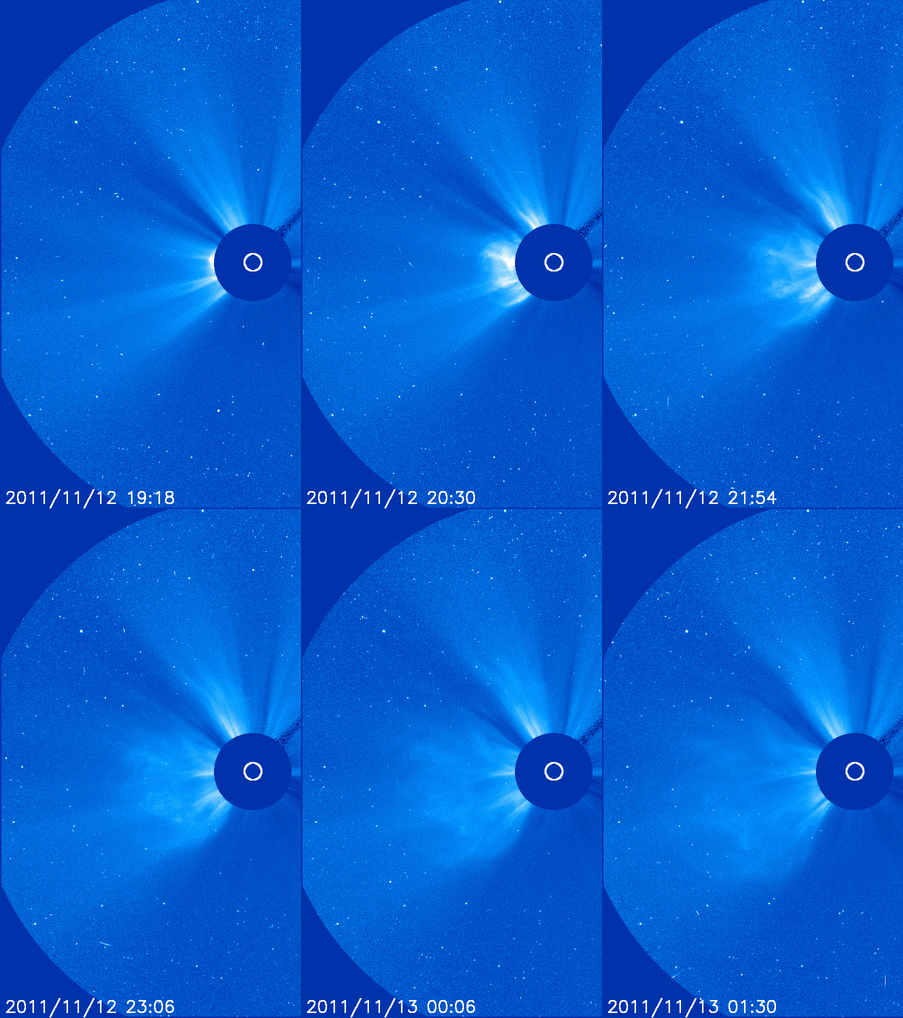
VENUS-DIRECTED CME: A coronal mass ejection (CME, movie) that swept past Mercury on Nov. 13th will likely hit Venus later today. Because Venus has no global magnetic field to protect it, the impact could erode material directly from the top of the planet's atmosphere. It's okay; Venus has atmosphere to spare. Analysts at the Goddard Space Weather Lab calculated the path of the CME, which left the sun on Nov. 12th.
REMARKABLE SOLAR ACTIVITY: In terms of solar flares, the sun is quiet today. Nevertheless, some impressive activity is underway on the sun. For one thing, an enormous wall of plasma is towering over the sun's southeastern horizon. Stephen Ramsden of Atlanta, Georgia, took this picture on Nov. 11th:
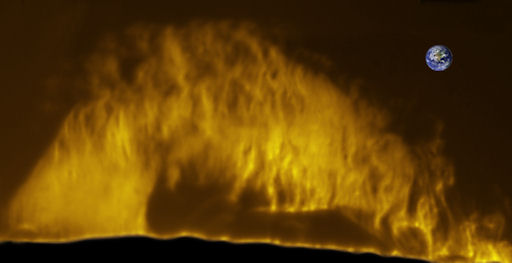
"Solar forums all over the world are buzzing with Sun-stronomers proclaiming this to be the biggest prominence that many of them had ever witnessed," he says.
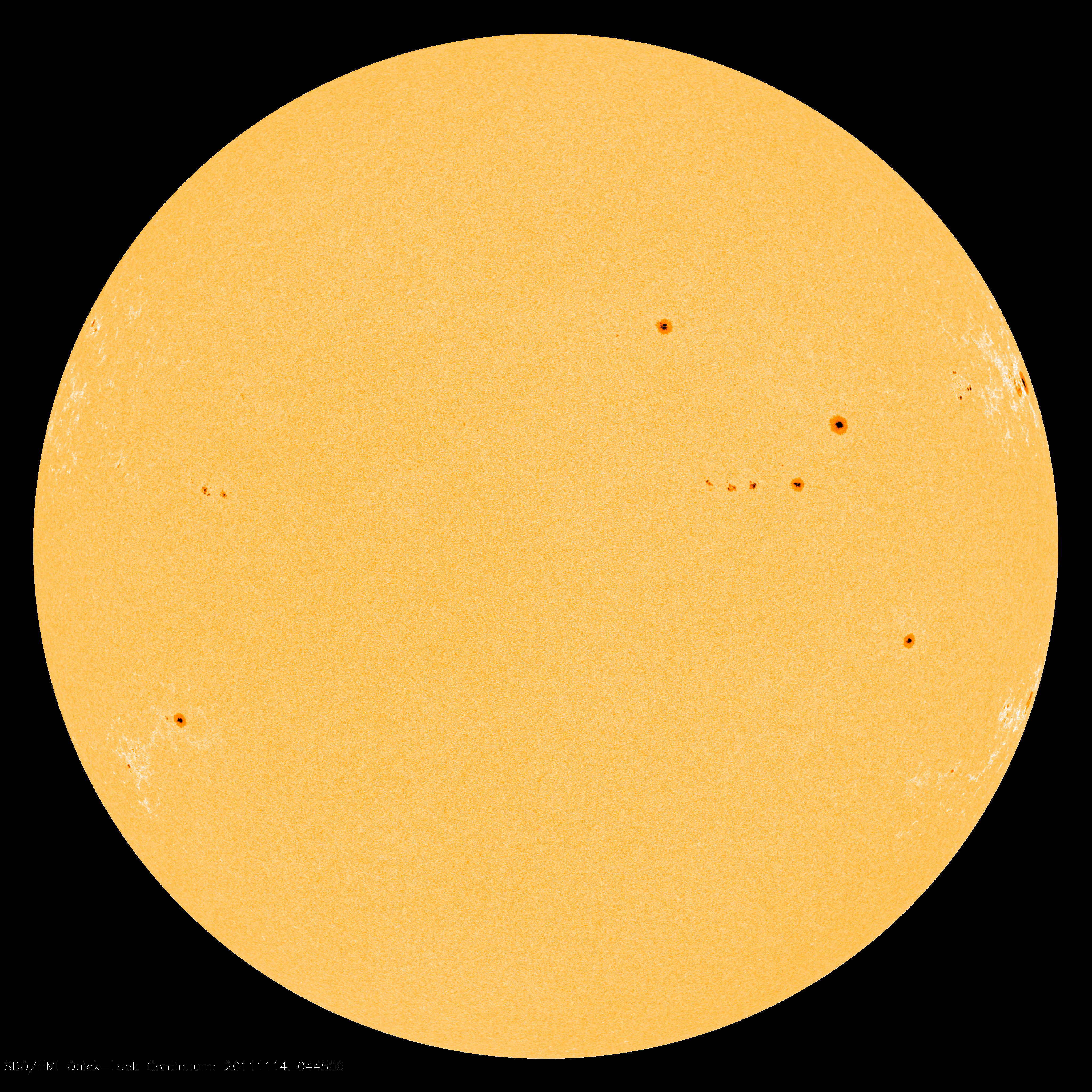
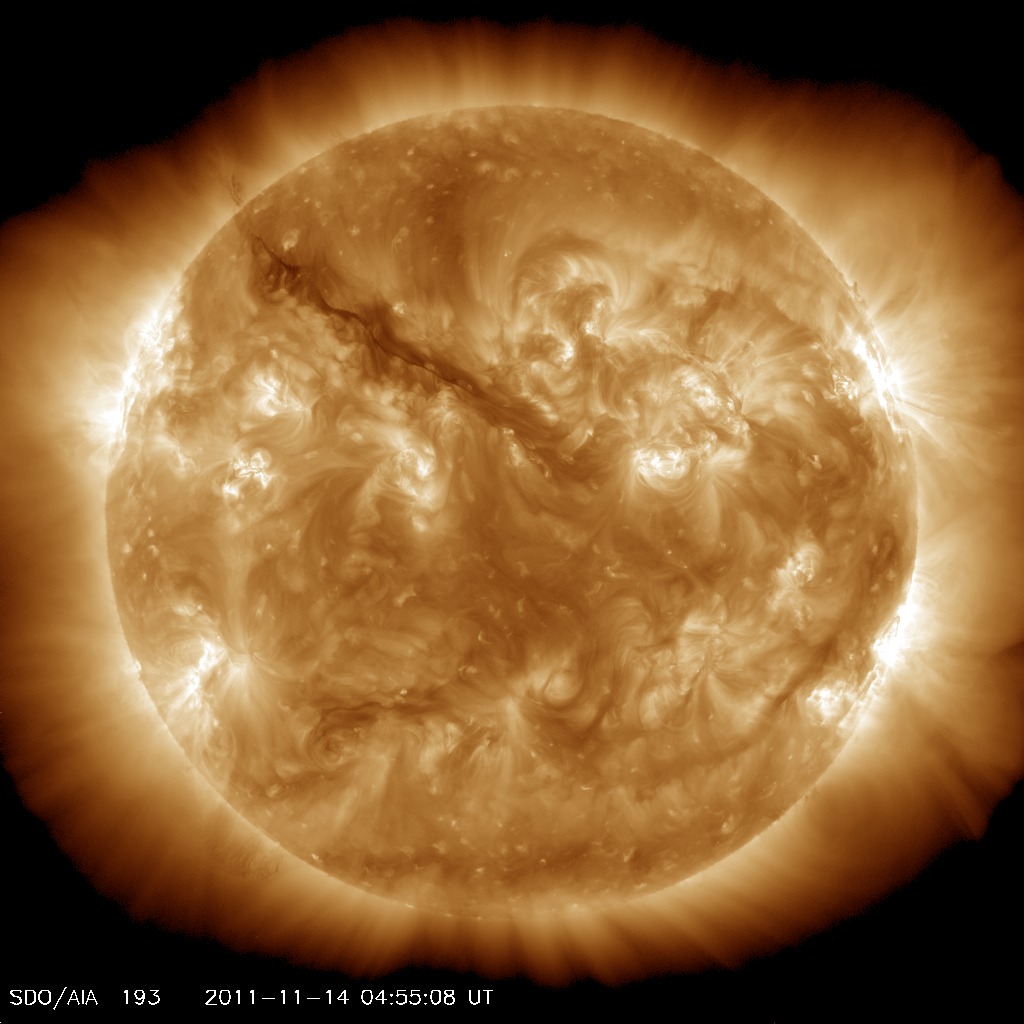
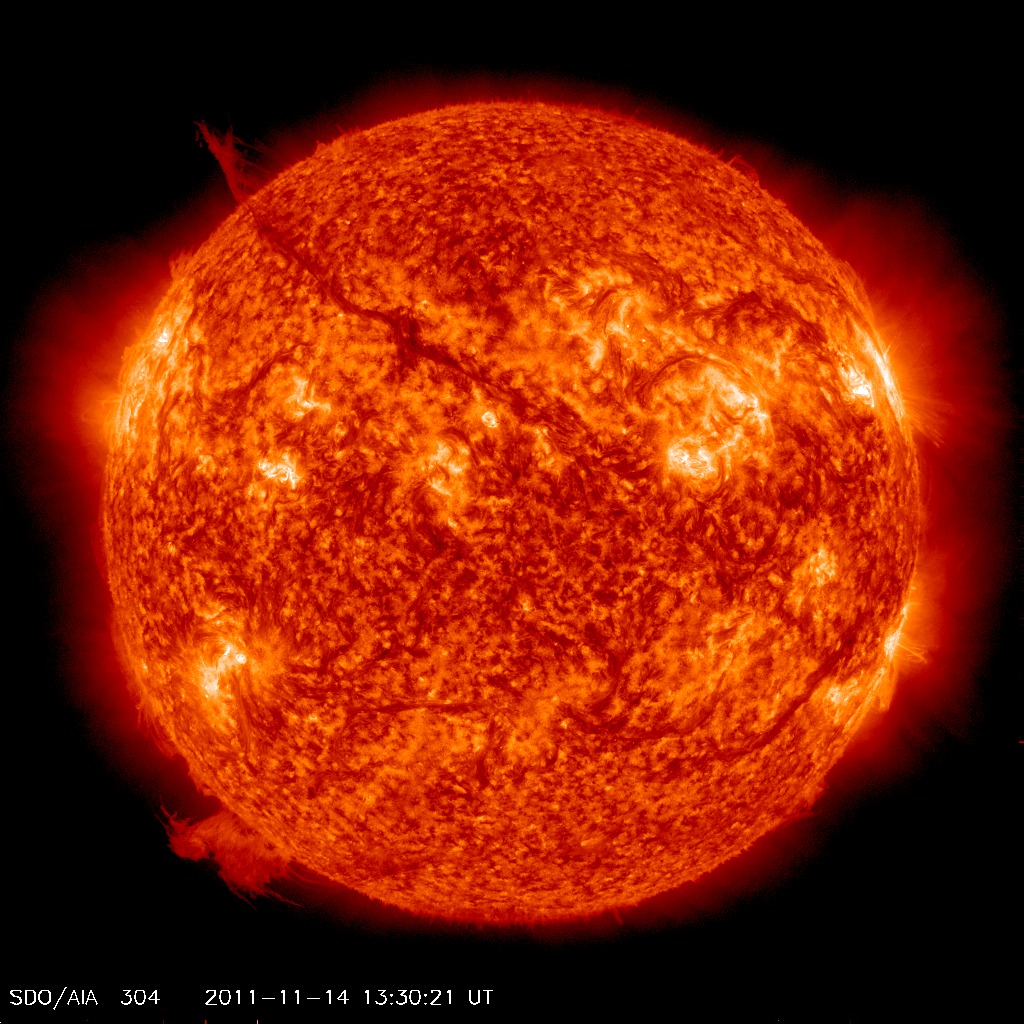
Remarkably, though, this is not the biggest thing. A dark filament of magnetism is winding halfway around the entire sun. NASA's Solar Dynamics Observatory took this picture during the early hours of Nov. 14th:

From end to end, this twisted fiber of magnetism stretches more than a million km or about three times the distance between Earth and the Moon. If the filament becomes unstable, as solar filaments are prone to do, it could collapse and hit the stellar surface below, triggering a Hyder flare. No one can say if the eruption of such a sprawling structure would be Earth directed. Solar flare alerts: text, phone
"I cant help but wonder what could possibly come next since we are still over a year away from the forecasted Solar Maximum," adds Ramsden. "There's never been a better time to own a solar telescope than now!"
SOLAR UPDATE: The wall of plasma on the sun's SE limb has shifted to a state of high activity. "The prominence is evolving very fast now!" reports Sylvain Weiller of Saint Rémy lès Chevreuse, France. This morning it looked like [the dinosaur] Diplodocus."
more images: from Pete Lawrence of Selsey, West Sussex, UK; from Kamil Kusinski of Wloszczowa, Poland; from Christoph Otawa of Geretsried, Bavaria, Germany; from Wouter Verhesen of Sittard, the Netherlands; from Roel Weijenberg of Wilp, The Netherlands; from Michael Borman of Evansville, Indiana; from Jesus Muñoz of Querétaro, México; from Alan Friedman of Buffalo, NY; from Theo Ramakers of Social Circle, GA; from John Stetson of Falmouth, Maine; from Randy Shivak of Elyria, OH; from Steve Riegel of Albuquerque, NM; from Robert Arnold of Ilse of Skye, Scotland;
DISAPPEARING TRICK: If you're a spy satellite, the ability to disappear could come in handy. US spysat Lacrosse 5 occasionally performs just such a trick. On Nov. 11th, satellite watcher Dr. Marco Langbroek of Leiden, the Netherlands, caught the orbiting radar suddenly fading to near invisibility:
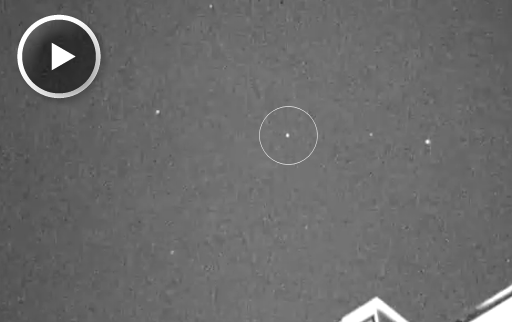
"Lacrosse 5 is typically bright but occasionally performs what is known among observers as the 'disappearance trick,'" says Langbroek. "Its brightness suddenly drops 3 astronomonical magnitudes or more."
Could this be a deliberate form of stealth? Langbroek doesn't think so. "Maybe some part of the spacecraft such as its solar panels casts a shadow over the main body," he speculates. "Or perhaps the surface of Lacrosse 5 becomes less reflective at certain viewing angles. This could happen as the craft suddenly changes attitude for some reason." Other Lacrosse satellites do not perform the trick, at least not to this extent, suggesting that the design of Lacrosse 5 differs from its predecessors.
"Later in the movie a bright Soyuz rocket booster (81-008B) passes by as well," he adds. "This is a piece of space debris connected to the 1981 launch of a Russian military satellite."
Readers, would you like to try catching the tricks of Lacrosse 5? Local flyby times may be found on the web or on your smartphone.