Metallic photos of the sun by renowned photographer Greg Piepol bring together the best of art and science. Buy one or a whole set. They make a stellar gift. | | |
CME IMPACT (MORE TO COME): An interplanetary shock wave buffeted Earth's magnetic field on March 11th at 11:59 UT. It was probably the first of two CMEs expected to arrive today. The impact did not spark a strong geomagnetic storm, but it did cause significantly elevated electron counts in Earth's outer radiation belt. Analysts at the Goddard Space Weather Lab say that "spacecraft in orbits passing through or in the vicinity of Earth's outer radiation belt [could be affected]." Another CME is on the way (see below), so sky watchers should remain alert for auroras on March 11-12. Aurora alerts: text, phone.
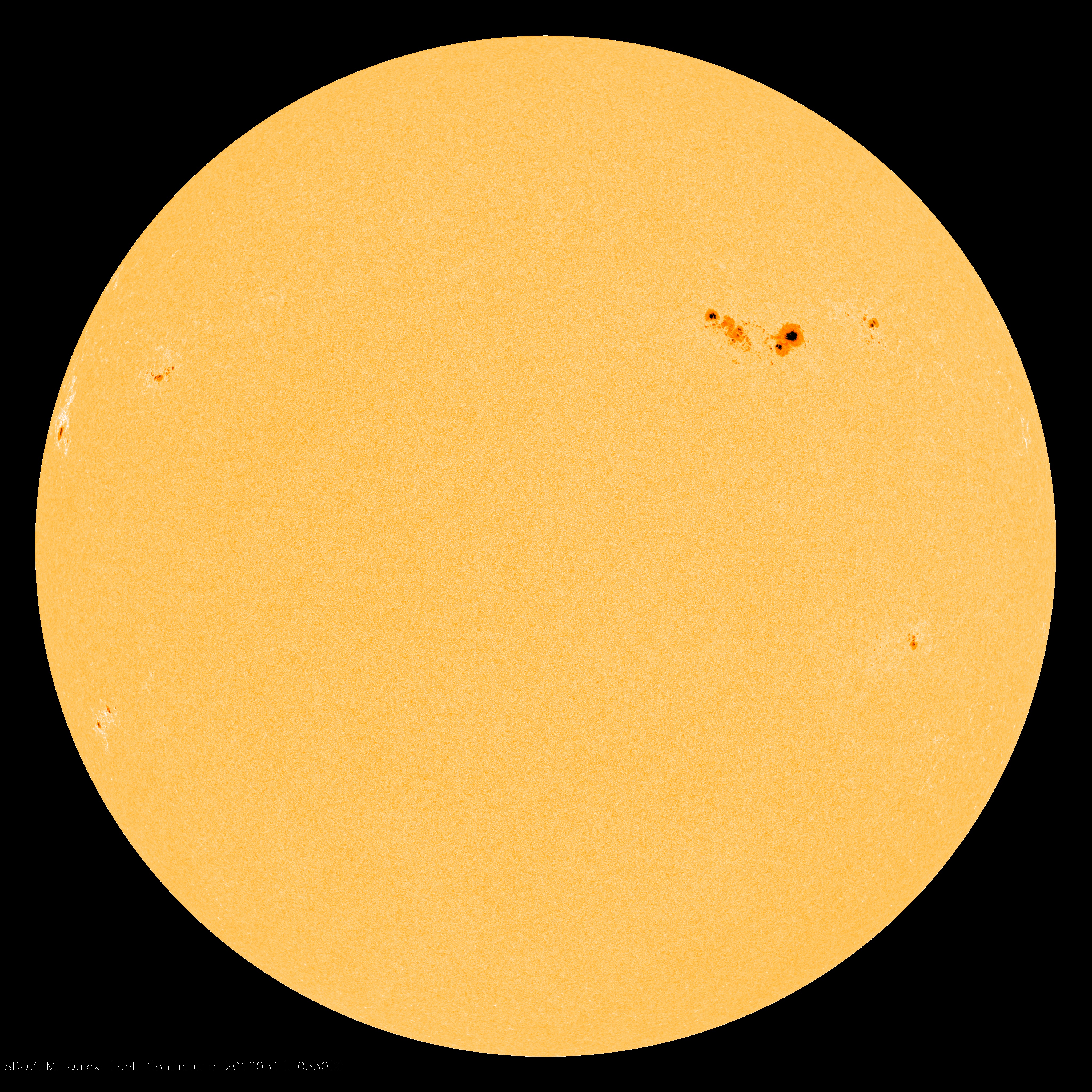
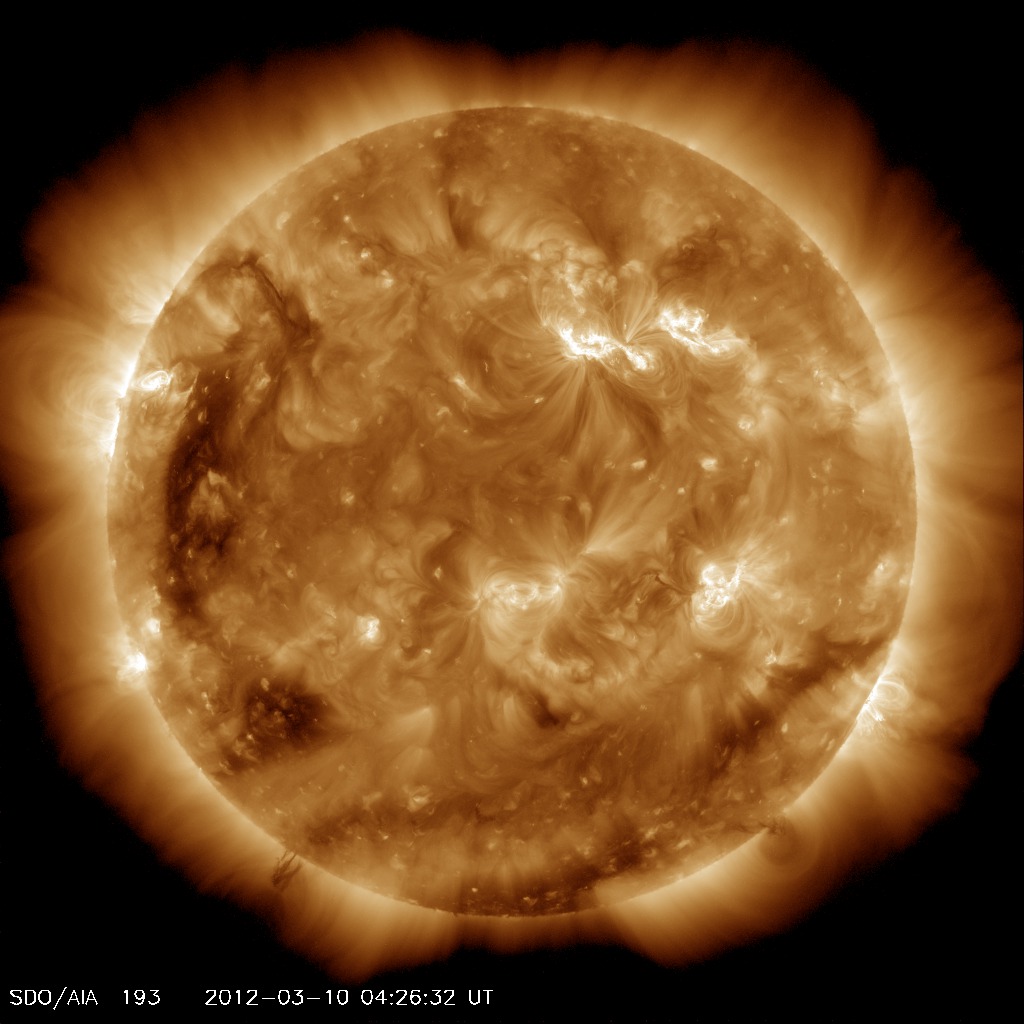
WEEKEND SOLAR FLARE: Sunspot AR1429 is still erupting this weekend. On Saturday, March 10th, it produced a powerful M8-class flare that almost crossed the threshold into X-territory. During the flare, New Mexico amateur astronomer Thomas Ashcraft recorded a series of radio bursts at 21 and 28 MHz:
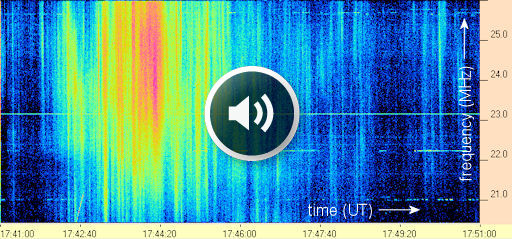
Dynamic spectrum courtesy Wes Greenman, Alachua County, Florida
The roaring sounds you just heard are caused by shock waves plowing through the sun's atmosphere in the aftermath of the explosion. "There is incredible complexity in the waveforms," notes Ashcraft. "This is a recording of one of the most turbulent events in all of Nature!"
In addition, the explosion propelled yet another CME toward Earth. According to a forecast track prepared by analysts at the Goddard Space Weather Lab, the cloud will hit our planet's magnetosphere on March 12th at 1803 UT (+/- 7 hr), possibly sparking a new round of geomagnetic storms.
After passing Earth, the CME will also hit the Mars Science Lab (MSL) spacecraft on March 13th followed by Mars itself on March 14th. Mars rover Curiosity onboard MSL might get some interesting readings as the cloud passes by.
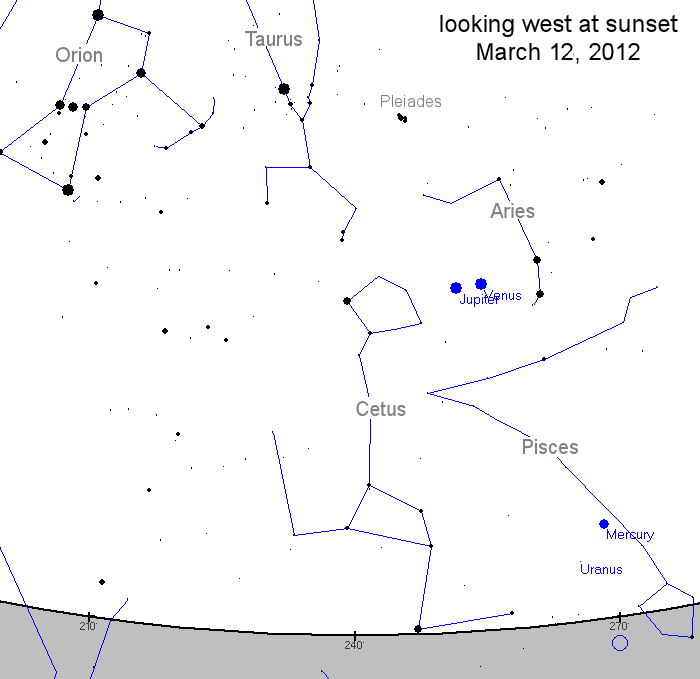
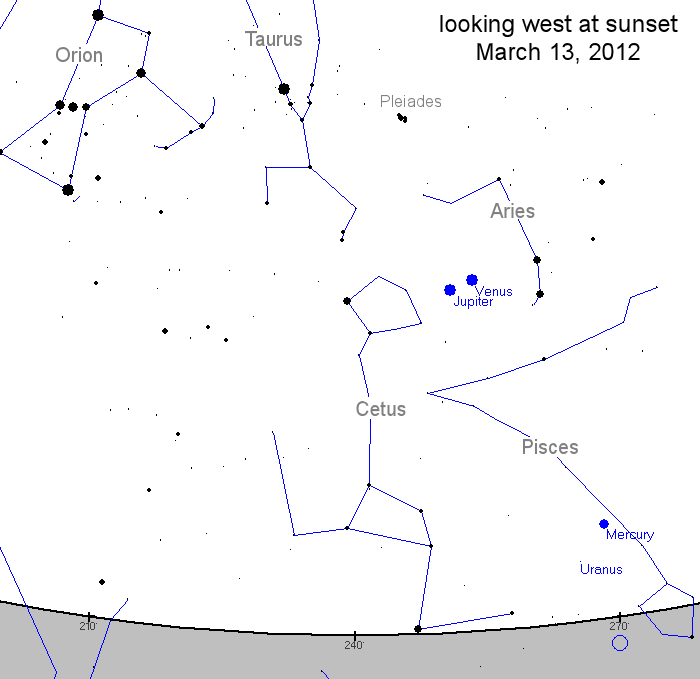
CONVERGING PLANETS: Venus and Jupiter are converging for a remarkably close encounter. On March 12th and 13th the two bright planets will lie scarcely 3o apart in the western sky at sunset. Marek Nikodem photographed the approach on March 9th:
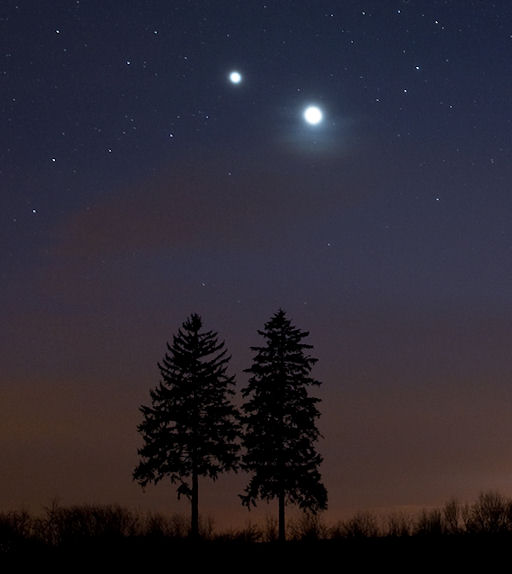
"Venus and Jupiter glitter so clearly, they are like beautiful diamonds in the sky," says Nikodem. "It is an amazing and unique view."
As the distance between them shrinks, Venus and Jupiter can become physiologically mesmerizing, according to NASA. Look for them before the sky fades completely black. The two planets surrounded by twilight blue is a beautiful sight indeed. [Sky maps: March 12, 13]
more images: from Gary A. Becker of Coopersburg, PA; from Chris Cook at Mt. Wilson Observatory, California; from Stefano De Rosa of Turin (Italy); from Kat of Northeast Philadelphia, PA; from Joel Linao of Mirdiff, Dubai, United Arab Emirates; from Stefano De Rosa of Turin (Italy);
CALM BEFORE THE STORM: Earth's magnetic field is growing quiet again after two days of geomagnetic storming prompted by CME impacts. At the peak of the disturbance on March 9th, Northern Lights were spotted in the United States as far south as the Dakotas, Minnesota, Wisconsin, Oregon, Wyoming, Illinois, Montana, and even Kansas. The finest displays, as usual, were reserved for Alaska:
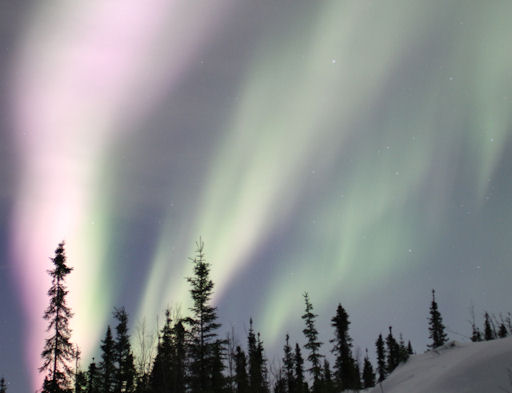
"Almost immediately after sunset, the sky began to fill with ribbons of auroras above Chena Hot Springs (just outside Fairbanks) in Alaska," reports photographer Christopher Freemantle. "The intensity grew until very bright, multicoloured and fast moving auroras were visible."
Although the magnetosphere is calm now, more storms arre in tthe offing. A CME hurled toward our planet by the M6-class solar flare of March 9th is expected to reach Earth during the early hours of March 11th. High-latitude sky watchers should be alert for auroras. Aurora alerts: text, phone.
more images: from Todd Salat north of Anchorage, Alaska; from Dave Headland of Oamaru, Southern New Zealand; from Brian Hall of Edmonton, Alberta; from Ben Podolak of Split Rock Lighthouse State Park, MN; from Ryan de los Reyes of Anchorage, Alaska; from Doug Kiesling of Saint Cloud, Minnesota; from Nick Monk of Mountain River, Tasmania, Australia; from Chris Picking of Owhiro Bay, Wellington, New Zealand; from Ron D of Carrington, North Dakota; from Carlton McMillan of Pine City, Minnesota; from Ben Chorn of Duluth, Minnesota; from Lyle Anderson of Duluth, Minnesota; from Yuichi Takasaka of Lumby, British Columbia; from Imelda Joson and Edwin Aguirre flying 34,000 feet over Minnesota;
February 2012 Aurora Gallery
[previous Februaries: 2011, 2010, 2009, 2008, 2007, 2006, 2004, 2003, 2002]